To understand the Boers of Mercury, you have to begin with the insult of arrival.
Not the romance of arrival. Not the heroic silver capsule descending on a new world while music swells and children point upward from Earth, sticky-faced and proud of their species. No. Mercury has no patience for that kind of theater. Mercury does not welcome. Mercury does not even refuse. Mercury merely exists in a state of such thermodynamic contempt that every living thing which approaches it must first confess, in budget line-items and mass ratios, exactly how badly it wants to be there.
Getting to Mercury as flesh and blood is obscene.
Machines can fall sunward cheaply enough if you are patient, clever, and willing to play billiards with Venus, Earth, and the inner system for years. Mass is not sentiment. Ore does not suffer. A radiation-hardened excavator, a spool of superconducting cable, a thousand tonnes of sinter feedstock, a block of factory firmware hardened against solar flare upsets — these things can be nudged and looped and braked and insulted through the gravitational architecture of the inner system until, eventually, Mercury receives them like thrown scrap.
Humans are different.
Humans require temperature envelopes, pressure envelopes, water, shielding, psychological tolerances, waste reclamation, medical redundancy, social lies, legal excuses, and enough engineered ceremony to persuade the monkey in the skull that it is not being mailed to a furnace inside a coffin. The delta-v is not merely a number. It is a moral filter. It asks who is desperate enough, rich enough, ideological enough, indentured enough, fanatical enough, or simply broken enough to go.
The Boers went.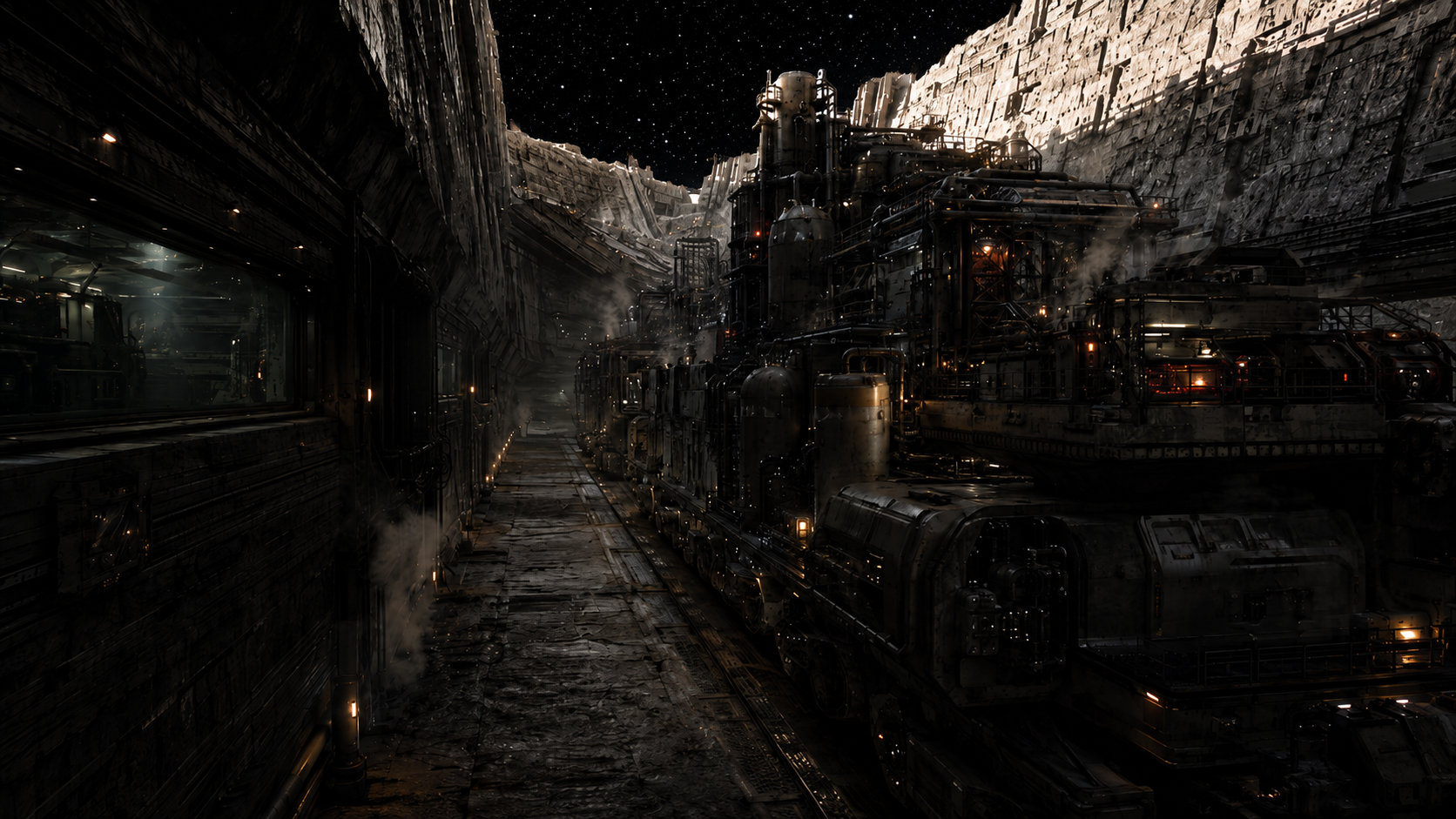 They went hard.
That is the phrase that survived: hardcore Hohmann. It was inaccurate in the way all frontier slang is inaccurate, which is to say it was technically offensive to navigators and emotionally perfect. The South African consortiums, clans, remnant republics, mining dynasties, church-factories, security cooperatives, and private orbital militias that eventually became collectively known as the Boers of Mercury did not trickle inward through comfortable, high-cost, medically pampered transfer architectures like the old corporate families from the Labi-Korean combines, nor did they arrive as ecstatic processions like the Loveless Cultists with their sung telemetry and white ceramic coffins. They took the ugliest trajectories that still kept meat alive.
They staged through 434326, 2004 JG6, unofficially and then stubbornly called PaulKruger by the people who needed the joke to be real.
PaulKruger was a one-kilometer Atira, a dark little inward-skimming rock whose orbit made it useful in exactly the way a diseased knife is useful in an alley. It was never a settlement. It was never a port. It was a dug-in transfer abscess: propellant bladders, storm vaults, patched docking collars, abandoned emergency habitats buried beneath slag shielding, and old autonomous winch systems that groaned in Afrikaans, Mandarin, Korean, Russian, isiZulu, and machine-code pidgin depending on whose maintenance ghosts had last touched them.
That cursed rock was also infested with Asbestos.
Not asbestos, the ancient industrial mineral that ruined lungs and made lawyers rich. Asbestos, capitalized by habit and terror, was the name given to the fibrous mineral-biological contamination found in the shaded microfractures of PaulKruger’s interior after the third excavation season. Nobody agreed whether it was life, pseudo-life, a prebiotic catalytic horror, or merely mineral whisker growth with a taste for warm polymers and mucus membranes. The scientists argued. The lawyers argued. The insurers stopped answering messages. The miners gave it a name and treated it as a demon, which was probably the most practical classification available.
Asbestos got into seals. It got into suit joints. It wicked along condensation films. It grew where machines sweated. It formed pale fur in filter cartridges and brittle black lace inside heat exchangers. It loved lungs in the simple, impersonal way Mercury loved heat: not maliciously, not symbolically, but with the horrifying innocence of chemistry.
After the first deaths, PaulKruger should have been abandoned. Instead it became exclusive.
That, too, is very Mercurian.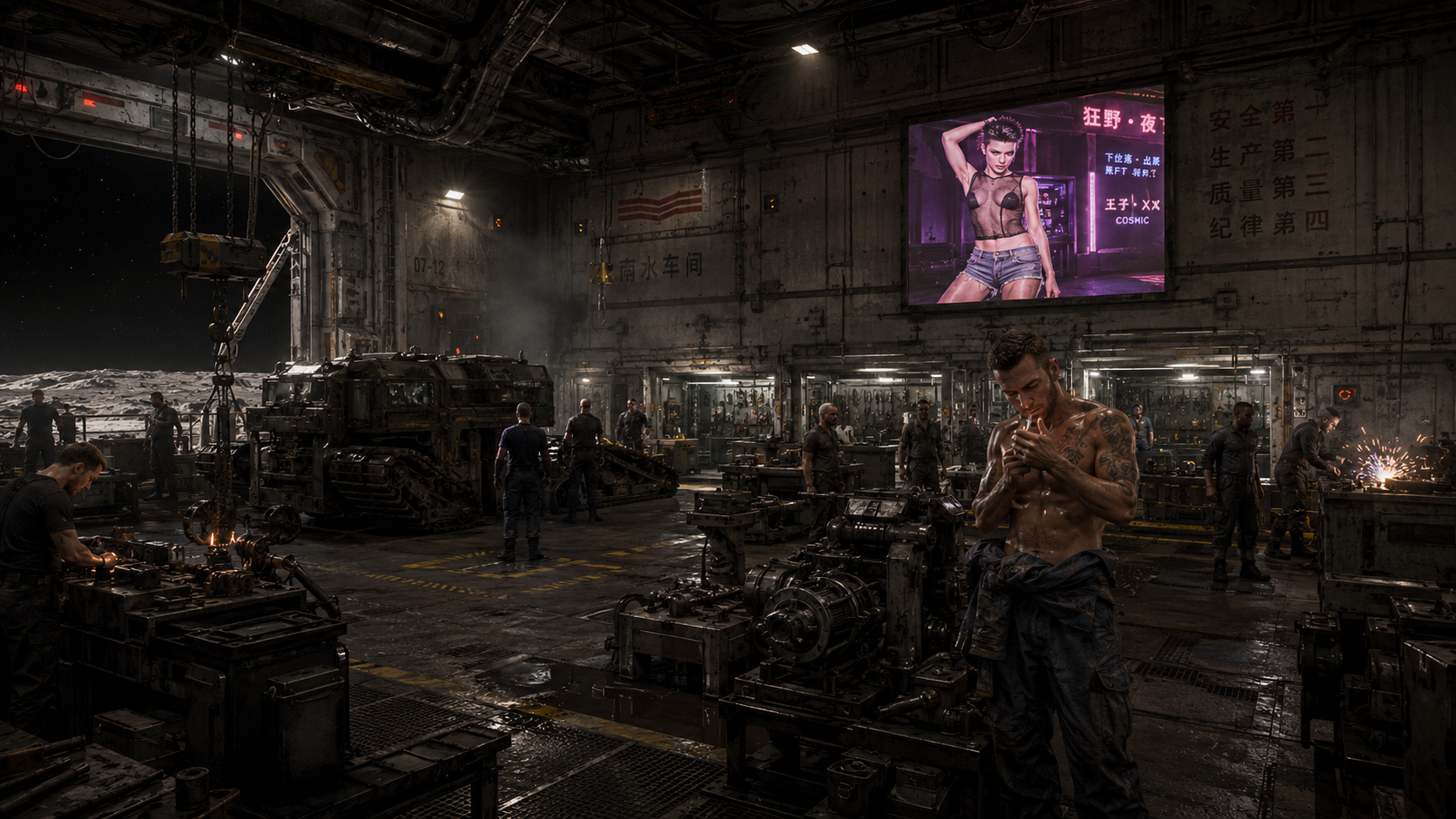
The TSEK ideg — depending on who you asked, a security doctrine, a family compact, a racial hallucination, a logistics cartel, a joke that had acquired automatic weapons, or a sovereign ideology in larval form — declared total transference claim over PaulKruger. No one was welcome to transfer there for any amount of money. Not because it was safe. Because it was theirs. Because they had bled into its filters, buried cousins in its sealed galleries, mapped its contaminated tunnels by touch and fever, and learned which vaults could still be used if you accepted a certain number of future tumors as operational cost.
Outsiders called this madness.
The Boers called it position.
And position, in the inner system, was everything.
Mercury’s economy was built on a fact too large to feel real at human scale: sunlight there was not weather, not illumination, not ambiance. It was an industrial feedstock. The Sun at Mercury was a god-sized furnace door left open. Energy fell on the planet with a violence that made old terrestrial categories limp and sentimental. Even shade became valuable. Especially shade. A shadow on Mercury was not absence. It was infrastructure.
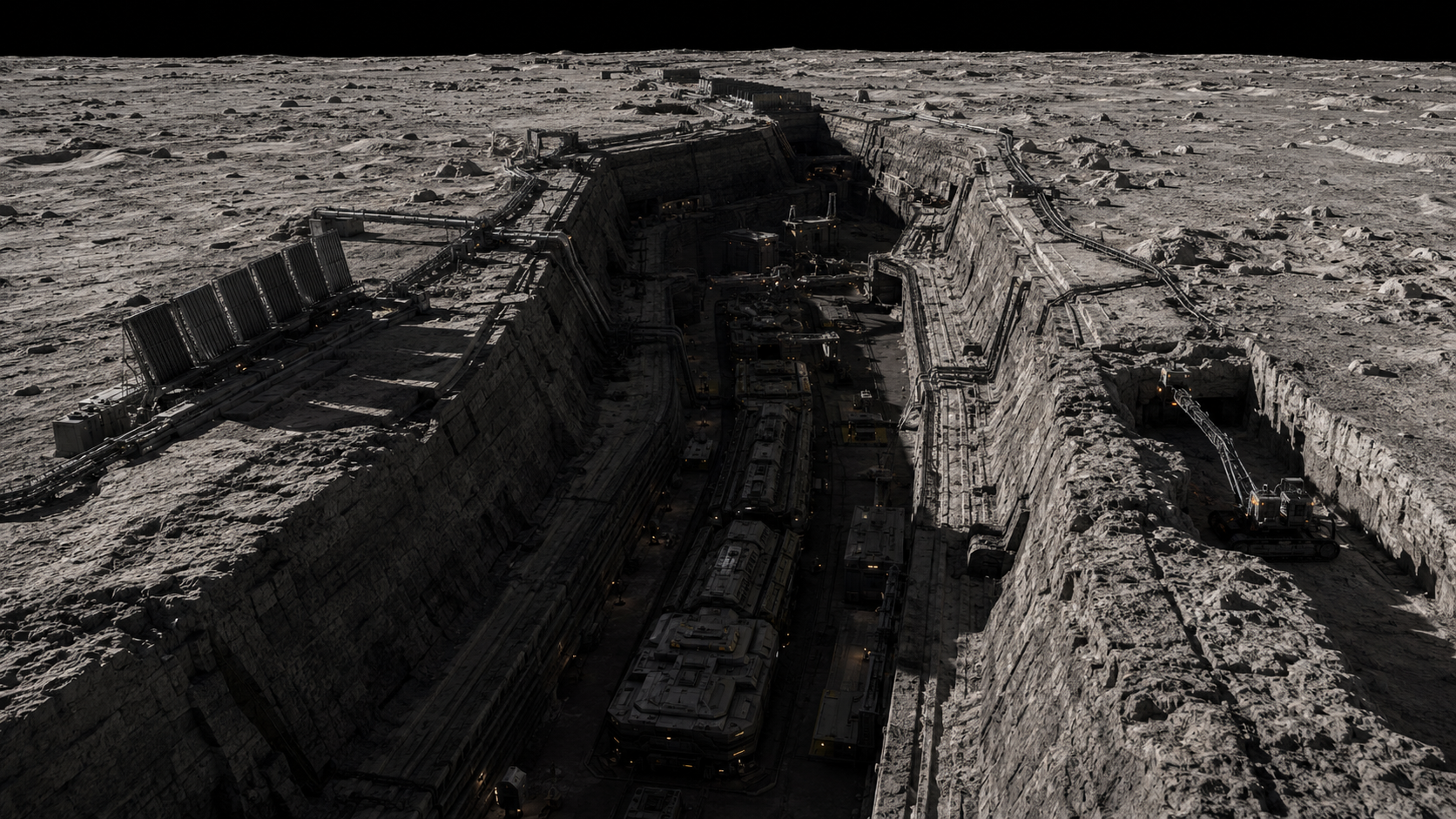
The first successful Mercurian habitats did not rise as domes, towers, or bright frontier towns. Those were children’s drawings. The real settlements were cuts. Trenches. Slotted wounds in the regolith. At high latitudes, where geometry could be made to do half the work of civilization, automated excavators began carving deep, sloped-walled channels through the battered plains. The walls were sintered into brutal, cinderblock-like faces: regolith fused, compressed, patterned, and refaced until the trench became both quarry and fortress.
The goal was not beauty. Beauty was for orbital shareholders and promotional renders.
A proper trench was two hundred meters wide, sometimes more, and deep enough that its lower section never saw direct sunlight. The bottom belonged to machinery, trains, pressure docks, loading systems, crew warrens, cold storage, fabrication bays, hospitals, gambling rooms, unlicensed churches, and the little social cancers that humans inevitably bring with them when locked in darkness under intolerable profit pressure. The upper walls held heat exchangers, radiator vanes, mirror teeth, sensor masts, solar concentrators, and maintenance gantries that leaned into the killing light like sacrificial combs.
The trench was a climate machine.
The trench was a labor camp.
The trench was a bank.
The trench was a weapon pointed at the future.
At the bottom of these cuts ran trains, though calling them trains caused immediate arguments. They were not terrestrial trains. No one with any pride used wheels where dust welding, thermal cycling, and vacuum abrasion could turn nostalgia into maintenance debt. The Boer trench-crawlers were squat, armored, magnetically indexed beasts that gripped embedded guide-spines and load rails with a sort of patient hatred. Each car was a pressure-rated brick of function: ore slurry, volatiles, crew transfer, reactor service, drone racks, printer feedstock, heat batteries, repair coffins, medical cages, smart dust reclaimers, and once, infamously, a mobile chapel distillery that exploded during Lent and killed nine people, three priests, and an accounting server
The Boers loved those machines in the way frontier people love anything that fails constantly but not quite fatally.
Failure was the background music of Mercury.
Exponential machinery was the dream: machines building machines building machines, excavators making trenches for factories that made sinterers that made support frames for mass drivers that launched material to build solar lilies in orbit. Every investor deck showed curves bending upward like promises from a drunk prophet. Every operations chief knew the actual curve looked like a heart monitor during a knife fight. Thermal expansion cracked housings. Electrostatic dust infiltrated joints. Solar events flipped bits despite shielding. Imported bearings died in patterns no one had modeled because no one had been stupid enough to test them under Mercury’s particular mixture of abrasion, radiation, vacuum, and human impatience.
So the Boers recycled constantly.
Everything was feedstock. Broken crawler mandibles became pump housings. Pump housings became pressure braces. Pressure braces became heat-exchanger ribs. Failed heat-exchanger ribs became devotional plaques or knives. Human waste became carbon accounting. Dead drones were stripped by children in shadow schools. Old station walls were ground down and re-sintered when the trench expanded. Nothing was discarded until it had been humiliated through at least six reincarnations.
They programmed constantly, too. Not in the clean old-Earth sense of soft-handed people arguing about frameworks. Boer programming was often done by mechanics with burned wrists and sleep debt, sitting on tool crates under amber emergency lights, patching excavation swarms while someone screamed over comms that a tunnel lip was slumping. Their code had comments in Afrikaans, English, isiXhosa, machine shorthand, profanity, scripture, and threats. Their version control histories read like hostage negotiations. They trusted no vendor firmware, no Labi-Korean optimization suite, no Mak-PHurb swarm scheduler, no Loveless predictive oracle. Everything imported was interrogated, forked, sandblasted, and taught manners.
Robotics were ordered constantly. Drones, crawler teeth, actuator bundles, thermal shutters, regolith classifiers, autonomous cutters, vacuum-rated manipulators, sensor beads, furnace throats, rail clamps, smart foams, cable worms, emergency wombs for crew rescue, cheap disposable inspection spiders sold by the million and cursed individually. Logistics became religion because logistics was the only miracle that worked twice.
And all of this existed for the grid.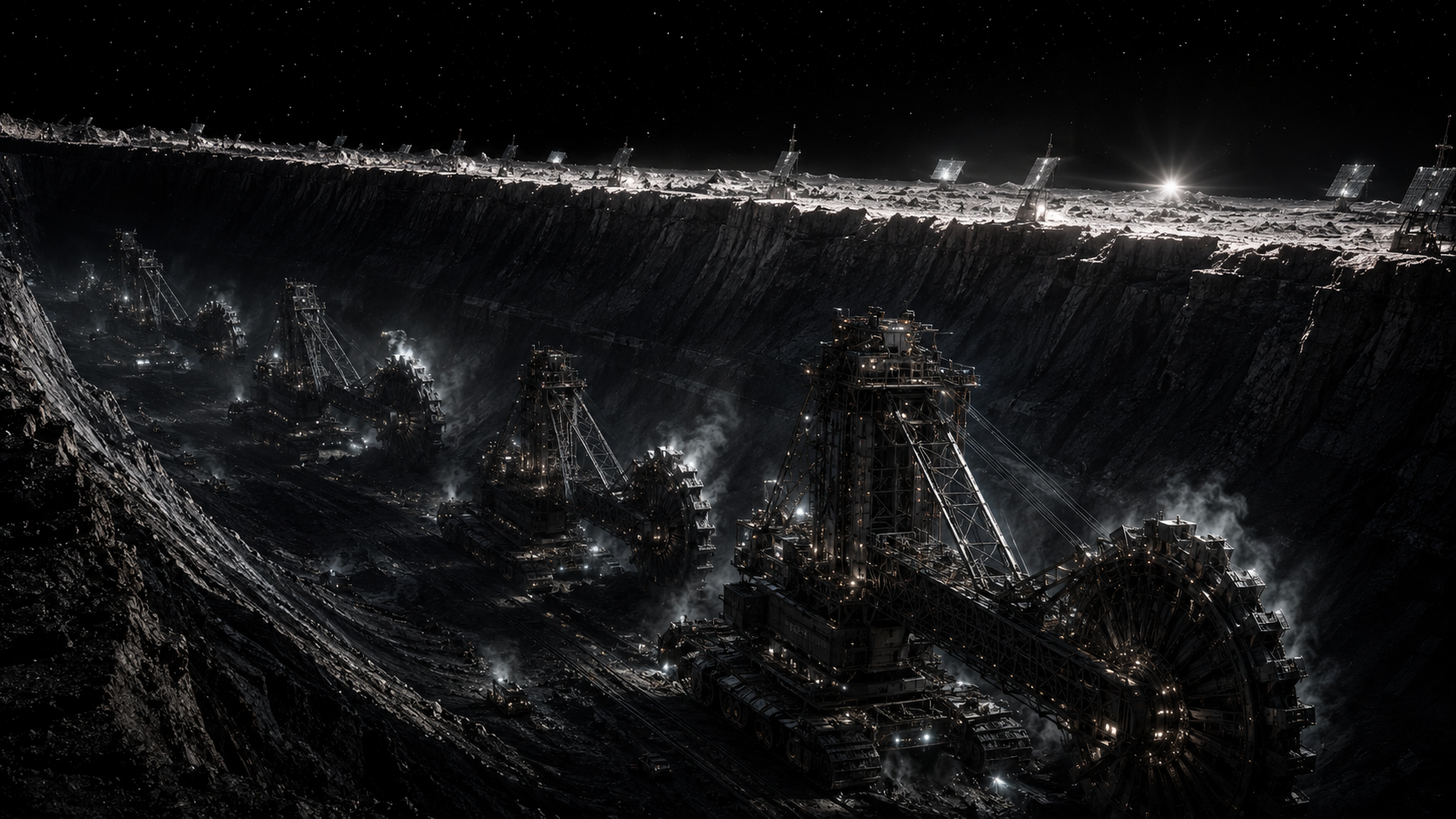
The northern and southern trenchworks were not random settlements. They were the first strokes of a planetary-scale industrial diagram. At high latitudes, the factions competed to lay linked trench networks across terrain that had once been only crater and scarp. The Boers drove their cuts with a blunt, clan-based aggression that made diplomats sweat. They wanted corridors, shadow harbors, rail-fed mass elevators, low-g mass drivers, and launch alignments long enough to export mass without wasting the whole margin on brute violence.
Mercury’s gravity was generous enough to hold things down and weak enough to let ambition escape.
From the trenchworks, mass drivers threw refined structure into solar orbits: trusses, panels, tanks, shield blocks, mirror frames, radiator spars, laser gain assemblies, maintenance nests, bolt clouds, and modular hexagonal units called lilypads, though they were neither delicate nor green. Each lilypad was a solar heat exchanger, collector, converter, radiator, and laser node, designed to dock with others until fields of them unfolded across thousands upon thousands of kilometers. From far away, they looked almost floral, a glittering industrial bloom in the Sun’s private furnace. Up close they were ugly, modular, replaceable, and lethal to approach without permission.
The lilypad fields harvested sunlight, turned heat into managed flow, flow into stored potential, potential into beam energy, and beam energy into money.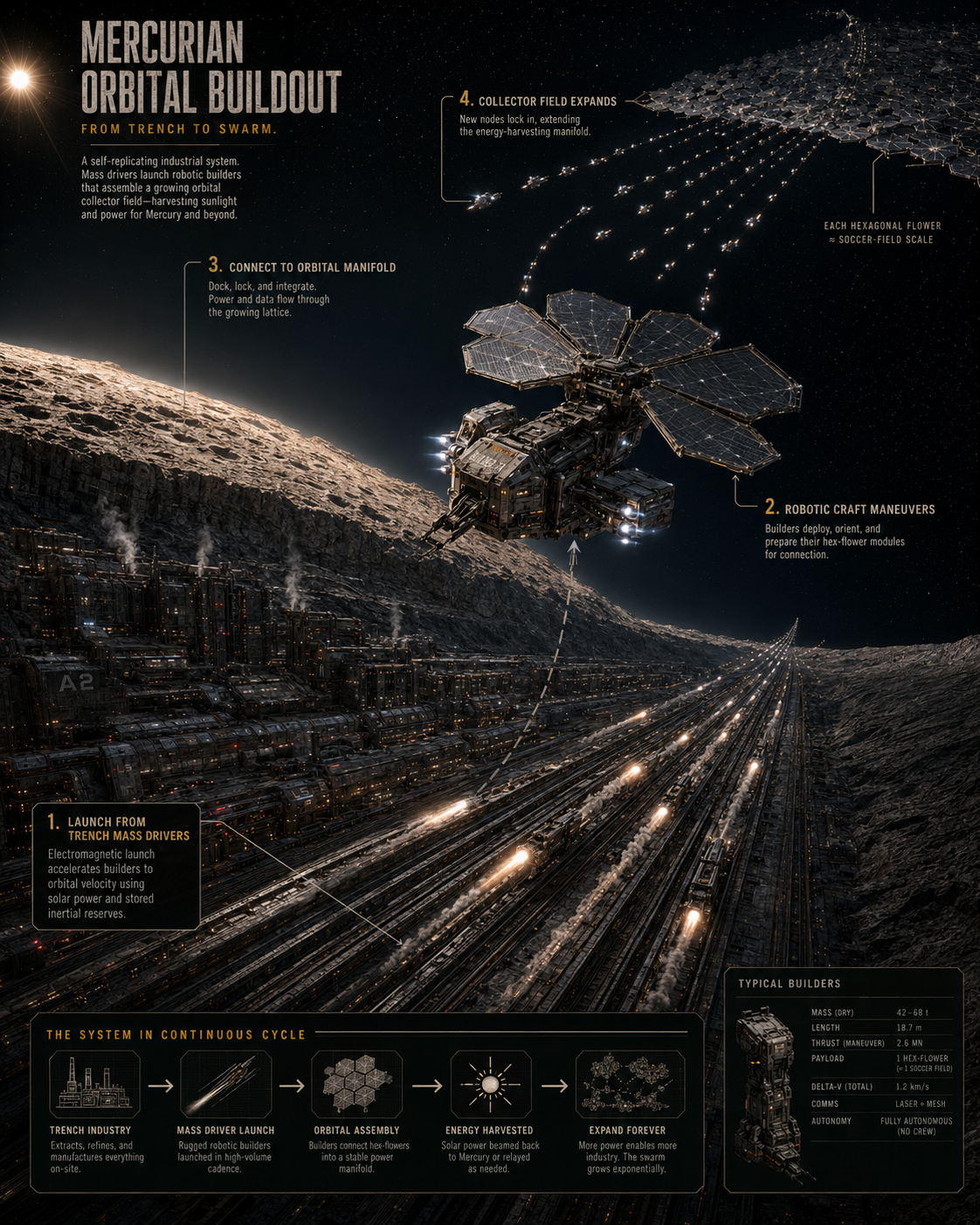
That was the true Mercurian export. Not ore. Not metal. Not romance. Directed energy.
The outer system was hungry. The Belt wanted beam power for processing and habitat spin-up. The Jovian clients wanted industrial lasers to run refinery moons, drive sail convoys, warm cold infrastructure, and support military games they pretended were defensive. Saturnian consortiums bid years in advance for scheduled beam windows. Uranian ice projects paid obscene premiums because any energy arriving that far from the Sun felt like contraband fire stolen from God. Even the Neptunian archival kingdoms, who affected disdain for inner-system vulgarity, quietly bought Mercurian beam time through cutouts.
The clients were there.
They were already bidding like crazy.
And because the prize was so large, Mercury did not attract normal companies. Normal companies die when exposed to sufficient reality. Mercury attracted factions.
The Labi-Koreans arrived like surgical instruments: disciplined, vertically integrated, obsessive about process cleanliness, capable of building a pressure valve that looked like jewelry and charging accordingly. Their habitats smelled of coolant, tea, antiseptic, and quiet superiority. They treated Mercurian dust as an enemy to be excluded.
The Mak-PHurb came as adaptive swarms of contract families, Philippine-urban engineering diasporas, Malaysian platform syndicates, Makassar navigators, legal ghosts, and black-budget habitat cooperatives. They were fast, socially liquid, impossible to fully map, and frighteningly good at making three incompatible systems talk long enough to invoice. They did not conquer territory. They colonized dependencies.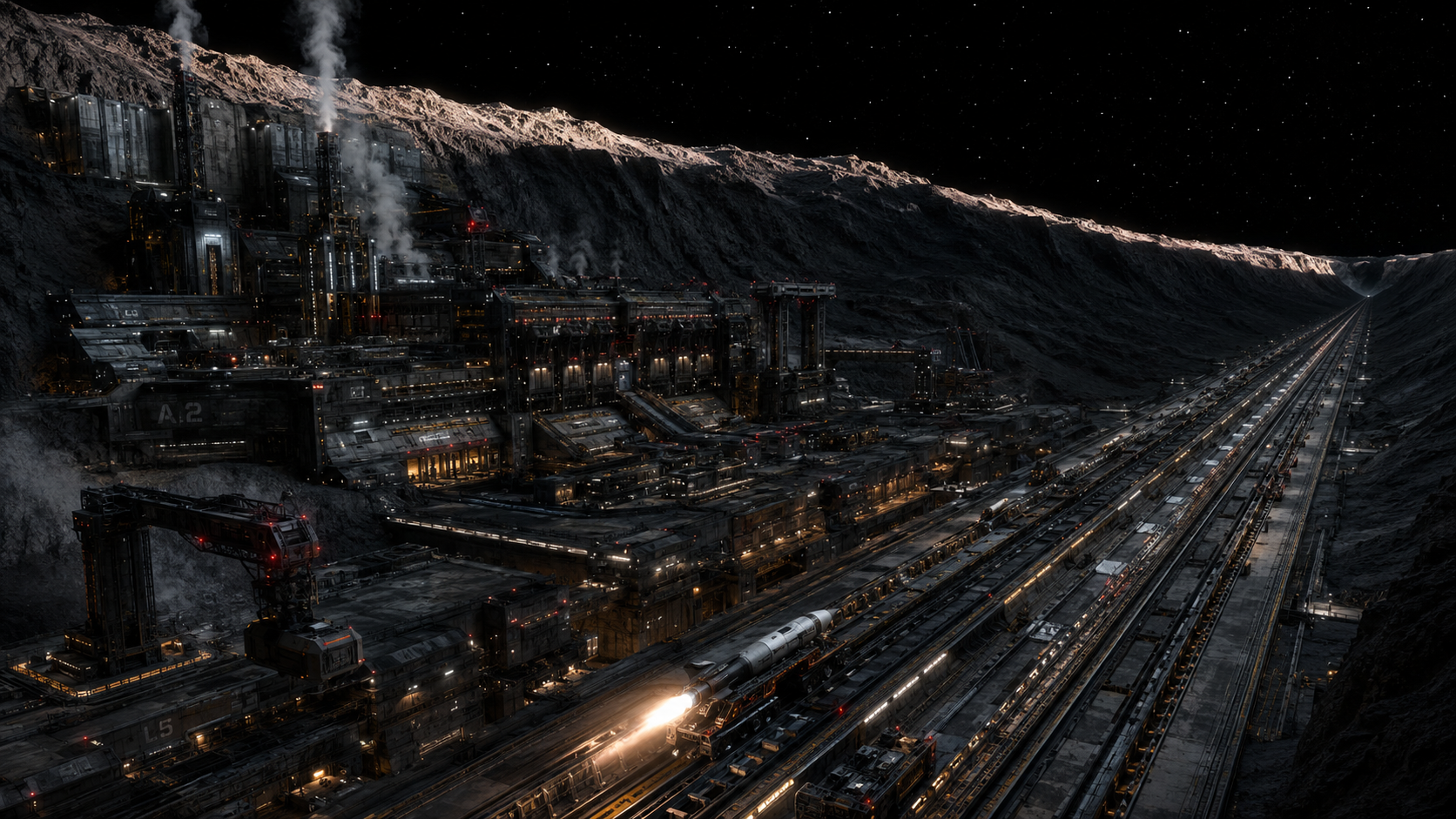
The Loveless Cultists were the strangest to outsiders and perhaps the least strange to anyone who had spent long enough under Mercury’s sky. They believed attachment was a heat leak. They designed habitats like monasteries for machines, spoke softly, married rarely, sang to thermal gradients, and produced some of the finest failure-prediction models in the inner system. Their crews could watch a friend die through a pressure window and still complete the shutdown checklist without raising their voices. Everyone hated working with them. Everyone hired them.
And then there were the Boers.
Colorful was the polite word.
They were not all Afrikaner, not by blood, not by language, not by any clean old category that could survive three generations of hard vacuum and profit selection. “Boer” on Mercury became less an ethnicity than a posture: clan-bound, land-hungry, mechanically intimate, suspicious of abstraction, violent in negotiation, sentimental about tools, and religious about inheritance even when the religion itself had mutated beyond recognition. Their young learned pressure discipline before poetry. Their adults fought over trench frontage with the same emotional intensity their ancestors had once reserved for farms, borders, cattle, flags, and bitter songs.
Their machine shops were ugly, roaring, and alive. They hung old Earth maps next to thermal stress charts. They painted slogans in bad Mandarin because the original wall modules had come cheap from a Sino-industrial liquidation sale and nobody bothered to strip them. They watched imported filth, gladiator feeds, prayer duels, welding tutorials, old rugby riots, and court proceedings from inheritance murders on the same big screens. They built fight pits in maintenance bays because bodies under pressure needed ritual violence or they began inventing worse hobbies.
Their frame of reference was weird. Hostile. It had been cooked down by distance, debt, heat, masculinity, exile, and the knowledge that no one came to Mercury casually. If you arrived there as flesh, you had already burned the bridge behind you, then sold the ashes for shielding.
This gave Boer society its cultish edge. Not cultish in the soft suburban sense of chanting around a charismatic idiot with perfect teeth. Cultish in the older sense: bound by work, danger, oath, grievance, and shared machinery. A trench clan might be legally a cooperative, spiritually a church, economically a cartel, militarily a security contractor, domestically a madhouse, and genealogically a lawsuit. Children inherited not just shares but maintenance obligations. Marriages could include rights to excavation lanes. Feuds were measured in delayed replacement parts and suspicious pressure losses. A man could insult your mother and be forgiven, eventually. A man who corrupted your excavator scheduler would have descendants afraid of airlocks.
The TSEK ideg’s claim over PaulKruger made sense inside this worldview.
Outsiders saw a contaminated transfer rock. The Boers saw a throat into Mercury that they had seized, survived, cursed, and made useful. The Asbestos made it unusable to polite traffic, which only increased its value to those willing to live with contamination protocols bordering on ancestor worship. Every transfer through PaulKruger became a test: of discipline, loyalty, tolerance for risk, and willingness to accept that Mercury did not reward clean hands.
No one was welcome to transfer for any amount of money because money was not the point.
Exclusion was the point.
Control was the point.
A clan that controlled a route controlled which bodies arrived, which machines arrived, which debts matured, which marriages became possible, which rivals waited eighteen more months in expensive orbit, which contracts failed because a replacement furnace throat did not make the window. In the inner system, timing was sovereignty. PaulKruger was diseased, dangerous, miserable, and priceless.
The Boers did not want Mercury as a colony in the old imperial sense. They wanted it as a machine that could make them unavoidable.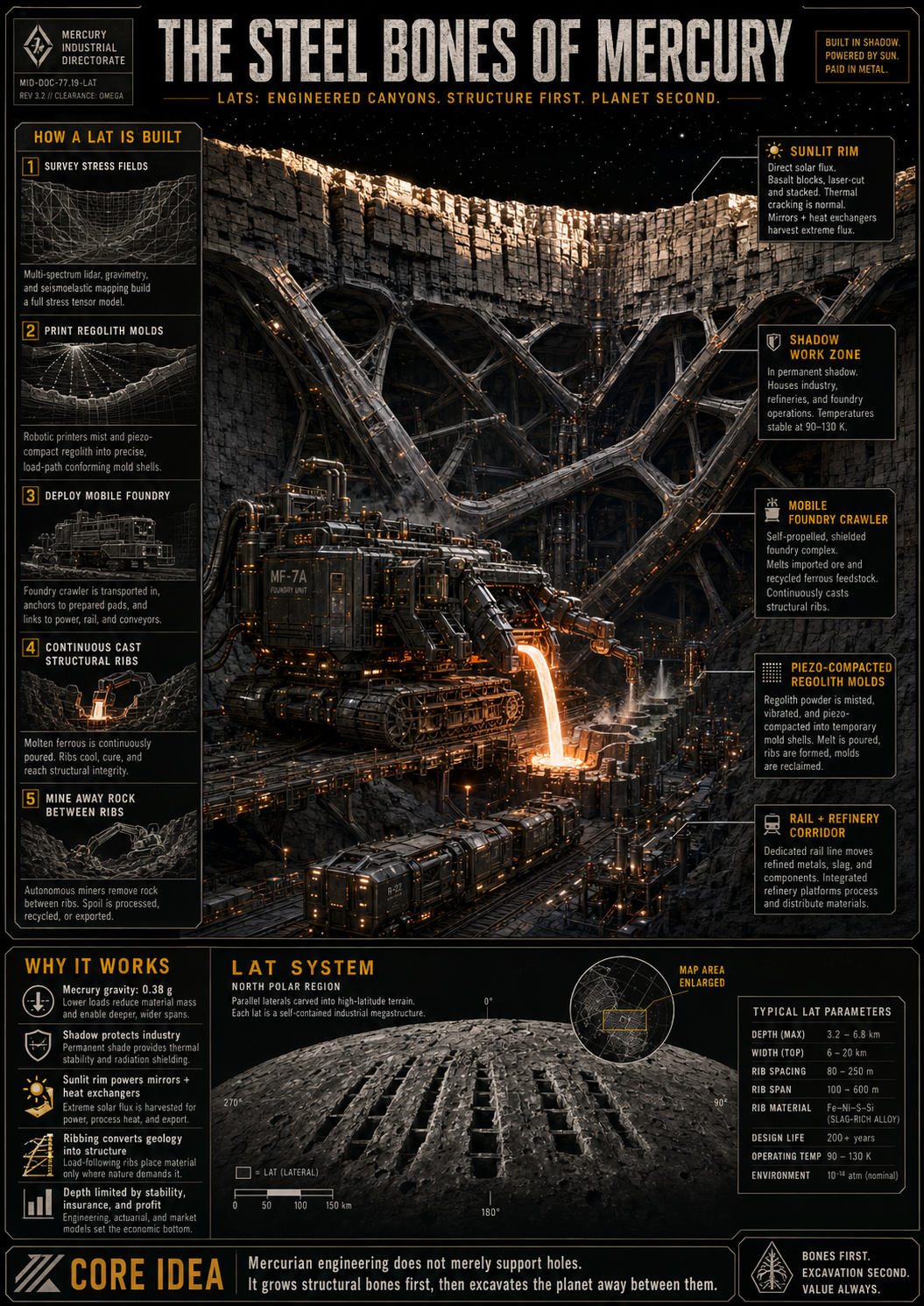
That was what all the trenches meant. Each cut into the regolith was not merely habitat or transport corridor. It was an argument written in stone and heat: we are here, we can survive here, we can build here, we can export from here, we can beam power across the system, and you will negotiate with us because your cold little empire beyond Jupiter needs our sunlight.
The tragedy, if one wanted to be boring and moral about it, was that they were right.
The outer system clients despised them, feared them, mocked their accents, sanctioned their militias, complained about their labor practices, funded their rivals, and still bought beam time. The Labi-Koreans called them dirty and leased trench rights through shell companies. The Mak-PHurb laughed at their clan politics and sold them interface kits at a markup. The Loveless Cultists quietly modeled their expansion and concluded, without emotion, that Boer persistence was a major structural variable in all mid-century energy scenarios.
On Earth, commentators made documentaries. They spoke of extremism, resource fever, masculinity under pressure, postnational enclaves, frontier myth, and the psychological deformation caused by irreversible migration. They were not wrong. They were also not useful. None of them had ever stood on a Mercurian trench rim while the sun burned white off the upper heat exchangers and the bottom of the cut lay black as a mine shaft, alive with machines, amber lamps, shouted maintenance codes, and a flat armored train waiting in shadow with two thousand tonnes of export mass.
To understand the Boers, you had to look down into that trench and understand that it was not a workplace.
It was a vow.
Every sloped wall, every sintered block, every radiator tooth on the rim, every crawler in the branch tunnels, every patched drone, every forbidden transfer through PaulKruger, every contaminated filter burned and logged and buried, every fight in a machine bay, every child taught to read rail telemetry before bedtime stories — all of it served the same vast, ugly promise.
They had paid too much to arrive.
They would not be leaving poor.