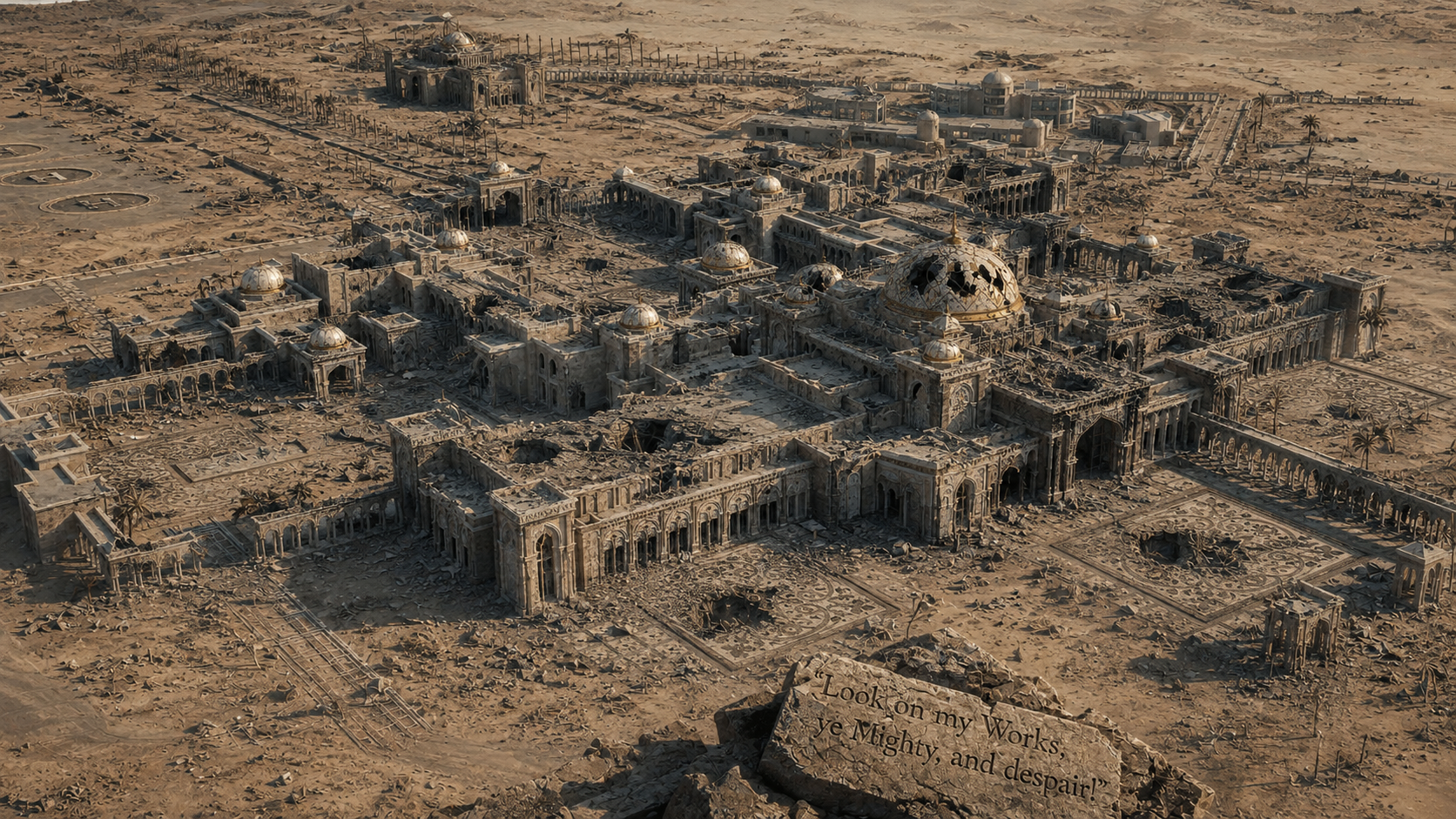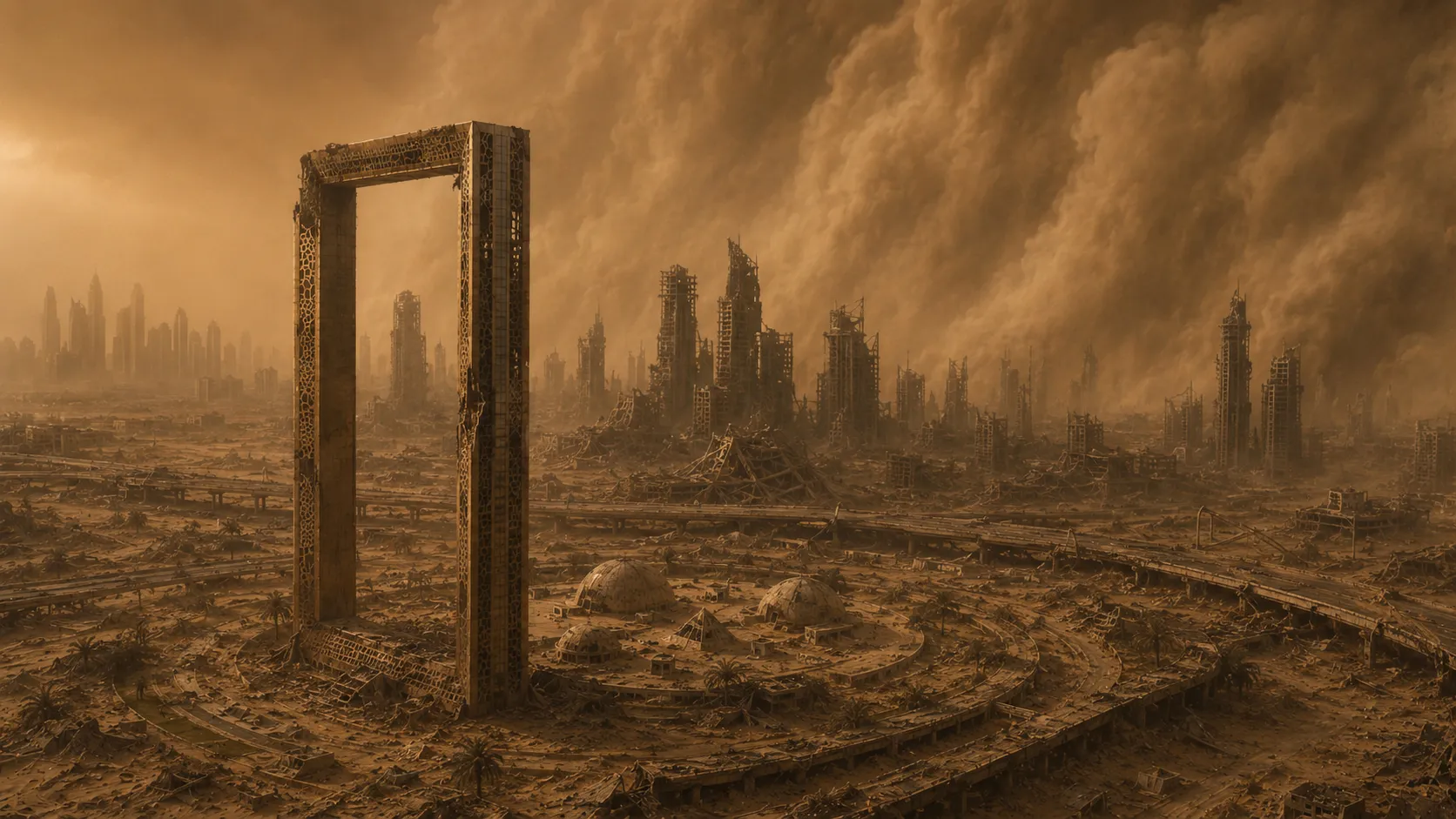
We all feel it now, somewhere between the ribs and the unpaid electricity bill. We are approaching the end of an era in which words still technically mean things, but only because nobody has yet had the administrative courage to admit otherwise.
Work means security, except when it does not. Education means advancement, except when it means debt and six interviews for the privilege of answering emails beneath a motivational poster. Property means safety, except when the roof leaks, the insurer flees, the mortgage doubles and the neighbourhood is cooked into an outdoor crematorium. Investment means sacrificing something today to create something useful tomorrow, except when it means giving a billionaire four hundred million dollars to construct a software-powered spoon.
Our intuitions have deserted in formation. The maps are still being printed, the compasses still sold in tasteful brushed aluminium, but north has quietly resigned.
One of the clearest symptoms of this collapse of intelligibility is the mass disintegration of investability.
An investment is supposed to be a claim upon a future that can plausibly exist. You spend resources now, build something, maintain it, and receive something useful later. A bridge, a railway, a machine, a hospital, a house. Even a factory producing rubber ducks qualifies, provided somebody genuinely wants the rubber ducks and the factory does not require the annual electrical output of Belgium.
But today, assigning something a price is treated as proof that it has value. Put it in a spreadsheet, introduce it to three consultants, issue a glossy prospectus containing the word “ecosystem,” and behold, value has occurred.
O Market, thou art so clever.
O Capital Allocation Committee, thou art so tremendously large.
O PowerPoint deck of seventeen slides, thou hast converted a hole in the ground into an emerging asset class.
Money itself is not wealth. Money is a claim upon wealth, a transferable little permission slip entitling the bearer to ask for food, land, medicine, labour or silence. It is a consensual fiction, although, like most consensual fictions, the consent becomes rather theatrical once bailiffs arrive.
For those without power, money is oxygen. Without it, doors close. Machines stop. Landlords become metaphysical. Doctors vanish behind invoices. The world remains physically present but withdraws permission to be touched.
For those with power, money is almost beside the point. They have assets.
Assets are the actual machinery of command: land, buildings, energy systems, shares, patents, water rights, political access, legal immunity, distribution networks, data, armed guards and the charming ability to telephone someone who can make a problem disappear into a subcommittee.
Money is what assets exude. Sometimes perfume. Sometimes gas.
The rich do not possess an enormous pile of money in the way Scrooge McDuck possesses coins. They possess structures that cause money to continue happening to them. Their assets sit there gently perspiring revenue while somebody else rises at five in the morning to scrub the perspiration from the marble.
This is why the financial system is, at heart, an extraordinarily ornate grovelling infrastructure.
Credit is not merely a neutral assessment of future repayment. Credit is society deciding whose promises count.
A billionaire says, “I shall repay you from future growth,” and ten banks experience a collective erection.
A poor person says, “I need six hundred euros to repair the boiler,” and is asked to provide three years of documentation, undergo a moral autopsy, surrender a kidney and explain why they purchased a sandwich in February.
Credit is the polite language of “please, sir.”
The person below asks permission to survive. The person above issues instruments.
Our economic language is saturated with ritual submission. Service. Client relationships. Networking. Stakeholder engagement. Executive assistance. Hospitality. Personal branding. All the dainty lacework placed around the fundamental transaction: someone powerful wishes to be gratified, and a procession of lesser organisms forms outside the door.
The vulgar metaphor is oral servitude because the vulgar metaphor is accurate. We have merely professionalised it, accredited it and given it a lanyard.
The modern economy has produced millions of people whose primary function is to kneel upright.
They advise. They reassure. They facilitate. They curate. They optimise the emotional weather surrounding capital. They tell some hereditary pudding that his idea for an app-controlled necktie represents a paradigm shift in wearable finance.
This is lackeyisation.
Naturally, the powerful cheat.
This is not a shocking discovery. One does not peer into the mechanisms of finance and gasp, “Good heavens, the duke has marked the cards.” The duke owns the casino, the cards, the printing press and the newspaper reporting that the game remains robust.
The trick is to multiply claims upon reality much faster than reality itself.
Debt expands. Valuations rise. Future profits are dragged into the present, tarted up, securitised, sliced into attractive little portions and sold to pension funds. Houses become financial instruments. Land becomes a yield vehicle. Human attention becomes inventory. Illness becomes recurring revenue. Loneliness becomes engagement. Childhood becomes a market segment.
Nothing merely exists. Everything must emit a claim.
Eventually, the butter is churned so violently that it becomes foam.
The foam looks impressive. It rises. It spreads. It occupies more space than the substance from which it came. Consultants gather around it and declare that volume has increased.
Unfortunately, foam is mostly air.
The exact ratio between financial claims and material capacity is impossible to calculate cleanly, because finance has been designed by men who regard clarity as a regulatory threat. But the broad condition is obvious: society has promised itself vastly more future wealth than its physical systems can plausibly deliver.
Too many pensions, too many returns, too many valuations, too many leveraged expectations, too many rich people requiring their wealth to grow at seven percent forever, as though the planet were a savings account managed by God.
O Compound Interest, thou art eternal.
O Exponential Curve, thou shalt continue upward until every atom in the universe is pledged as collateral.
O Future Generations, thou hast not yet been born, but we have already spent thy lunch.
The foam is not harmless simply because it is artificial. Financial claims possess courts, police, contracts and politicians. Foam can evict you. Foam can close a hospital. Foam can purchase the building in which you live and increase the rent because an algorithm in Connecticut has detected “under-monetisation.”
But financialisation does not stop at inflating prices. It reaches backward into matter and instructs matter to become stupid.
This is the great obscenity.
We have factories. Oil. Land. Metals. Energy. Skills. Engineers. Chemists. Architects. Machines capable of cutting titanium to tolerances measured in microns. We possess a species-wide technical competence bordering on sorcery.
And what do we do with it?
We manufacture yachts with cinemas.
We build seventy-room houses for families of four.
We produce automobiles the size of municipal libraries so that one accountant may travel six kilometres to purchase moisturiser.
We fabricate disposable clothes designed to disintegrate before the worker who stitched them has finished paying for breakfast.
We build towers whose principal function is to be photographed from other towers.
We construct artificial islands shaped like logos.
We create shopping centres containing aquariums large enough to make the fish feel financially inadequate.
This is not an absence of productive capacity. This is productive capacity captured by status panic.
A civilisation can be fabulously productive and still produce mostly rubbish. In fact, advanced rubbish requires astonishing expertise.
A McMansion is not primitive. It is a highly coordinated insult involving concrete suppliers, mortgage brokers, zoning lawyers, interior designers, HVAC engineers and a marble kitchen island large enough to host the trial of Charles I.
A superyacht is not useless because it is simple. It is useless at an industrial scale.
Thousands of skilled people labour to build an object whose purpose is to allow one bloated princeling to experience the sea without encountering the public.
The economy calls this growth.
Schools are costs.
Hospitals are costs.
Affordable housing is a distortion.
Public transport is unrealistic.
Clean water infrastructure must demonstrate a return.
But a private aircraft with a marble lavatory is value creation because a man in loafers has purchased it.
O GDP, thou most magnificent bucket.
Into thee we pour medicine and murder, education and gambling, sewage treatment and yacht varnish, and thou judgest all liquids equally.
What a splendid measuring device.
A bucket.
This absurdity becomes worse when elite overproduction enters the picture.
Peter Turchin’s term is useful here. Societies produce more aspirants to elite status than they possess actual elite positions. Too many graduates, financiers, consultants, political heirs, minor celebrities, venture-capital tadpoles and dynastic loafers emerge expecting the full princeling package.
Not comfort. Rank.
Not sufficiency. Deference.
Not a good house. A house which causes another person to feel unsuccessful.
There are only so many cabinet posts, board seats, professorships, media empires and hereditary cushions available. Thus the economy must manufacture simulations of aristocracy for people who have mistaken a master’s degree and a podcast for a divine mandate.
More luxury districts.
More premium lounges.
More velvet ropes.
More executive tiers.
More penthouses.
More brands whose sole product is the sensation that someone else cannot afford them.
Every aspiring prince requires servants. Every servant requires supervisors. Every supervisor requires a consultant. Every consultant requires a thought-leadership conference in a hotel shaped like a tuning fork.
The court expands until the palace consumes the kingdom.
And then we arrive at the central problem: an asset is not merely a physical object.
This seems obvious, but financial civilisation has spent fifty years pretending otherwise.
A skyscraper is not concrete and glass. It is electricity, cooling, lifts, pumps, fire suppression, water pressure, replacement parts, software, technicians, roads, insurance, policing, telecommunications and thousands of people willing to perform maintenance while being priced out of the city they maintain.
A marina is not a hole containing water. It is dredging, pumps, seawalls, fuel, security, finance, wealthy visitors, aviation and the continued existence of leisure as a social category.
A luxury mall is not a building. It is refrigerated atmosphere surrounding handbags.
Remove the atmosphere and the handbags become archaeological evidence.
Modern assets are dependency bundles. Their apparent solidity conceals a nervous system of invisible services. Their value exists only while the entire bundle remains intact.
This is why investability is disintegrating.
We no longer know whether today’s assets are tomorrow’s infrastructure, tomorrow’s stranded capital, or tomorrow’s extremely expensive tombs.
And now, at last, Dubai.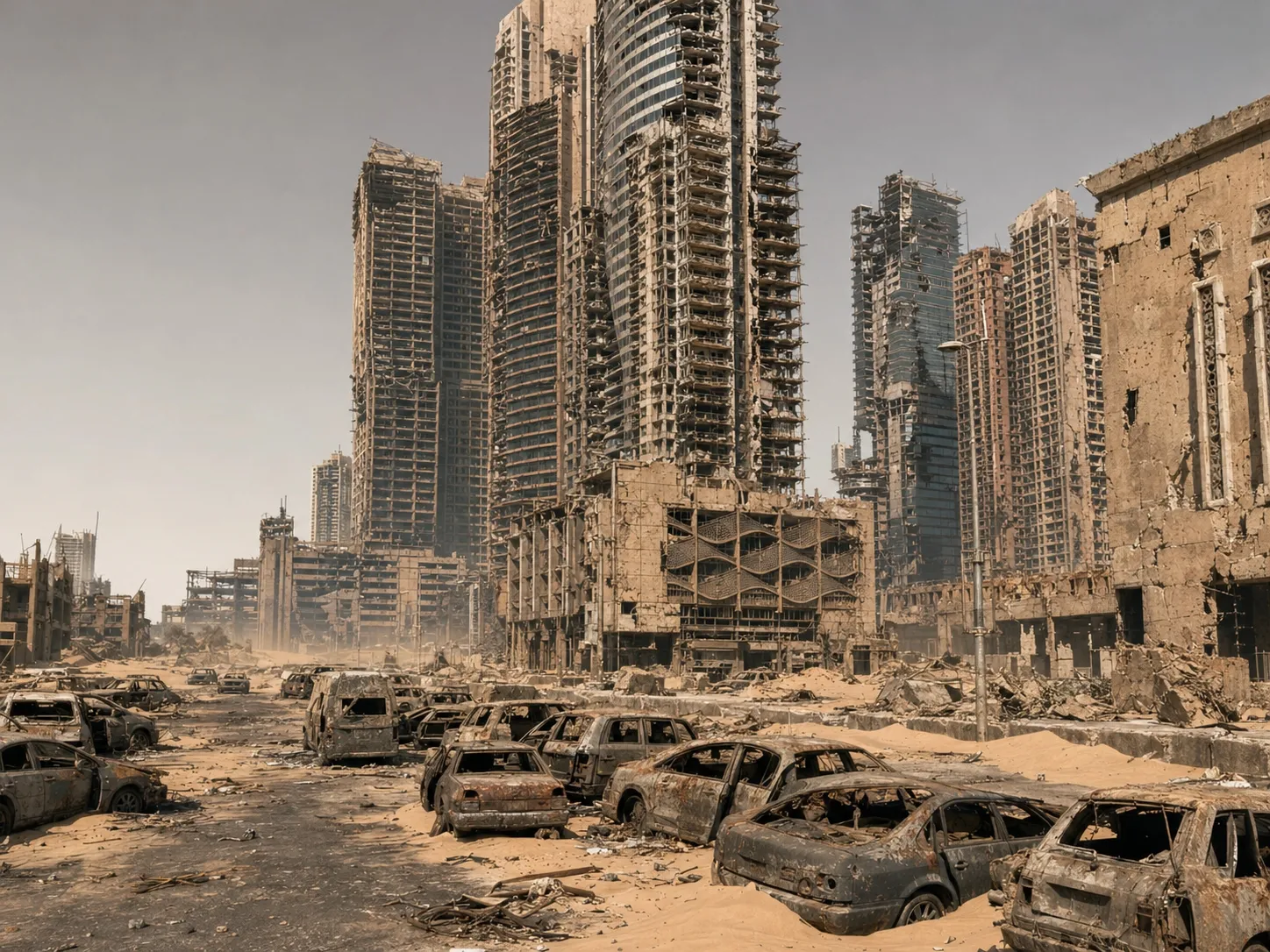
Dubai is not merely a city. Dubai is what happens when a spreadsheet achieves municipal sovereignty.
It is the sublime apotheosis of financialised matter, the absolute nadir of bullshit stuff, an entire urban civilisation constructed to answer the question: “What if a prestige brochure became load-bearing?”
Behold the towers.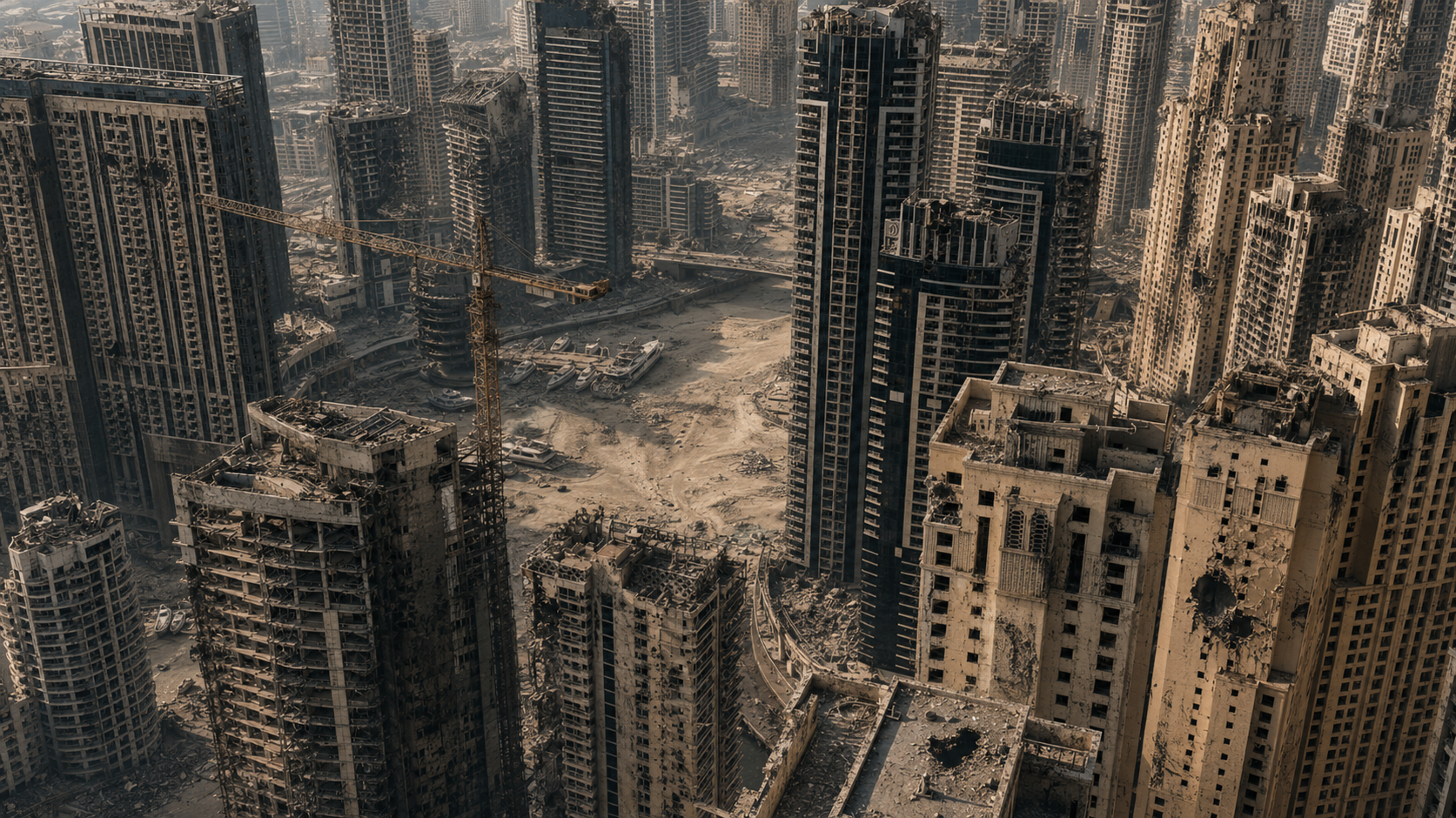
Behold the artificial islands.
Behold the aquariums inside shopping centres inside deserts.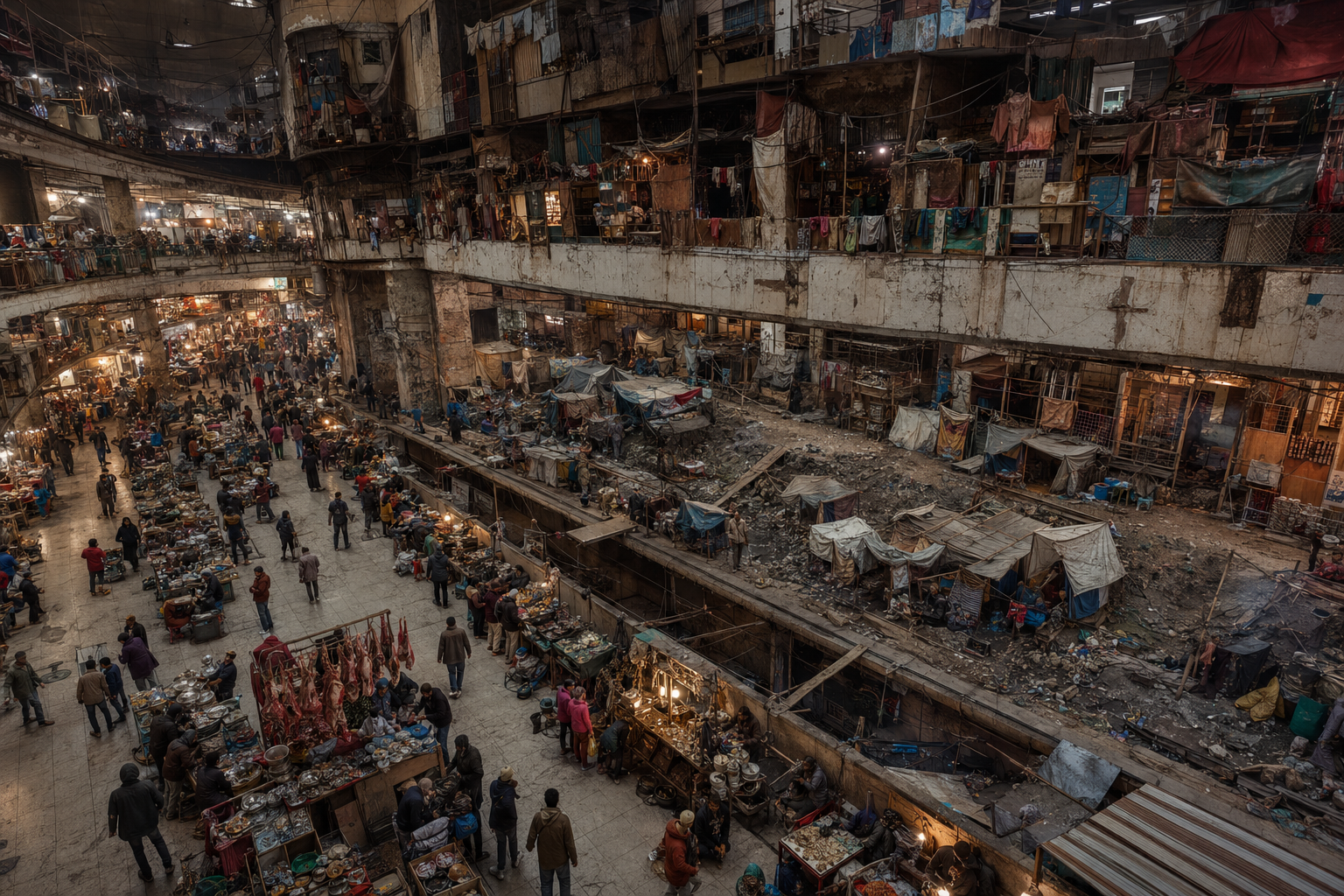
Behold the lawns growing in a climate that regards grass as an inflammatory rumour.
Behold the glass façades, each square metre conducting a daily experiment into whether air-conditioning can defeat the sun.
O Dubai, thou art so big.
Thy roads are so wide.
Thy foyers are so polished.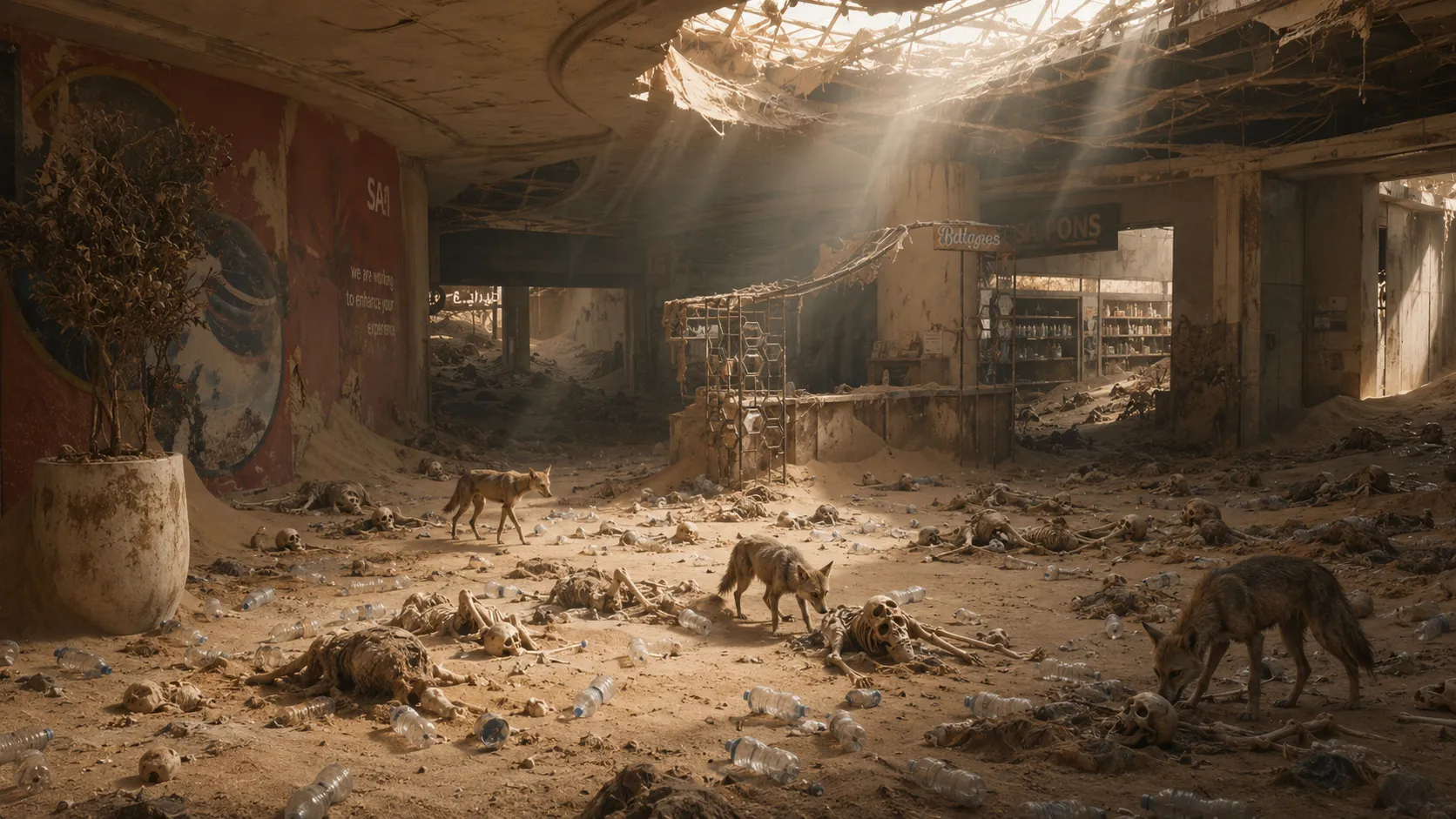
Thy fountains are so magnificently wet in a place where water must be manufactured by industrial force.
Surely this shall continue forever.
Surely energy shall remain cheap.
Surely desalination plants shall hum eternally. 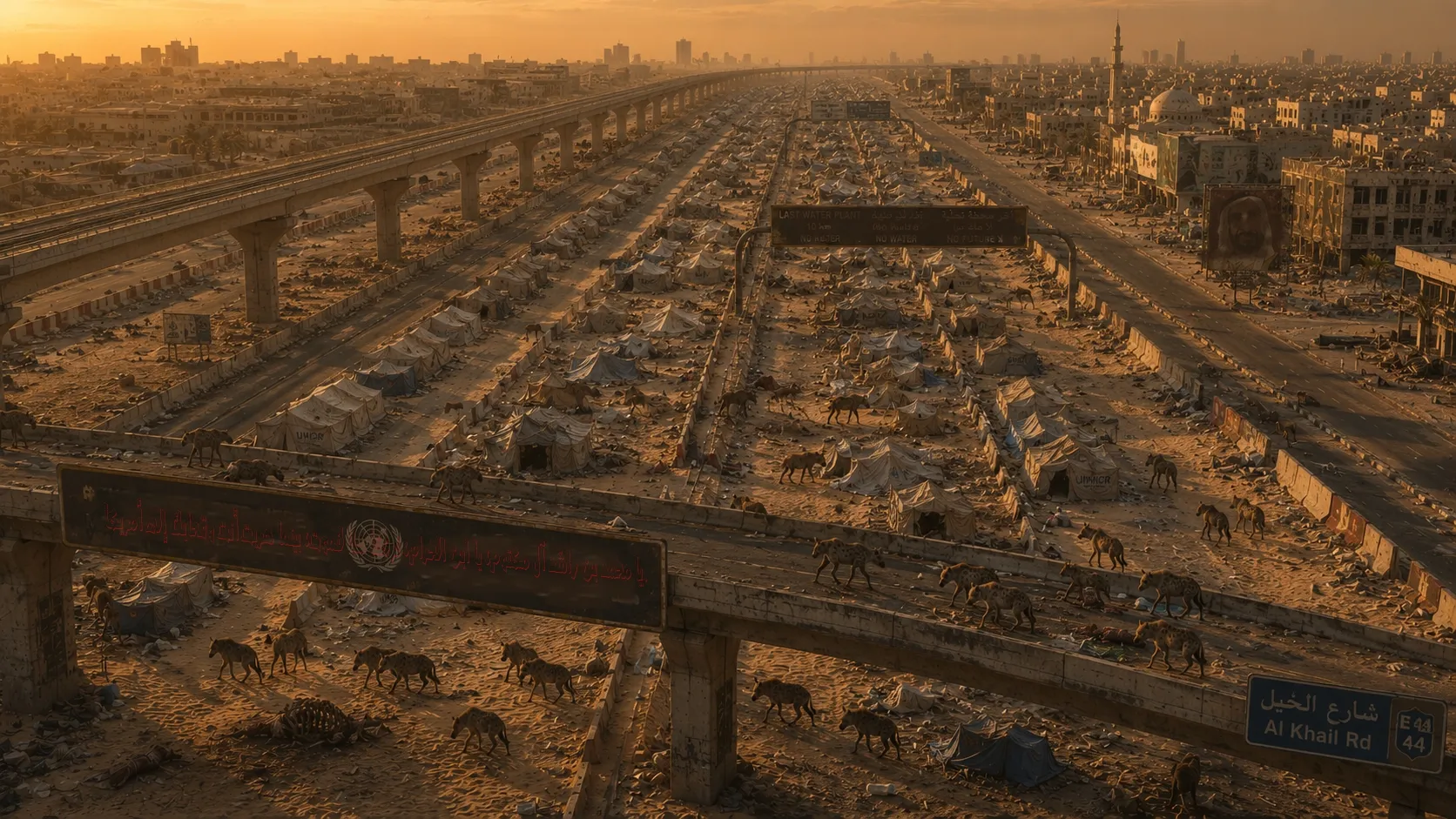
Surely imported food, labour, replacement glass, aircraft, insurance, finance and political stability shall arrive on schedule until the heat death of the universe.
Surely nothing unfortunate shall happen in the Gulf.
This is not investment in the traditional sense. It is an exquisitely arranged wager that every dependency shall remain obedient.
Every tower is a contract with electricity.
Every marina is a contract with pumps.
Every landscaped boulevard is a declaration of war upon geography.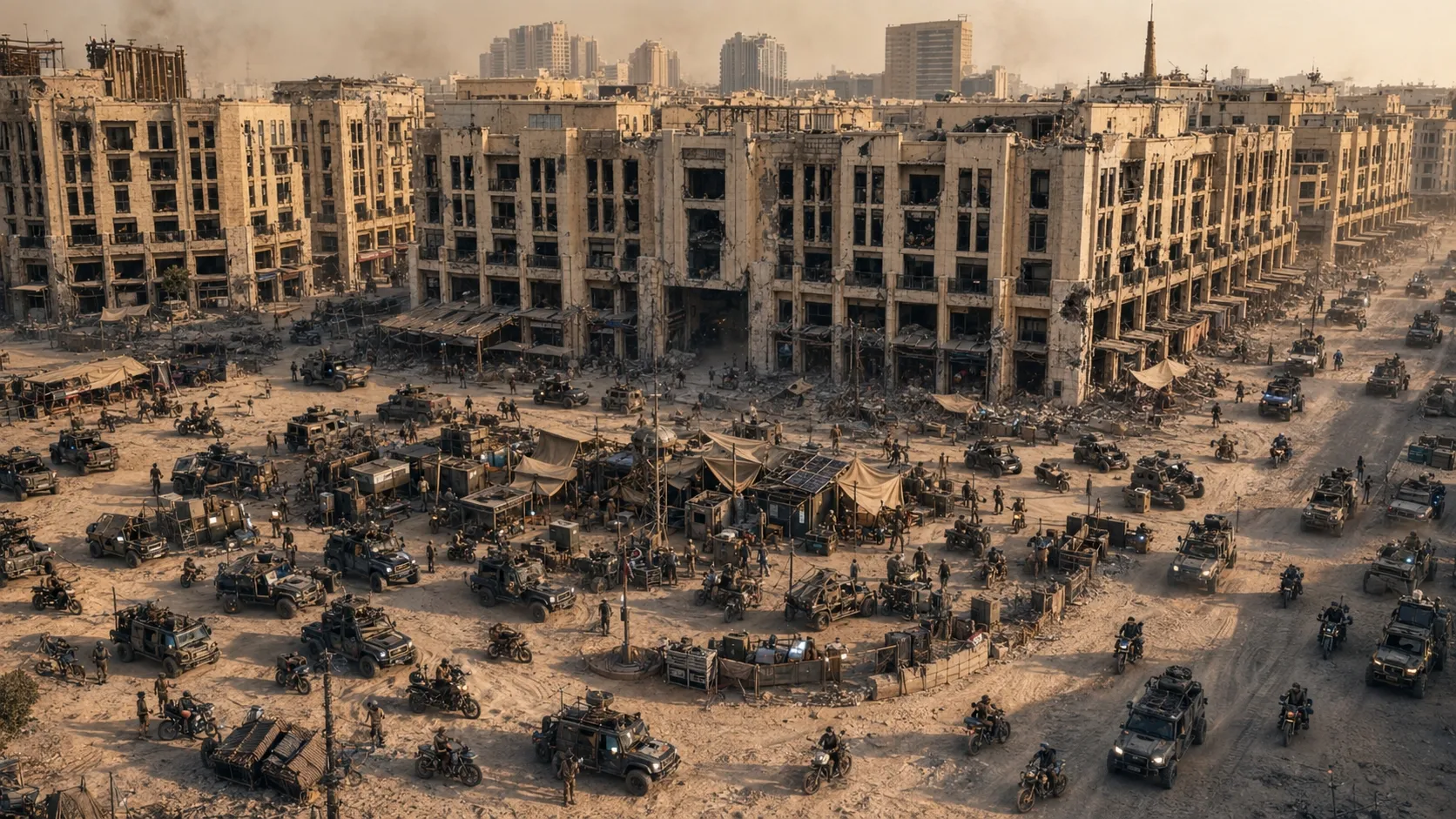
Every luxury development is an IOU written to geopolitical calm.
The entire city is stored expectation.
Its concrete does not contain its value. Its value exists in the continued operation of systems extending across continents. Shipping lanes. Fuel markets. migrant labour. International banks. Air routes. Insurance syndicates. Semiconductor supply chains. Desalination. Cooling. Security.
Interrupt a few of these and the transformation is immediate.
A forty-storey residential tower without reliable cooling is not affordable housing. It is a vertical kiln with concierge facilities.
A dry marina is not waterfront property. It is a ditch containing yachts which have discovered the principle of depreciation all at once.
A dead shopping mall is not retail space. It is a heat-retaining mausoleum with an abandoned food court.
A palace without water, electricity, security and servants is simply a quarry with chandeliers.
This is the great phase transition financial civilisation refuses to contemplate. An asset can become a liability without physically moving.
The building remains.
The price vanishes.
The maintenance bill salutes.
Imagine the interruption.
Oil prices buckle. Regional conflict damages ports, grids or desalination capacity. Insurance evaporates. Capital leaves first, because capital possesses excellent luggage. Skilled expatriates depart. Supply chains thin. Replacement parts fail to arrive. Water becomes rationed. Cooling becomes intermittent. Lifts become unreliable. Buildings designed for permanent mechanical life begin encountering ordinary thermodynamics.
The city does not instantly disappear.
That would be merciful.
It remains.
Millions of tonnes of concrete, steel and glass persist beneath an increasingly hostile sun. Structures too tall to maintain, too hot to inhabit, too specialised to repurpose and too expensive to demolish stand intact enough to be useless.
Stranded magnificence.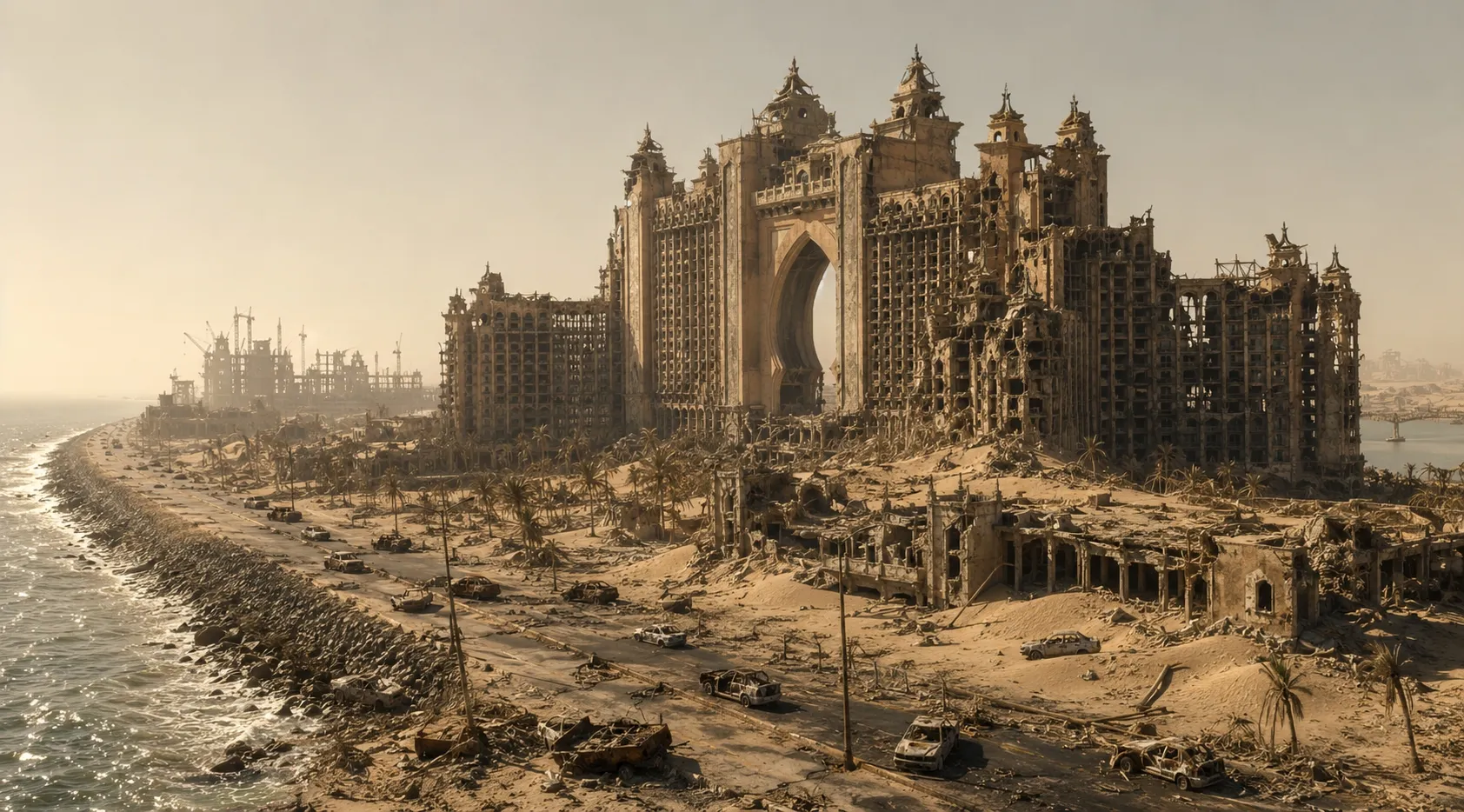
The largest paperweight in the known universe.
Humanity will have arranged a geological quantity of material into forms whose principal remaining function is to obstruct the wind.
Future scavengers will look upon the penthouses and marvel that kitchens once contained six ovens while entire labour camps contained no meaningful rights.
They will wander through dry aquariums beneath cracked acrylic panels.
They will sleep beneath escalators.
They will strip copper from hotel ballrooms whose carpets were chosen by committees.
Goats will browse in ceremonial gardens.
Sand will enter through shattered revolving doors and perform the only viable investment strategy remaining.
Accumulation.
Perhaps a surviving sign will still read:
THE FUTURE LIVES HERE.
It will be half buried.
A hyena will urinate on it.
This is the final write-off. Not a market correction, not a bad quarter, not a restructuring in which executives receive retention bonuses for remaining aboard the vessel they drilled holes into.
A write-off of an entire economic imagination.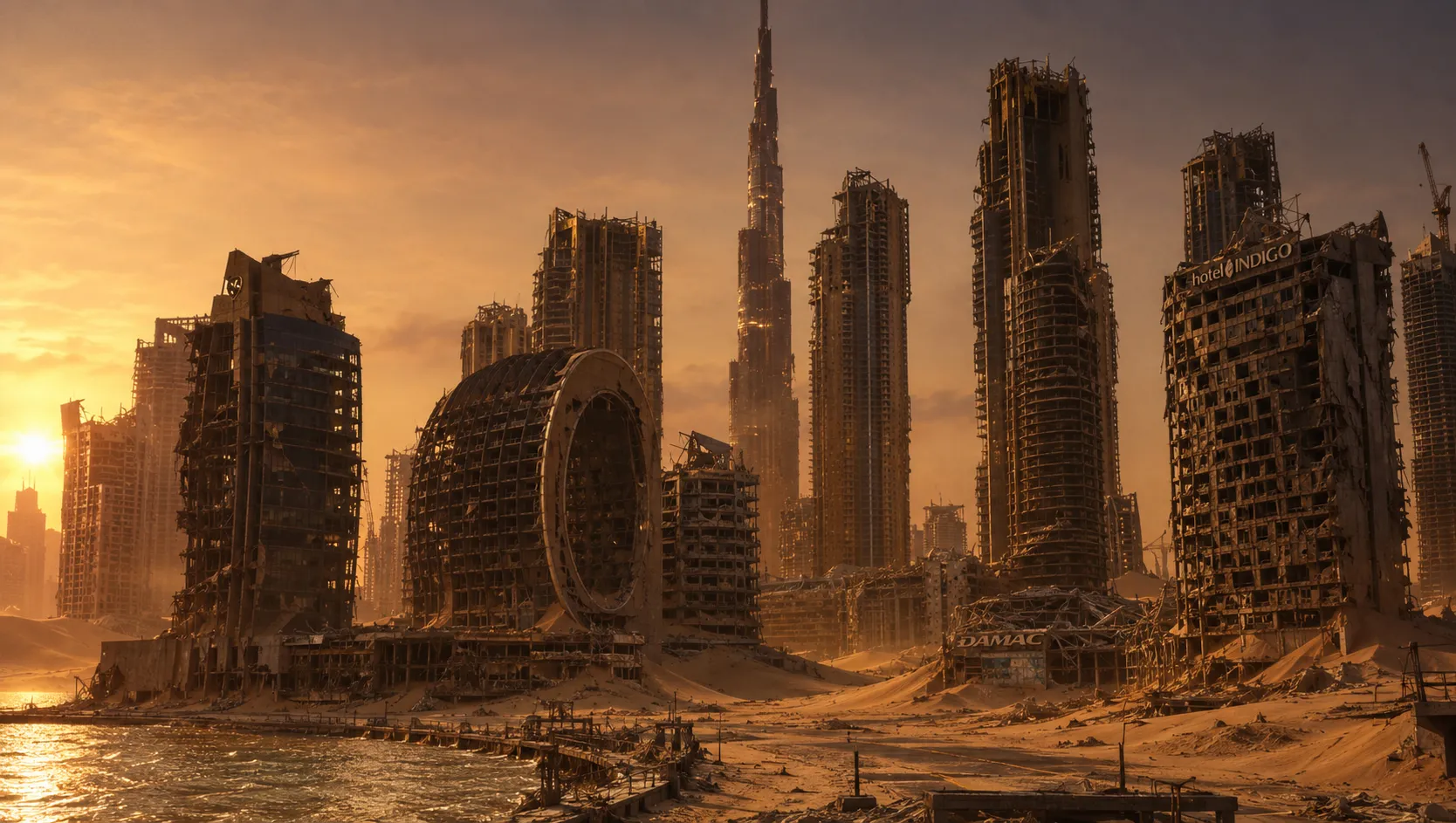
Dubai is merely the cleanest diagram because it compresses the pathology into a skyline. It converts energy, labour, water and credit into spectacle with unmatched efficiency. It reveals the governing confusion of our era: the belief that because something is costly to build, it must be valuable; because it is difficult to maintain, it must be sophisticated; because it photographs well, it must belong to the future.
But price is not value.
Complexity is not resilience.
Luxury is not wealth.
A dependency is not an asset merely because bankers have attached a yield to it.
The ruins will not represent the failure of technology. The technology worked perfectly. It pumped the water, chilled the towers, illuminated the islands and made fountains dance in the desert.
The failure was deciding that this was what technology was for.
That is why Dubai is the proper monument to the collapse of investability. It is a city in which matter has been organised according to the fantasies of finance rather than the durable requirements of life.
The towers are not fraudulent because they are unreal. They are horrifying precisely because they are real.
The steel was mined.
The concrete was poured.
The workers sweated.
The energy was burned.
The water was desalinated.
The future was consumed.
And for what?
So that capital could look upon its works and experience itself as enormous.
O Lord, it was so big.
O Lord, the atrium was seven storeys high.
O Lord, the aquarium contained sharks.
O Lord, the suite had three bathrooms.
O Lord, the city had an indoor ski slope.
O Lord, we were extremely serious people making disciplined long-term investments.
Look upon our works, ye mighty.
Do mind the broken glass.