Grand Theft Cyberpunk: Now THAT Is How You Do an Expansion
Cyberpunk 2077: GTA VI – Review | ★★★★★
So I have been playing the massive new Cyberpunk 2077 expansion, rather curiously marketed as GTA VI, and frankly, OMG. What an upgrade it is! I had anticipated something substantial, but I wasn’t quite prepared for the sheer geographical, narrative and mechanical ambition of this release.
The expansion adds an enormous stretch of the North American coastline, including subtropical coastal floodlands, communities struggling with sea-level rise, sprawling wetlands, impoverished rural settlements and, in what I consider an absolutely inspired design decision, “Vice City“. The contrast between the architectural brutality of Night City and the humid, neon-drenched decadence of Vice City is wonderful. These are two entirely different manifestations of the same dystopian civilization, and the geographical continuity between them makes the world of Cyberpunk feel considerably more plausible.
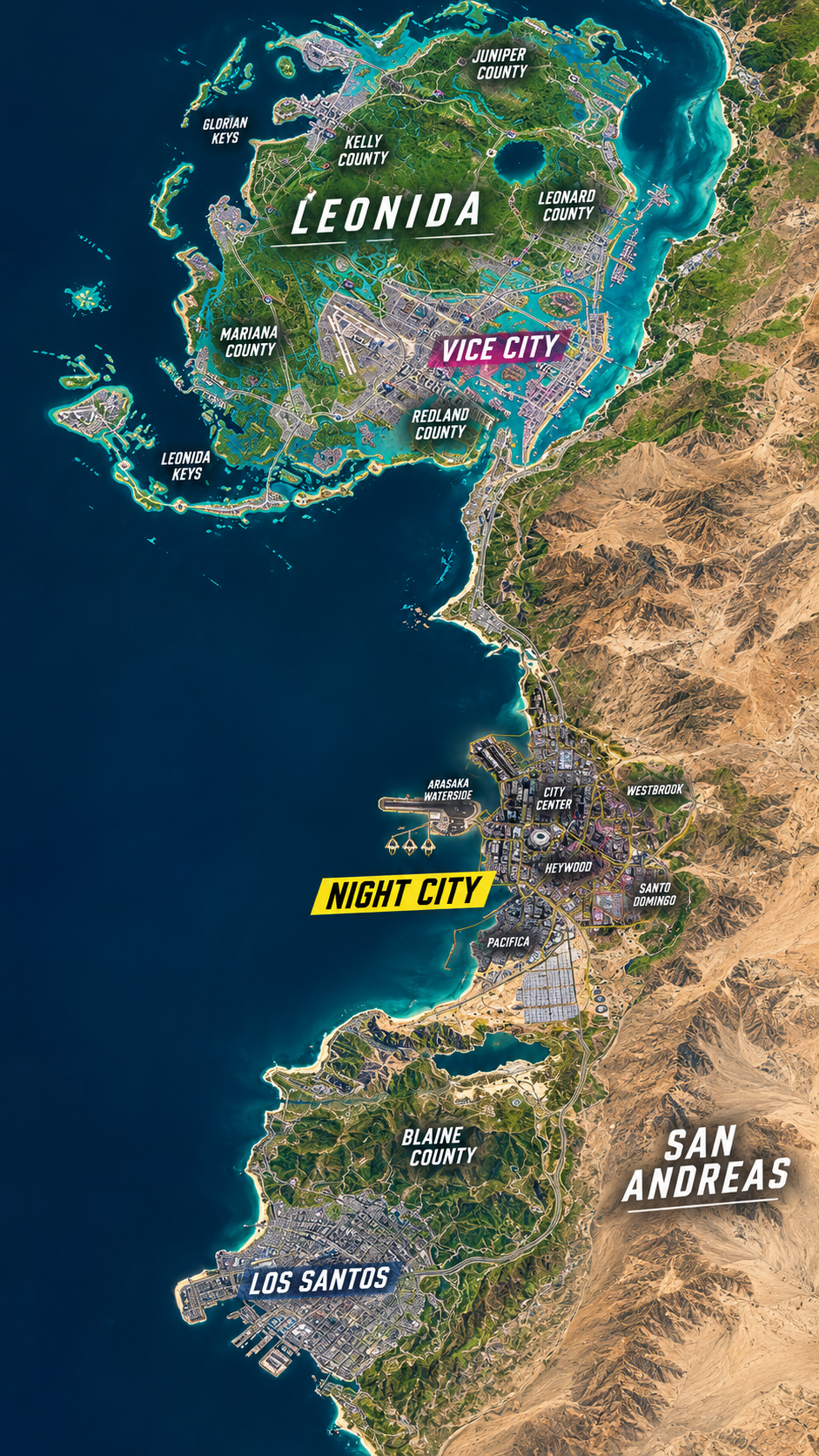
And WOW, is this map detailed. There are whole communities out there that have absolutely nothing to do with the central storyline. There are places you can spend an evening exploring without encountering a single scripted mission. The developers finally seem to understand that a convincing open world should not exist exclusively for the convenience of its protagonist.
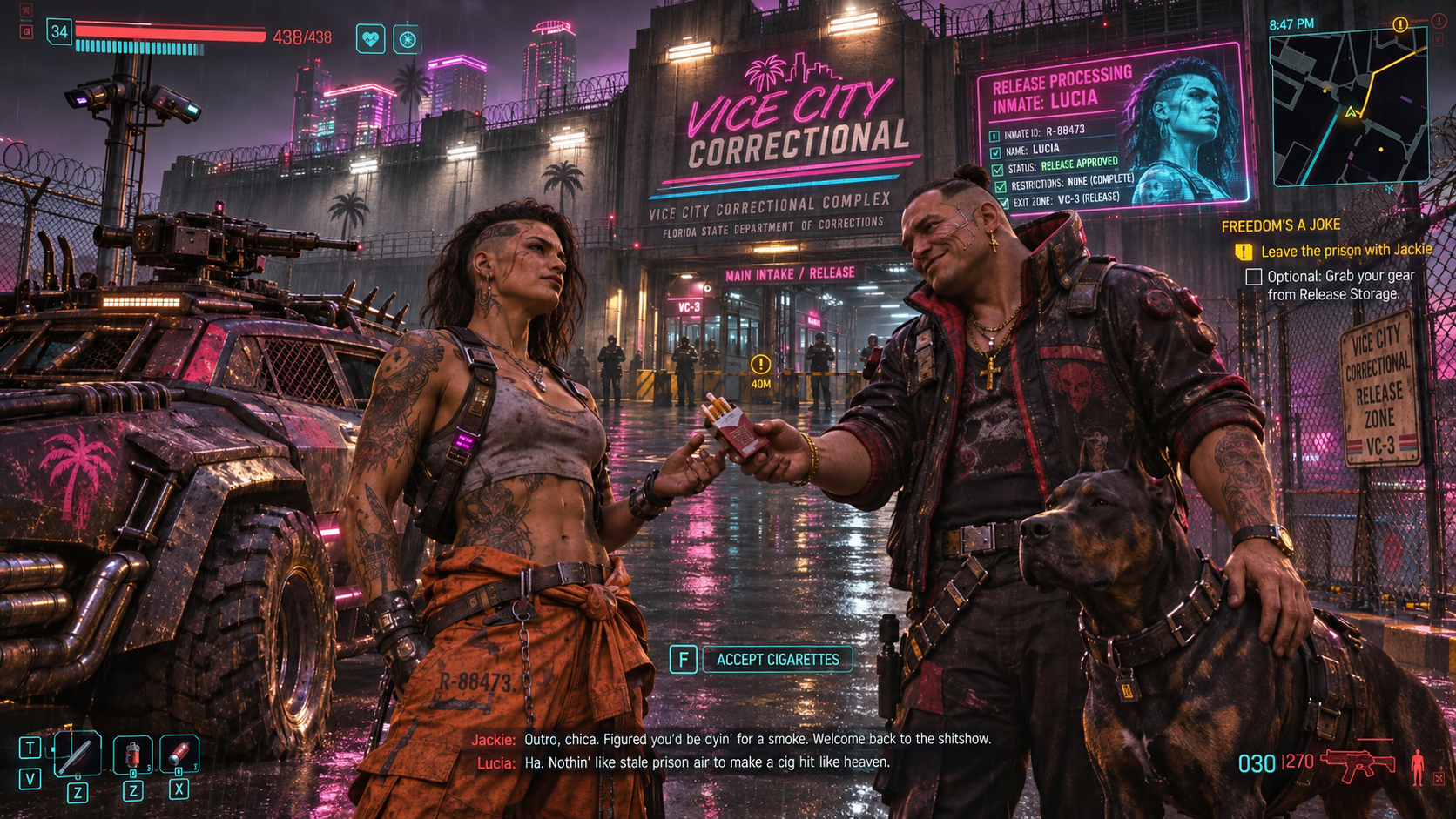
A Different Kind of Protagonist
I started with the ‘Dark Lucia’ solo scenario, selecting the particularly grim background in which her baby died during a botched robbery. We are introduced to Lucia as she is released from prison and picked up by none other than Jackie Welles.
That brought a little tear to my eyes. Hearing Jackie’s voice again, encountering him through the eyes of an entirely different protagonist, and realizing that this is a man with an existence independent of V was unexpectedly emotional. His relationship with Lucia is quite different from his relationship with V. There are recognizable mannerisms, certainly, but also sides to his personality that we never previously got to see.
The chronology is interesting. Lucia’s story appears to run partly before and partly parallel to the events of the original Cyberpunk 2077. Jackie eventually heads out to Night City proper, and what you have done with him prior to his departure has some rather surprising consequences.
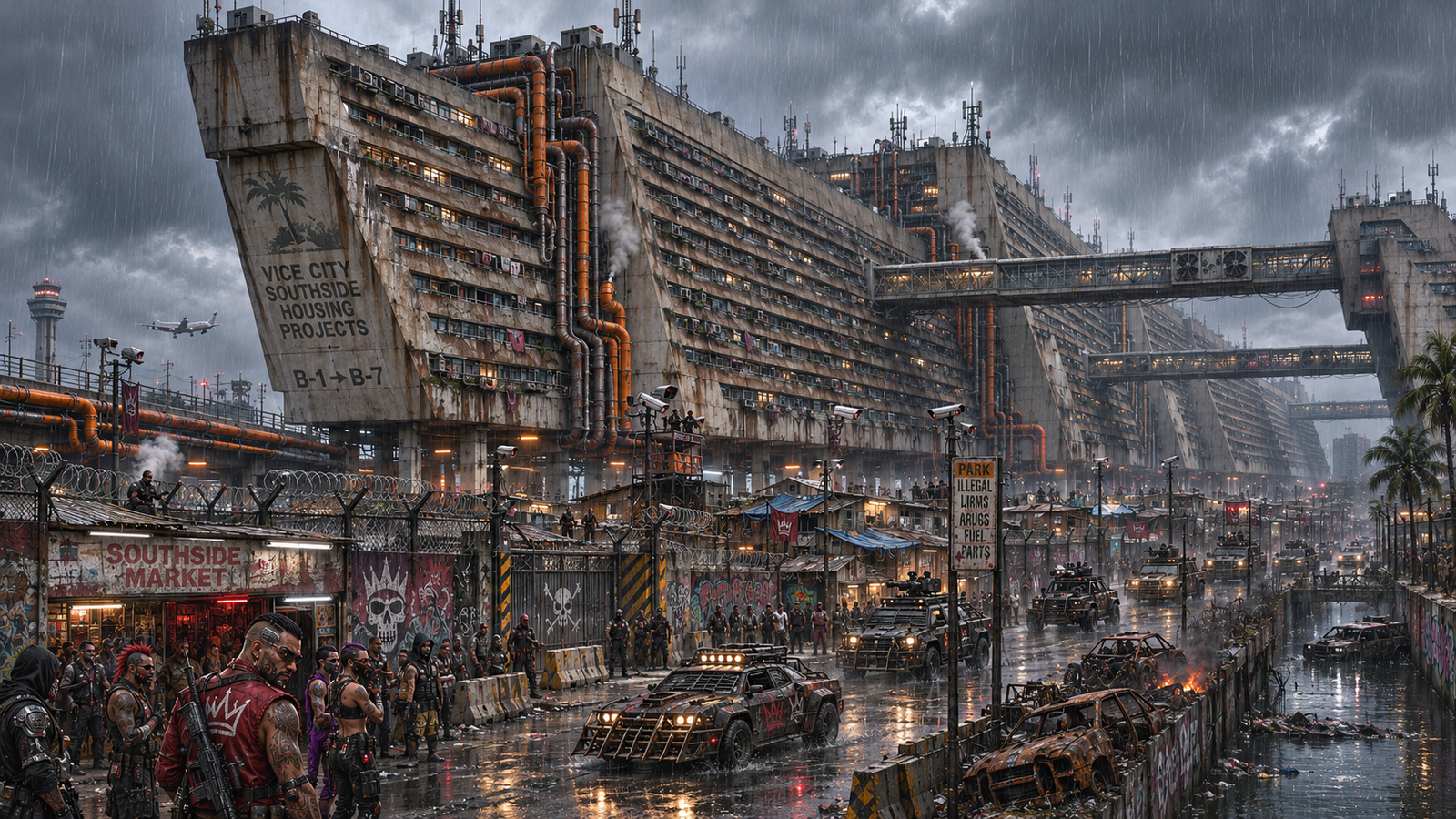
After selecting Lucia’s appearance, starter cyberware and psychological background, I picked Revolutionary from the five available career paths and was thrown almost immediately into the action. My starting locations included a modest operational base in the Leonidas Keys and an entirely newly designed megabuilding in South Side.
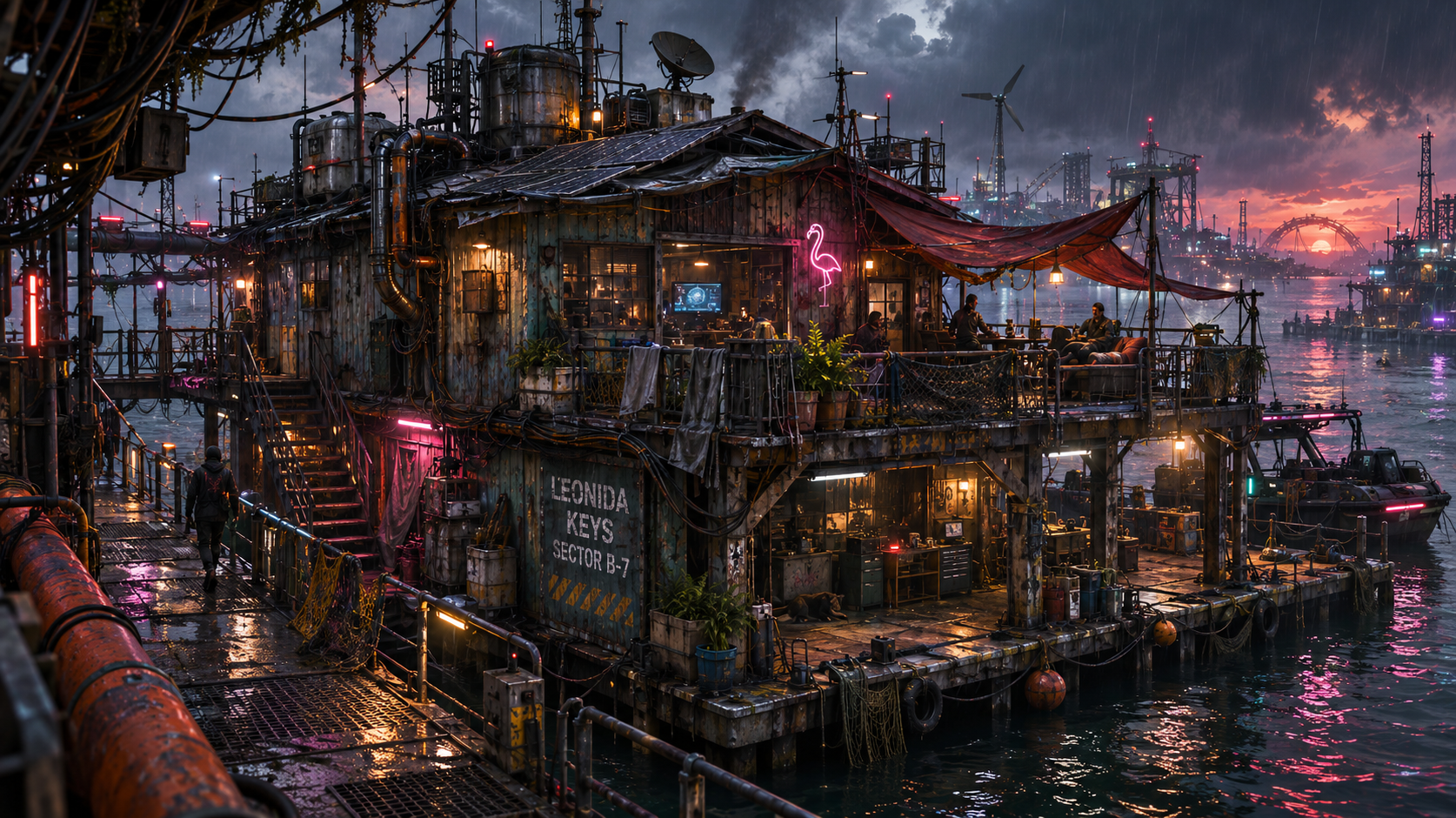
What I particularly appreciated was that Revolutionary did not feel like a conventional character class. It felt more like a commitment to a particular way of engaging with the world, something that other characters gradually recognize, accommodate, exploit or actively oppose.
Beyond the Original Combat System
The original Cyberpunk offered considerable scope for specialization: sniper rifles, swords, knives, blunt weapons, smart guns, hacking, submachine guns, stealth and technical weapons.
The expansion introduces a substantial number of additional disciplines, including:
- Infiltration hacking
- Drone control
- Laser weaponry
- Flamethrowers
- Tactical maneuvers
- Martial arts
- Intelligence and counterintelligence operations
That last category is particularly interesting because it is not simply another means of killing people. Intelligence allows you to cultivate sources, investigate organizations, manipulate information, anticipate betrayals and sometimes resolve entire mission sequences before anyone has drawn a weapon. Information itself has become a resource, and frequently a very dangerous one.
All of this meshes beautifully with the new third-person controls and vastly expanded vehicle combat. Vehicles no longer feel quite so much like transportation between the actual interesting bits of the game. They have become meaningful extensions of character specialization.
The ability to develop two characters simultaneously also allows you to team up with an online friend in two-player cooperative mode. I anticipate that this will eventually expand to four, eight and, given the sheer size of the environment, potentially much larger multiplayer scenarios.
There are places on this map where I could quite comfortably imagine a hundred players operating without constantly bumping into one another.
A World That Remembers
What I absolutely loved about Lucia was her freedom as a character. More so than V, Lucia feels like a person whose identity I am actively constructing rather than a predefined personality whose responses I occasionally get to select.
Throughout the campaign you get these constant echoes of V’s story. The death of Saburo Arasaka reverberates through corporate media. I encountered Solomon Reed very briefly, almost tangentially. Later, President Myers crashes in Dogtown and suddenly the news broadcasts are full of speculation, misinformation and competing corporate narratives.
Lucia has much her own problems. The events of the original Night city story are merely echoes compared to the sworling shitshow you find yourself embedded in and depending on your decisions become utterly drowning in one of three vast sprawling storylines. Note these these also are quite different depending whether you choose to play Jason Solo, Lucia Solo or Both Characters “Co-Op” mode. In the last version you have the freedom to grow a relationship between the two, although that takes effort, and the nature of the relationship can be … weird. In one version a friend played her Jason became Lucia’s BDSM submissive. I saw several online versions where “Jason put Lucia to work as a high class prostitute” of sorts, although that game play was apparently censored in US markets.
The first game storyline involves a major international smuggling operation attempting to reactivate sections of the abandoned Pan-American high-speed rail tube network. The second story branch concerns orbital communities and spacers who are being compromised by what appears to be a particularly disturbing variant of the Blackwall phenomenon – and this one is absolutely best in Co-Op where one is Hacker and the other is synergizing a powerful INT based cybernetics with smartguns – you literally use the computational hardware of your partner if within range. It is brutal.
The third involves a coalition of South American criminal organizations, some with exceptionally gruesome ritualistic practices, expanding into Midwestern territories occupied by Nomad communities. That one is best as Jason, with sniper rifle, assault rifle and the like, since male physique allows for much higher BODY stats than female physique in this game, even with muscle enhancement, bodybuilding and cybernetics.
You cannot meaningfully pursue all three storylines. Commitments close doors. Alliances make other alliances impossible. People remember what you did, and occasionally they remember things you would very much prefer them to forget.
The truly clever bit is that when I returned to playing V, some of the choices I had made as Lucia had become part of the background state of V’s campaign. Jackie’s equipment, dialogue and behavior were noticeably different when I restarted certain missions after playing through sections of Lucia’s story.
For once, narrative replayability means something more substantial than selecting the blue dialogue option instead of the red one.
Judy Alvarez, You Absolute Little Menace
Now we get to the nastiest part of my playthrough. Lucia will be able to date Judy Alvarez.
What I had not anticipated was that Judy can apparently date Lucia and female V during overlapping periods, and that the game actually simulates the consequences of this arrangement without necessarily informing either protagonist.
Playing the two campaigns in parallel, I gradually realized that Judy was cheating on V. Not through a dramatic scripted revelation, not through a conveniently discovered message announcing a love triangle, but through discrepancies in conversations, unexplained absences, little evasions and events I had personally witnessed while playing the other character.
Oh, Judy, you filthy little minx.
That adorable little face. Those enormous, expressive eyes. All that apparent emotional vulnerability.
You little liar.
What makes the writing particularly good is that I don’t think Judy was simply playing V. I think she genuinely loved both women and was attempting to compartmentalize two increasingly incompatible emotional lives. There were things she told Lucia that she never told V, things she told V that she carefully omitted when talking to Lucia, and a handful of statements that were demonstrably untrue.
Playing through the Clouds storyline with Lucia produced a radically different sequence of events. It also retroactively altered my interpretation of several conversations from the original Cyberpunk. Suddenly, some of Judy’s silences made considerably more sense.
I find this absolutely wonderful. A beloved character has been allowed to become more complicated, less immediately sympathetic and considerably more human. The game does not seem particularly interested in protecting the player’s emotional investment in her. Good.
I attempted something similar with Panam, but despite extensive exploration I was completely unable to locate the Aldecaldos camp as Lucia, at either of its familiar locations. Whether that was a consequence of my career path, my prior decisions as V or simply a different sequence of events, I have yet to establish. Jason can however date Thorn, and this is ample compensation. Thorn has a similar ass as Panam, and the first spicy scene is ….nasty. She goes straight to fifth base.
Being a Supporting Character in Somebody Else’s Game
One of my favorite moments occurred entirely unexpectedly.
I was playing Lucia in Dogtown when I caught sight of female V in the distance. Not some generic version of V. My V. My character, with the appearance, clothing and equipment I had previously selected.
She was performing SEMI RECORDED actions that I recognized from my own earlier playthrough.
The sequence wasn’t entirely seamless. I suspect the developers are recording certain mission-state variables and reconstructing events from a combination of scripted possibilities rather than literally replaying every player action. Nevertheless, I recognized a truck I had used during that particular mission, and I remembered exactly what happened to it.
Sure enough, while Lucia was stuck inside the casino, the truck exploded in the distance.
I could witness the event but could not meaningfully intervene. Somewhere out there, another protagonist was having her big cinematic moment, and for once I was merely a person in the surrounding world.
That was a deliciously disorienting experience.
For decades, open-world games have insisted on making the player the gravitational center of the universe. Everything waits for you. Everybody needs you. Entire criminal organizations, governments and existential threats politely suspend their activities until you arrive at the mission marker. Here, I was temporarily an incidental character in my own previous story.
More of this, please!
The Death of the Mission Giver
Vice City also substantially abandons the familiar system of geographically distributed fixers who call you the moment you enter their territory.
Instead, you acquire contacts through achievements, reputation, ideological commitments, professional specialization and sometimes entirely incidental encounters. Certain mission givers will never approach you if you have established relationships with their competitors. Some require you to demonstrate particular competencies before they even acknowledge your existence.
Others appear to have been quietly investigating you long before you realize they are potential sources of employment.
There were several instances where I strongly suspected that decisions made while playing female V were influencing the availability of contacts for Lucia. I have yet to properly disentangle those mechanics, which is exactly the sort of thing that encourages me to start another playthrough. I run a Male V and check out the chronology of events when I date Panam, for instance, and see how that feedbacks to running a solo Jason.
The game feels far less like a map covered in errands and considerably more like a society in which you are attempting to establish a position.
Two People, One Disaster
As I understand it, there is also a substantial storyline involving Jason, a child and the difficulties of maintaining a relationship under rather extraordinary circumstances.
Apparently, this branch has numerous endings, including one involving Solomon Reed and another featuring a spectacularly difficult Militech operation aboard an offshore oil platform, you can’t do either Solo.
That particular mission requires the player to constantly switch between two characters whose actions have immediate consequences for one another. I have encountered smaller versions of this mechanic in missions involving the various NPC’s Judy, Saint, Tweaker and Black Star – but NOT Thorn, Callahan or Razor. That wouldn’t make sense obviously.
Black Star, incidentally, is an absolutely wonderful robot. The game spends considerable time allowing you to become accustomed to its presence, its mannerisms and its increasingly peculiar understanding of human behavior.
Which makes its eventual (inescapable) death absolutely heartbreaking.
The fact that I was considerably more upset about the death of a piece of industrial machinery than several of the human casualties probably says something about the quality of the writing.
Dual-character missions are technically impressive and create opportunities for some genuinely interesting narrative structures, although they are not entirely my cup of tea. I tend to prefer the sustained immersion of inhabiting one character and experiencing the consequences of her decisions from a single, consistent perspective.
Still, I appreciate that the game is willing to experiment.
Vice City: The American Dream Has Sepsis
The undisputed star of the expansion is Vice City itself.
Night City was always a fairly explicit critique of corporate capitalism, technological alienation and the commodification of human existence. Vice City takes those themes, immerses them in tropical heat, adds recreational pharmaceuticals, influencer culture, luxury real estate, organized crime and industrial quantities of sexual exploitation, and turns the whole thing into a particularly obscene theme park.
It is a civilization that has successfully monetized virtually every conceivable human appetite.
The wealthy inhabit fortified coastal enclaves, protected from rising sea levels by private infrastructure. The poor live behind deteriorating flood barriers, in repurposed shopping complexes, improvised floating settlements and neighborhoods that periodically disappear beneath contaminated seawater.
You can travel from an obscenely luxurious nightclub to a flooded residential district in minutes. Both are serviced by the same corporations.
Vice City sells freedom as a lifestyle product while systematically reducing the number of meaningful choices available to its inhabitants. Its inhabitants are constantly invited to reinvent themselves, provided their reinvention conforms to one of a handful of commercially viable identities.
Sex, rebellion, authenticity, spirituality, political radicalism, even poverty itself have become marketable aesthetics.
There is something particularly vicious about the way the designers have juxtaposed this with Lucia’s own struggle for autonomy. You are playing a woman attempting to establish a meaningful existence in an environment that is constantly attempting to package her, categorize her, recruit her, exploit her or sell her back to herself.
I will admit that CD Projekt Red occasionally goes a little overboard. Some of the sexual exploitation is so relentlessly in-your-face that the satire risks becoming indistinguishable from the spectacle it is supposedly criticizing. There were moments when I wondered whether the developers were exposing the hypocrisy of consumer culture or simply enjoying the opportunity to render it in extraordinary graphical fidelity.
Then again, that uncomfortable ambiguity is rather characteristic of Cyberpunk.
Los Santos
I understand why, but Los Santos feels underdeveloped. There are gangs there, there are some stray missions there but nothing major. The whole region is huge – bigger than proper Night City and extremely complex, but empty. A lot like Pacifica before Dog Town in fact and I look forward to future upgrades in that area. Right now it’s awesome to drive through and for shoot-outs and vehicular combat with gangs but not much more.
Five Stars
What ultimately makes GTA VI such a successful Cyberpunk expansion is not simply the enormous map, the graphical improvements, the expanded combat system or even the extraordinary amount of new narrative content.
It is the willingness to treat the original game as the foundation of an expanding fictional civilization rather than as an isolated, disposable entertainment product.
Characters continue to exist when you are not playing them. Events can be experienced from multiple perspectives. Relationships develop beyond the player’s immediate supervision. A protagonist can become a supporting character in somebody else’s story. Entire narrative possibilities emerge from decisions made dozens of hours earlier, potentially in another campaign altogether.
The developers have understood that the most valuable thing they created with Cyberpunk 2077 was not necessarily V’s story.
It was a world.
And rather than throwing that world away, developing an entirely unrelated game, rebuilding the same fundamental mechanics from scratch and asking consumers to become emotionally invested in another isolated fictional universe, they have allowed that world to grow.
Imagine that.
Five stars. Absolutely outstanding expansion.
I look forward to seeing what they do with the next one.