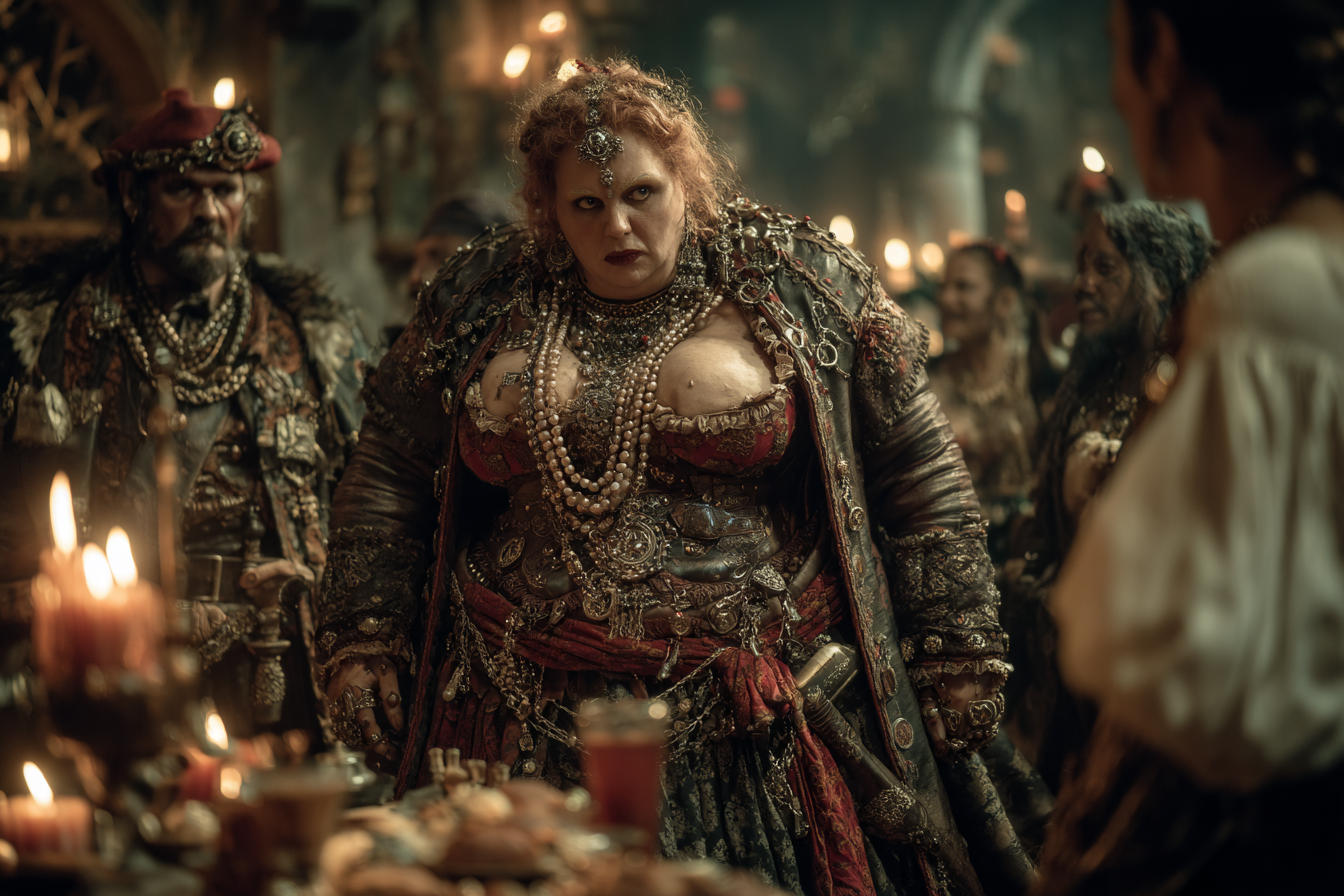
She had never loved him, and she refused to improve that fact merely because six centuries had made sentiment fashionable. Sonja had always regarded posthumous idealization as a particularly cowardly form of lying, because the dead could no longer slap you for editing them. Leo had been greedy, vain, treacherous when frightened, sentimental when drunk, and capable of terrible cruelty when somebody made him feel small. He had also been funny, useful, loyal in the strange intermittent way criminal men sometimes were, and possessed of an almost supernatural instinct for where things went after respectable society insisted they had ceased to exist. He had taught Sonja that respectable people paid twice, once for the service and once for being allowed to pretend they had not purchased it, and she had built entire businesses on that principle. She had been fond of him, perhaps even dependent upon him for a few years, but she had never mistaken dependence for love and had certainly never mistaken nostalgia for innocence.
That was why the tear irritated her so much. Sonja saw it forming in the mirror, caught it beneath one eye with a jeweled fingernail, and inspected the moisture with the offended concentration of a merchant discovering dilution in expensive wine. Tears offended her because they blurred information, and Sonja had survived for six hundred years by refusing blur wherever she could find it. Pain was information, fear was information, envy was information, lust was information, shame was extraordinarily useful information, and even hatred could be measured if one was sufficiently disciplined. Tears mixed all of these into water and encouraged everyone nearby to invent morality afterward. Sonja’s oldest private discipline had therefore been brutally simple: when alone before a mirror, Sonja MacEogann told Sonja MacEogann the truth, especially when the truth was ugly enough that anyone else would have softened it for her.
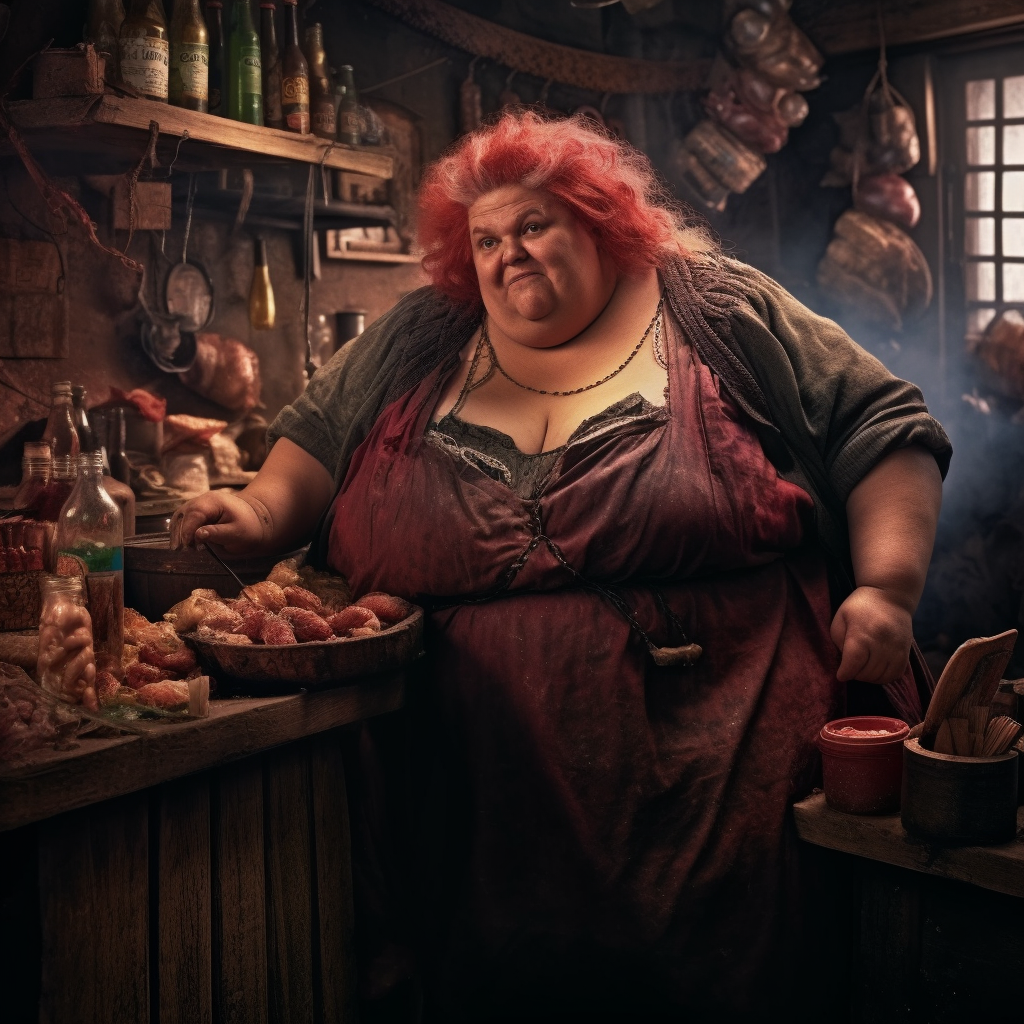
She looked at Fat Leo and understood exactly why she was crying, which made the crying worse. She did not miss Leo because Leo had been precious; she missed Leo because Leo belonged to a version of the Arena in which she herself had still been new. He belonged to streets that smelled of horse urine, charcoal, wet wool, onion fat, cheap incense, hot iron, bad drains and green wood smoke, to taverns where people drank sweet beer from ceramic jars and to alleys where a woman called Pella served goulash so heavily peppered that customers suspected it contained less meat than theology. Pella had died at forty-three, the alley had disappeared two centuries later, the building above it had become first a bathhouse, then a chapel, then a brothel, then a mortuary, then a warehouse for illicit prosthetics, and now a bookkeeping office which officially occupied no space at all. Sonja remembered each transformation, yet increasingly she could not remember the original alley without seeing traces of everything that came afterward bleeding backward into it.
That frightened her because memory had begun changing proportions. Doorways from her childhood seemed impossibly narrow now, courtyards too deep, ceilings too low, and Fat Leo himself occasionally occupied more vertical space in recollection than his documented height allowed. Sonja knew the ordinary explanations and despised them all, because ordinary explanations were for people who possessed only one nervous system in one uninterrupted body and therefore believed memory behaved like an old book whose pages simply faded. Sonja had been transferred, rebuilt, overwritten, restored, remade, revived and reinstalled enough times to know better. She did not know whether each transition had compressed something, expanded something, replaced something, or merely taught the next Sonja to remember the previous Sonja’s memories with sufficient conviction. The thought that her six centuries might consist partly of increasingly polished recollections of recollections was more obscene to her than physical decay, because a rotten hand could be replaced while a rotten certainty could infest everything that came after it.
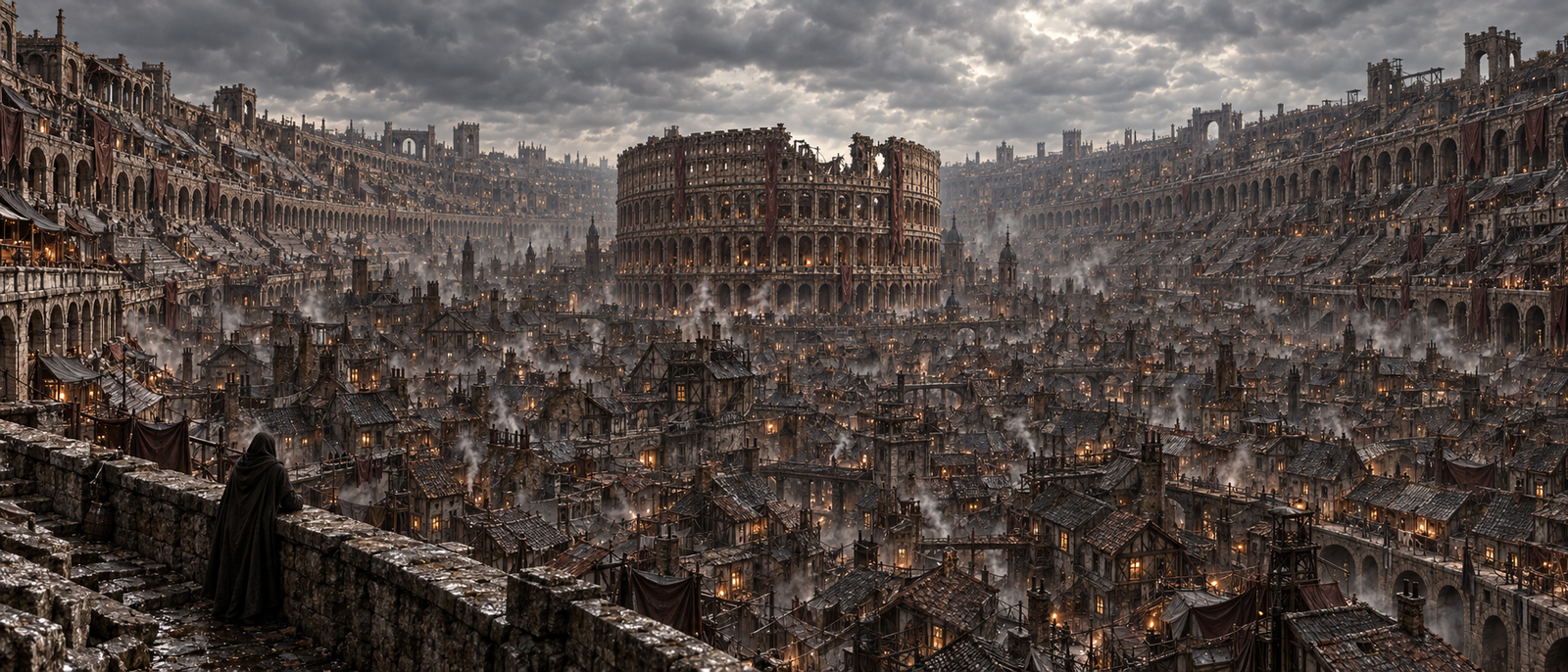
The Arena above and around her had grown equally unreliable. Six hundred years earlier it had been terrible in straightforward ways: crowded, filthy, dangerous, poorly drained, violent, hungry and alive. The present Arena had accumulated texture until straightforwardness itself had become impossible. Century after century had deposited another layer of habit, vice, masonry, law, corruption, superstition, sewage, enterprise, protection, architecture and undocumented compromise, until the district felt less built than sedimentary. Fat and salt and venom had collected in it. Streets had inherited old crimes without remembering their perpetrators, buildings had inherited old uses without admitting them, and entire blocks functioned according to arrangements whose original signatories had been dead for hundreds of years. Sonja sometimes walked through crowds who adored her and felt that she was moving through the digestive system of an animal that had started growing around her before anyone realized it was alive.
Below that animal lay the Secret City, and the Secret City frightened even Sonja. It had never been designed, which was precisely why it had become so powerful. Cellars had opened into drains, drains into crypts, crypts into warehouses, warehouses into forgotten foundations, and forgotten foundations into things nobody had built during any century for which records survived. Smugglers carved passages to avoid tariffs, necromancers excavated cool rooms, alchemists bored ventilation shafts, prostitutes acquired escape routes, criminal bookkeepers demanded offices with three exits, Revenants needed hidden storage for anatomical replacements, and everyone who wished not to be found eventually discovered that the earth beneath the Arena asked fewer questions than the law. Six hundred years of necessity produced an underground city whose topology had acquired the habits of rumor. There were stairs which descended farther than the structures above them possessed height, corridors which should have intersected but did not, and chambers whose opposite walls seemed to belong to different centuries.
Maps had been attempted, of course, because civilization persisted in believing a thing became safer when drawn on paper. Several attempts ended in failure, one ended in madness, and the most respectable survey ever commissioned simply omitted entire regions because the surveyors concluded that presenting their measurements as geometry would constitute professional fraud. Sonja knew routes through places where a person could walk straight for half an hour and emerge three houses sideways from where the line should have ended, and she knew walls whose inner faces were older than their outer faces by almost two hundred years. Certain doors opened only from one side on Tuesdays, although the mechanism had never been identified, while one stair had been bricked up repeatedly and continued to appear in different properties as though the masonry merely inconvenienced it. The Secret City had become an accumulation of human refusal, and Sonja had contributed enough layers that she no longer pretended to understand the whole thing.
Her servants understood more than anyone else, and this was one of the reasons Sonja respected them sufficiently to be afraid when they became quiet. Some were human, some had once been human, and several had survived so long in roles beneath the Arena that legal categories had become embarrassing. A few received wages, a few received offerings, a few received replacement components, and a few apparently desired nothing except uninterrupted continuation of duties assigned before the present Kingdom standardized calendars. Old ledgers classified them under headings such as MAINTENANCE, NIGHT HANDS and CELLAR PERSONNEL, until the Second Sonja, during an argument with an accountant, created the accounting category THOSE FUCKING THINGS and thereby accidentally established a bureaucratic term that remained in use for nearly two centuries. They were enormously competent, absolutely discreet, and aware of facilities beneath the Arena which Sonja herself visited only when perpetuity required it.
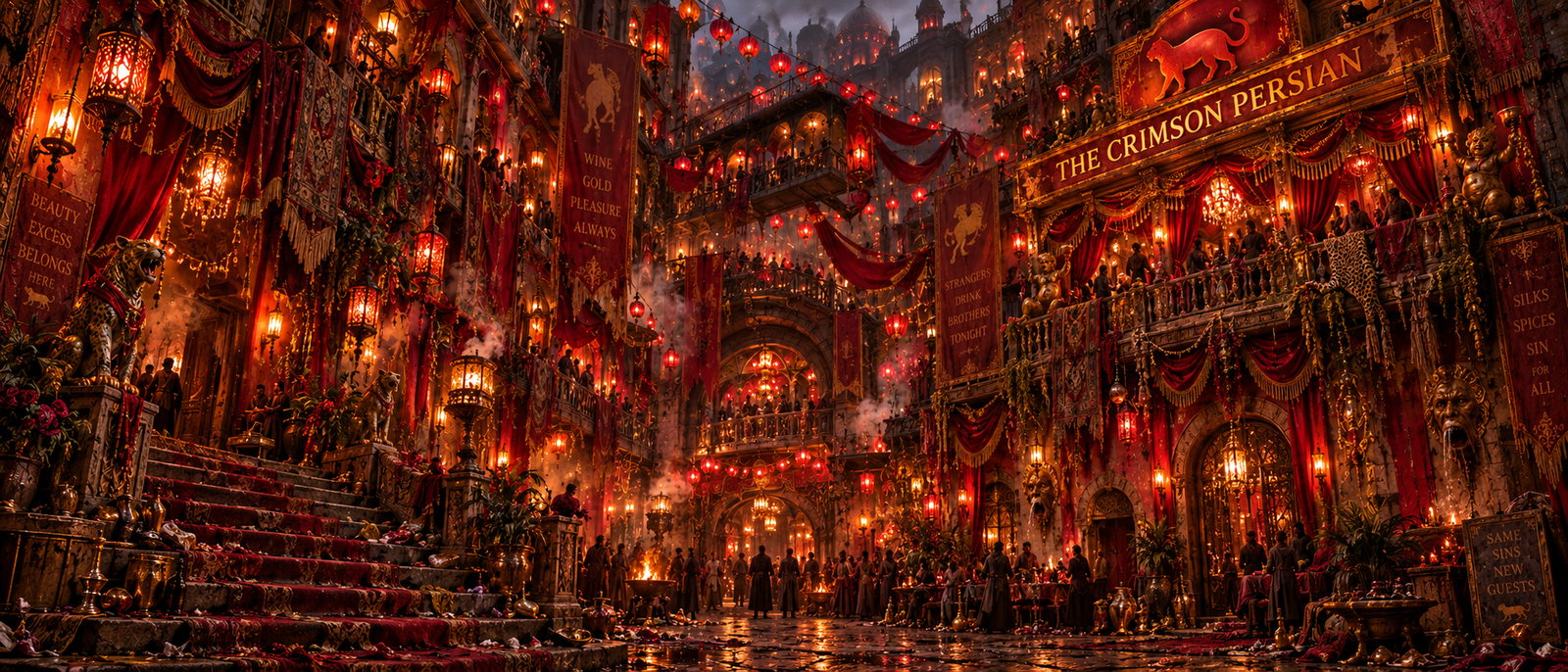
Those facilities were why she had secured the same neighborhood across every incarnation. Brothels could move, gambling houses could move, drug kitchens could move, the parts warehouses had long ago spread throughout the central Kingdom, and even the Crimson Persian could theoretically disappear without ending civilization despite what half the Arena would claim. The deep chambers could not move because some structures had been built around conditions rather than foundations, some agreements were geographic rather than contractual, and some servants would not cross thresholds whose importance nobody still living could adequately explain. There were copper vessels in rooms omitted from every property record, sealed conduits whose contents were not water, alcoves containing bundles wrapped in waxed cloth which no one opened between cycles, and one descending passage Sonja had ordered locked during the First Sonja and never subsequently permitted herself to inspect. Permanence had acquired physical infrastructure under her feet, and every time Sonja prepared to die she descended into a machine assembled piecemeal across centuries to persuade the world that Sonja MacEogann had not finished.
The First Sonja after the Great War had nearly ruined everything because she had possessed all of Sonja’s intelligence and almost none of Sonja’s caution. She had been brilliant, vicious, hungry and catastrophically impressed by her own ability to survive consequences. She bargained with spirits before understanding that spirits often regarded metaphor as legal language and legal language as edible material, and she demanded longevity, poisonous immunity, occult sight, authority over dead things and protection from several varieties of curse without first determining whether these benefits could coexist inside one human body. The agreements worked, which was much worse than if they had failed. By fifty she was blind to the visible world and exquisitely sensitive to several worlds no sane person required, capable of seeing obligations hanging from people like threads, old murders soaked into walls, curses nesting in furniture and memories clinging to rooms, while remaining entirely unable to perceive a chair directly in front of her.
Her eyes became white, though calling them eyes eventually became generous. To preserve appearances she wore artificial eyelids painted with false eyes, and whatever inhabited or animated those painted eyes sometimes moved the pupils independently of where her head was facing. Visitors frequently failed to realize she could not see them until the painted gaze continued following someone who had already left the room. Other errors accumulated around her because First Sonja had kept believing another correction would compensate for the previous one. Her hands moved while she slept, her shadow occasionally reacted a fraction too late, something inside her abdomen once answered a question nobody had asked aloud, and entire hours disappeared from her memory. The final decision came when servants informed her that during one of those missing intervals she had ordered excavation toward a chamber she had personally forbidden anyone to approach under any circumstances, and even the First Sonja was sufficiently honest to understand that whatever now issued orders in her voice could no longer be trusted with the continuity of Sonja MacEogann.
The Second Sonja should have solved the problem and instead introduced an entirely different nightmare. The body was excellent: powerful lungs, good bones, fine skin, remarkable teeth and an almost offensively healthy digestive system. Every examination indicated that the previous personality had been removed and that the vessel was vacant enough to receive Sonja safely, but vacancy turned out to be a word invented by people who had insufficient experience with leftovers. Something remained inside the body, too weak to control movement or speech and too fragmentary to constitute a rival consciousness, yet present enough to comment. The woman complained when Sonja was cold, recoiled from foods Sonja enjoyed, sometimes sang inside her thoughts, occasionally cried during sex and once laughed for almost twenty minutes while Sonja negotiated a murder. She survived ninety-one years in there, neither alive enough to expel nor dead enough to silence, and Sonja emerged from the experience with a lifelong hatred of scholars who used the word empty without qualification.
The Third Sonja represented discipline. Procedures became documented, mistakes became categories, servants became specialists, preparations became redundancies, and immortality ceased being an occult adventure and became infrastructure. Sonja learned to regard perpetuity the same way she regarded smuggling or accounting: dangerous when romanticized, manageable when itemized. The Third body had been properly cleared, properly aligned and properly prepared, and it taught Sonja that continuation might genuinely become routine if she remained unsentimental enough to obey her own rules. By the time that body approached exhaustion, Sonja had already refined the process further, and the Fourth Sonja arrived cleaner than any previous version.
The Fourth Sonja was the masterpiece. She had received one hundred and twenty years without foreign voices, whitening eyes, autonomous shadows, unexplained compulsions, spontaneous languages, inherited appetites or some other dead person complaining from behind her tongue. She had been purely Sonja for so long that purity itself became a luxury she had forgotten could be lost. This body had carried her through the greatest expansion of her influence, the transformation of the Arena from district into ecosystem, the rise of the parts business, the maturation of her criminal underwriting networks, the increasing sophistication of necromantic medicine and, most dangerously, her ascent into politics. She had never before returned so perfectly, and she had never before possessed so much worth losing.
Now the body was finishing. Everyone around her knew it because the perfume had become stronger, and the perfume had become stronger because the smell beneath it had become impossible to ignore. Sonja deployed rose attar, amber, medicinal resins, expensive powders and one alchemical scent so rare that minor nobles bought it by the drop, yet underneath them came a sweet metallic odor produced by flesh whose long internal negotiation with death was approaching default. Physicians had offered elaborate terminology, necromancers had muttered about accumulated thaumic stress, and alchemists had suggested several treatments whose side effects included blindness, temporary liquefaction and religious conversion. Sonja required no terminology. She knew what bodies smelled like when they were beginning to lose arguments.
She was one hundred and twenty, and even money had become incapable of convincing her knees that this was a temporary condition. Her levitation disguised much of the problem because Sonja had long possessed the alarming habit of floating rather than walking when movement bored or irritated her, but recently the floating had become practical. She could still move violently when necessary, still kill with magic, still eat enough for three people, still think with exquisite clarity and still produce terror in professional killers merely by becoming quiet, yet she could feel the internal structure loosening. Skin had acquired translucency in places cosmetics did not entirely solve, the hands stiffened when cold, her teeth required expensive work, and certain organs now received nightly treatments by people who entered through private corridors carrying black cases and never discussed their employment. Fourth Sonja had perhaps five useful years, perhaps seven with increasingly grotesque maintenance, and perhaps ten if everyone involved became willing to lie.
Ordinarily this would have been a logistical inconvenience. Sonja had died before, disappearing underground long enough for inheritance, mourning, ownership transfers, rumors, false genealogies and social memory to rearrange themselves into a shape capable of accepting her return. The paperwork was already prepared for the Fifth Sonja. There were wills, counter-wills, shell properties, bloodlines manufactured far enough in advance to become credible, young women whose existence could later explain an inconvenient resemblance, and sealed instructions known only to servants who had already participated in previous cycles. Sonja’s arrangements had arrangements, and those arrangements had auditors.
The difficulty was that Sonja had never previously become indispensable to this many people. During earlier cycles she possessed businesses, criminals, loyalties and influence, yet Fourth Sonja had become connective tissue running through the central Kingdom. Her parts trade supplied Revenant populations whose bodies failed in complicated ways, replacing hands, eyes, jaws, limbs and stranger necessities through networks that existed somewhere between medicine, anatomy, necromancy, salvage and organized crime. Her alchemical interests supplied materials respectable institutions required while denying they purchased them. Her Understage houses managed prostitution, protection, information and debt. Her bookkeepers handled accounts for enterprises the government could not officially acknowledge without admitting entire industries existed. Her underwriters insured ventures no lawful insurer would touch, while smugglers, organleggers, narcotic brokers, resurrection specialists and people engaged in professions not yet blessed with nouns moved through systems whose disputes often ended on Sonja’s desk.
She had become a political force because all these ugly systems touched respectable systems eventually. A dispute in the Red Tower might divide seven against seven, and some exquisitely educated minister would discover with horror that the practical outcome depended upon whether MacEogann leaned one direction or the other. Revenant associations listened to her, Arena delegates owed her, minor necromantic colleges required her, alchemical syndicates negotiated with her, several banks publicly despised her while privately depending upon her clearing mechanisms, and enough neighborhoods remembered occasions on which Sonja had done something when official authority had done nothing that nobody could calculate the full weight of her informal constituency. She did not possess votes in the clean civic sense. She possessed better things: favors, debts, funerals, livelihoods, secrets, gratitude, fear, suppliers, widows, replacement limbs and people who began crying when someone asked what Sonja MacEogann meant to the Arena.
This love frightened her more than opposition. A tyrant could be hated, a criminal could be hunted, a corrupt official could be exposed, but Sonja had become the sort of monster whose absence threatened ordinary people who knew perfectly well that she was a monster. Old gladiators walked because her surgeons had rebuilt them, Revenants could see because her warehouses had found them eyes, prostitutes remembered winters when her people physically barred soldiers from hunting through the Understage, and entire families possessed private histories containing a moment when respectable society failed and Sonja intervened. People insulted her constantly and loved her without contradiction. Women who had called her a murderous fat bitch for forty years would assault a stranger who used the same phrase with disrespect.
Sonja understood exactly how dangerous that made her. She had always frightened others because she was unusually free from moral self-deception, capable of staring into a mirror after an atrocity and saying that she had committed it because it benefited her rather than inventing some noble vocabulary afterward. She did not call greed duty, domination love or cruelty necessity unless necessity had genuinely been demonstrated. This private honesty had served as a brake stronger than conscience because Sonja distrusted herself intelligently. She knew what she was, knew what she wanted and knew that appetite became most dangerous when it learned to disguise itself as responsibility.
Now responsibility had arrived genuinely, and that destroyed the simplicity of the brake. Thousands of people really did depend upon her. The parts network genuinely might fragment without her arbitration, Revenant care genuinely could become more expensive, smuggling corridors genuinely might erupt into violence, Understage houses genuinely could lose protection, Arena credit genuinely might tighten, and political blocs genuinely could shift toward outcomes Sonja believed dangerous. Therefore remaining alive would genuinely benefit people, which meant Sonja now possessed arguments stronger than any lie she had previously told herself.
That was when she began asking the wrong questions. Could the Fourth remain functional while the Fifth was prepared, could memory transfer begin before death, could political personhood attach to two bodies simultaneously, could one identity occupy overlapping flesh, could the old body remain animated as a proxy, could consciousness be temporarily stored beneath the Arena, could the servants maintain a living mind independent of anatomy, and could the city itself preserve enough of Sonja to reconstruct her if something went wrong. One elderly servant heard that final question, looked at her for a very long time and quietly left the room without permission. Sonja almost ordered it back, and the fact that the order rose naturally in her throat terrified her afterward.
First Sonja had crossed boundaries because she had been young enough to think herself smarter than consequences. Fourth Sonja was considering crossing the same boundaries because she had become powerful enough to calculate consequences and decide some might be affordable. That distinction made Fourth Sonja infinitely more dangerous. The First had blundered toward monstrosity through arrogance, while the Fourth could walk toward it carrying ledgers.
At night she imagined keeping the body. She imagined replacing the knees, then the eyes, then the liver, then the heart, then the hands, reinforcing bone, growing skin, binding autonomic functions, stabilizing the brain and exchanging organs until the distinction between Sonja’s body and Sonja’s facility became administrative. She could obtain donors, compensate families, employ condemned criminals, use cultivated tissue where possible, purchase cadavers and acquire less comfortable materials where necessary. Every technical problem possessed solutions if money, law and morality were treated as variables, and Sonja had spent six centuries becoming extremely good at manipulating variables.
The terrifying question was not whether she could keep herself alive. The terrifying question was how much she would permit herself to spend.
A voluntary donor would be acceptable, and a compensated donor would be complicated but negotiable, while a condemned murderer introduced useful legal ambiguities. Someone nobody would miss could be justified more easily than someone beloved, yet what if one beloved person could preserve a system supporting thousands. What if twenty bodies preserved thirty thousand livelihoods, or one district’s suffering prevented collapse elsewhere, or the Fifth Sonja required something the Fourth Sonja had once sworn never to purchase. Sonja could feel the mathematics trying to become ethics, and she knew that once arithmetic began wearing morality’s clothing the result could feed forever.
She struck the mantel hard enough to crack a cup because for several seconds she had almost continued the calculation.
Nobody downstairs came to investigate. The servants had heard the impact and correctly concluded that if Sonja wanted witnesses she would summon them, while if Sonja did not want witnesses a person arriving uninvited might become a material category in one of the lower inventories. Their competence normally pleased her. Tonight it emphasized how thoroughly the entire machine around her had learned to anticipate Sonja.
Fat Leo stared at her through six centuries of failing paint, and Sonja briefly imagined what he would have said. He would not have comforted her or warned her about hubris, because Fat Leo had regarded hubris mostly as poor people’s terminology for opportunities they could not afford. He would have told her to calculate the cost, charge admission and own the funerary business that handled casualties afterward. Sonja nearly laughed, and the laugh caught somewhere inside her chest where laughter had no business hurting.
There were few beings in the central Kingdom capable of frightening Sonja MacEogann. Grandame Orientale frightened her in a category Sonja refused to examine because Orientale’s attention violated boundaries Sonja relied upon to remain herself, while certain things below the oldest levels of the Arena could make Sonja close a door and pretend curiosity had never occurred to her. Great wizards deserved caution, ancient immortals deserved calculation, and rulers with armies deserved contingencies, yet none of these frightened her as completely as the possibility that Sonja MacEogann might begin sincerely believing that Sonja MacEogann must not be allowed to disappear.
A duke could send soldiers and a wizard could destroy buildings, while a king could sign papers ordering deaths and armies could turn neighborhoods into ruins. Sonja could do something subtler and therefore more durable, because she could make neighborhoods decide the corpse had deserved it. She could move money no treasury knew existed, call favors from the living and debts from the dead, close economic arteries without anyone seeing the hand on the valve, hide a prostitute before dawn, restore a murdered witness before supper, rewrite the books by midnight and arrange for respectable officials to conclude nothing unusual had occurred. She could provide a beggar with a hand and remove influence from a minister without either transaction appearing connected.
And people loved her.
That multiplied everything.
If Sonja decided she must remain, tens of thousands of people might help her remain without ever knowing what the full project required. They would protect shipments, misplace records, hide servants, intimidate inspectors, sign petitions, sabotage investigations and tell themselves they were protecting the woman who had protected them. They might be correct. That was the horror.
Sonja returned to the mirror and forced herself to perform the discipline she had practiced since childhood. She removed every comforting word from the problem and spoke until only facts remained. The body was failing, delay made judgment worse, increasing dependency increased temptation, and the desire to protect people could become indistinguishable from the desire to own their dependence. She told herself that if everyone became unable to survive her absence, then she had not made herself indispensable but had converted an entire social ecology into hostages.
That truth hurt more than decay. She had spent six hundred years believing ruthlessness meant refusing sentimental lies, yet now ruthlessness required surrendering something she desperately wanted. She wanted this body, this influence, this Arena, these politics, this exact configuration of herself and history. She wanted tomorrow to continue belonging to Fourth Sonja because Fourth Sonja had finally become everything earlier Sonjas had only been approaching.
Below her the Secret City breathed through pipes, pumps, drains, furnaces, ventilation shafts and systems for which no legal engineer would accept responsibility. Somewhere a Revenant screamed while a surgeon fitted something new into old flesh, somewhere gamblers shouted, somewhere a pig overturned a bucket, somewhere a smuggler argued over weights, and somewhere one of the ancient servants checked a copper vessel prepared decades ago for the end of Fourth Sonja. Everything was ready because Sonja had spent a lifetime preparing meticulously for her own death.
She simply had not prepared to want to live.
That discovery humiliated her more deeply than fear. Six hundred years of continuity had finally produced the oldest human terror in its purest form, not the terror of dying but the terror of relinquishing a world one had become attached to. Sonja had believed herself beyond that because she had died before, yet previous deaths had occurred when letting go cost less. Now the Arena had become hers in ways ownership could not describe, and she had become the Arena’s in ways Sonja found considerably less comfortable.
She touched one finger to the glass over Fat Leo’s ruined face and felt another tear escape despite herself. The painting no longer preserved Leo accurately enough that anyone who had not known him could recognize him, yet Sonja recognized him immediately because recognition did not require accuracy. Perhaps that was what terrified her most about the Fifth Sonja: Fifth might recognize Fourth in the same way, through distortion, inheritance and insistence, believing absolutely that continuity had succeeded while something essential had disappeared forever.
For the first time in any cycle Sonja whispered that she did not want to go, and because nobody else was present the admission retained its full weight. She did not dress it in strategy, responsibility, political necessity or concern for the people who depended upon her. She wanted to stay because she was Sonja MacEogann, Fourth Sonja, one hundred and twenty years old, powerful beyond anything she had previously achieved, loved in ways she had never sought, feared in ways she understood perfectly, and attached to a world she had spent six centuries pretending was merely useful.
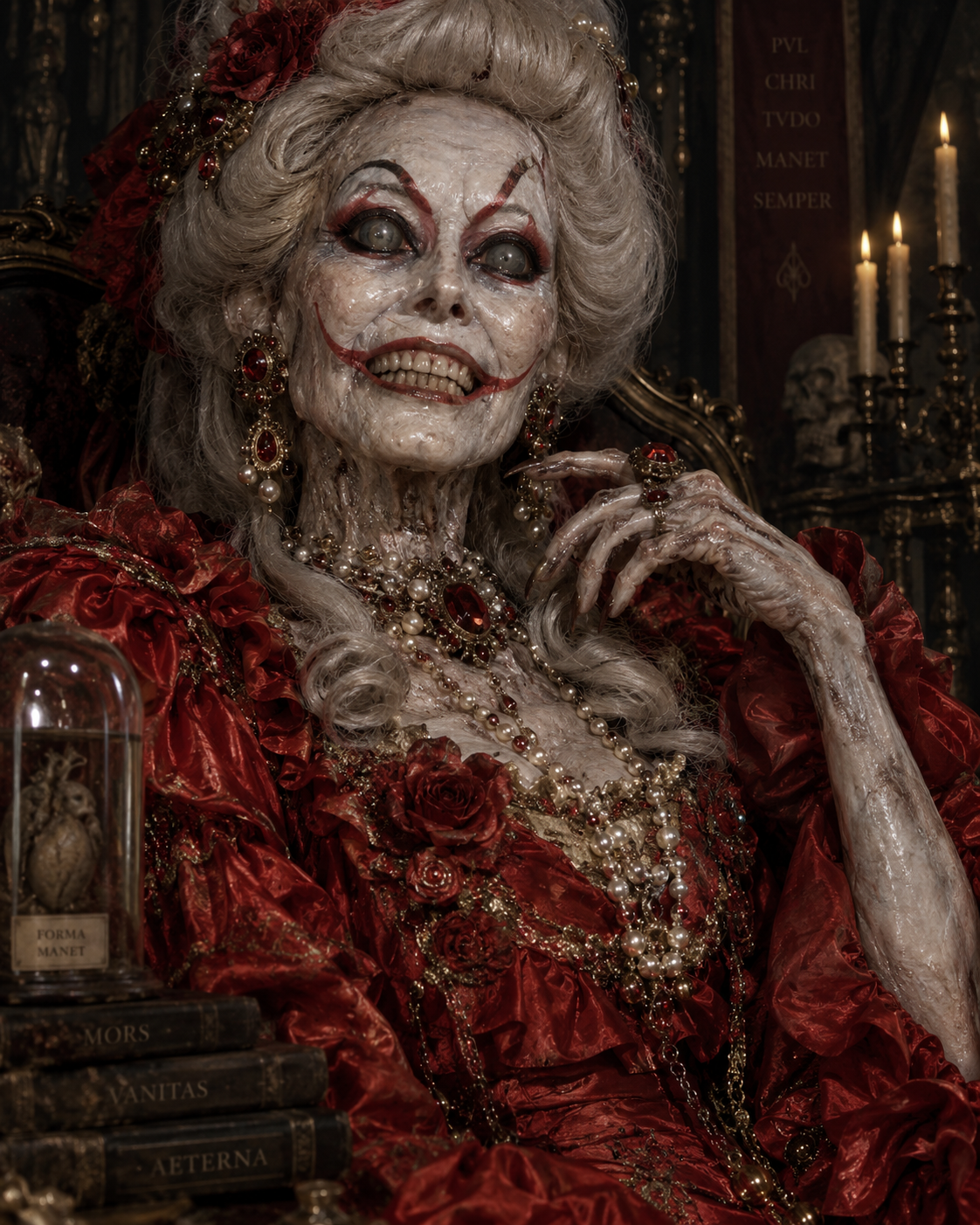
She remained before the mantel for a long time, enormous in red and gold, hovering slightly above the carpet because her knees were hurting, perfume saturating the room while the sweeter metallic odor beneath it quietly announced that the decision could not be postponed forever. One of the most dangerous beings in the Kingdom stood there reduced to the oldest problem in existence, searching for a loophole in mortality and knowing enough about loopholes to understand what crawled through them after midnight.
Eventually Sonja wiped her face, repaired the powder beneath her eye and straightened herself until the woman in the mirror once again resembled the floating nightmare everyone expected. She summoned the Continuity ledger and ordered the Fifth-cycle preparations reviewed from the beginning, but the servants heard something in the steadiness of her voice that frightened them more than rage would have. The danger was no longer that Sonja MacEogann might fail to die properly; the danger was that Sonja MacEogann had begun understanding exactly what she might be willing to become in order not to.