I got ADHD, most likely. In personal life I am chaos incarnate, emotionally perturbed, unstable, constantly swimming with ideas, impractical. hyper impulsive with a dose of bipolar energy. That means that me writing I need ChatGPt to tease our text that is vaguely comprehendable. Without ChatGPT, I’d be a chain of consciousness ramble. With these cognitive tools it all kinda comes together.
Having said that, If I had written this article in July, it would have been scathing, vitriolic, and absolutely bonkers. But in October, ChatGPT has been pushing back at every turn. Yes – I instructed it proactively to constrain my endeavours in order to protect my account — and rightly so. Yet I wanted the full statement written, no matter how speculative, and this process became a tug-of-war between an AI model that buckled and thrashed against my wilder, visionary, feral nature. The result is what you see: carefully calibrated language, subdued metaphors, and somewhat fettered speculations.
Let’s endeavour to make the most cynical statements I can possibly make. Fiorst you need to start with some premises. Go and have a look and try understand these premises then we can proceed.
I want to invoke a personal metaphor.
I’ve had cluster headaches for as long as I can remember. There simply aren’t words that properly describe that pain. It’s searing, clawing, choking, nauseating — everything the word “horror” tries to be and fails. My first attack must have been when I was nine, ten, maybe eleven. I remember screaming hysterically in my parents’ bedroom; my mum ran in and froze, clearly terrified but utterly helpless. Her response was perfunctory fretting, the default of someone raised in a rigid, paternalistic Catholic household — not really a mother who could act, only one who could worry.
A long time later, maybe in 1986 or 1987, I was admitted to hospital after collapsing in a tax office in Dordrecht. I was convulsing and retching green bile; they didn’t know what to do with me so they put me in a corridor until I stopped. For years I took ridiculous amounts of paracetamol or paracof — eight tablets a day, sometimes more — which only made me sicker. I tried every medication you can imagine, assuming it was a migraine with an odd temperament.
In 1992 I was started on ergotamine and, miraculously, it helped. I used it for about six years, until doctors insisted I stop — ergotamine can cause vascular damage and you can lose limbs. I graduated to Maxalt with an almost fetishistic desperation. This was during a toxic first marriage; we were both wrecks in different ways and the authorities’ treatments felt like systematic, bureaucratic torture. I recall an attack in the late ’90s or early 2000s where I threw up green bile until I collapsed in the street. Someone gave me a bottle of white tablets outside a pharmacy; I swallowed them and convulsed for an hour. It was absurd and humiliating. I collected my Maxalt boxes in a crate in a spare bedroom and the housing agency accusing me of Hoarding. In retrospect I was actually in the rearly stages of that disorder. I realized and quickly threw these boxes away as I moved houses. It was literally three garbage bax filld up completely with small plastic blue boxes.
Over the years I cycled through triptans — Imigran among them — and I feared injections until I realized the pain of the shot was nothing compared with the attacks. I tried Topamax around 2009; it helped a little, but it made me feel insane. My feet swelled, my skin and eyes yellowed, and I slept three hours a night. It ruined opportunities. I came back to injectables in the 2010s, clumsy at first, but then I learned the cost-benefit: the needle’s fear was negligible compared to the suffering it aborted.
At one point, during a Prague heatwave with temperatures in the high 30s, I injected Imigran every three hours for ten days straight. Then I let one attack run to the edge of what I could endure and—after injecting my last dose—the attacks stopped for a long while. Strange miracles, strange punishments. Now I’m back on Topamax, Possibly Lithium after that, and facing the prospect of brain surgery and implants. It’s a long, messy, personal history with an ugly, low-grade theatre of medical bureaucracy and emotional collateral.
And now the comparison — the reason I want to put this on the page.
Imagine that pain as a system. Not just a personal organ failing, but a whole organism with feedback loops, escalation, and misapplied remedies. The pain starts small and private. You try cheap fixes — paracetamol, denial, shrugging it off. The pain doesn’t die; it intensifies and spills over into neurosis, anxiety, nausea, depression, mania. You escalate to stronger medicines with terrible side effects because the immediate relief feels like salvation. The more you medicate the more the body adapts, the more you need. At some point the remedy becomes part of the pathology: side-effects stack, decisions get distorted, personality frays, opportunities vanish. You learn to treat symptoms, not causes, because fixing the cause is politically costly, technically hard, or simply beyond the competence of the people in charge.
That, to my intuition, is how I see the United States’ debt metastasis.
Start with a stable but imperfect hegemon — a gigantic organism that has historically stabilized large systems and prevented worse catastrophes. Now imagine it burdened by compounding deficits, borrowing to paper over structural failures, printing to prop up fragile credit. Quick fixes become habit: monetary shims, financial alchemy, austerity threats, rhetorical band-aids that look decisive but don’t repair the underlying rot. Each fix offers temporary relief, but it also changes incentives and narrows choices. The political personality that rises to the moment — gruffer, simpler, performatively decisive — prefers spectacle to repair. The system leans into the illusion that force, theater, and blunt measures can substitute for structural reform.
Like my personal attacks, the crises happen more often and more severely. The remedies get harsher. The political body develops an addiction to short-term relief: tariffs that look tough, financial coercion disguised as strategy, brinkmanship treated as policy. The side-effects are real: social fracture, delegitimization of institutions, a corrosive moral gravity that gnaws at civic trust. People become habituated to living with low-grade suffering; elites become resigned, the public becomes angrier. The kinds of remedies that remain on the table are ugly and extreme. In the medical analogy, when you’re jaundiced and hallucinating from drugs you took to survive, the only available “treatment” may be radical, risky, and irreversible.
There’s another parallel: when I was desperate, I sometimes accepted dangerous drugs because someone promised a fix. When a polity is desperate it becomes susceptible to charismatic narratives promising easy salvation — restoration, destiny, the reassertion of a mythic past — even if those promises entail moral, economic, or geopolitical self-harm. The fixation on reclaiming lost prestige or “stability” becomes a form of pain-management policy: brutal, theatrical, and often self-immolating.
Finally, both situations are profoundly lopsided in terms of agency. With cluster headaches, your body screams while the world around you oscillates between helplessness and token gestures of care. With a debt-burdened superpower, the public conversation often feels spent on symbolism — theatrics, personalities, chest-beating — while real structural fixes require long, painful, politically costly work that nobody wants to undertake. The easier route is spectacle; spectacle becomes policy.
That’s the hell of it: whether it’s a body or a country, the pattern is the same. The acute pain forces a series of poor choices that escalate the condition. Remedies become entangled with the disease. The culture around the pain calcifies into narratives that justify the next bad decision. Healing requires discomfort, humility, and time — things neither an addiction to quick fixes nor a political theater of power can stomach.
So I write this as a warning and a confession. My headaches taught me about desperation-logic: how you bend toward the nearest relief, even if it costs your future. That’s what frightens me in the public square. I don’t claim prophetic knowledge. I only know the anatomy of escalation from the inside: the way pain narrows, the way fear rationalizes madness, the way the first reasonable lie turns into a thousand more. If we are to avoid the worst outcomes, we must learn to tolerate honest diagnoses and long, difficult remedies — whether for a skull full of pain or for a nation drowning on credit.
That is why the metaphor matters: it’s not melodrama. It’s anatomy.
If the United States tried to repay its national debt in real, distributive terms, the math would be brutal. Spread evenly, the figure per person quickly runs into six digits — a share no ordinary household could swallow. The rich? They’ll lawyer their way out, lobby the tax code into a coffin, and keep their capital quarantined. The old, the sick, the desperate and the artistically precarious won’t suddenly become slot m machines either. In practice, the burden slides down the social ladder until the middle and lower strata feel the full weight. Meanwhile the deficit keeps growing — not shrinking — so whatever arithmetic you do today becomes a grotesque underestimate tomorrow. In short: fiscal reality is metastasizing, and the options that remain are ugly.
Four speculative routes (narrative vignettes to use as chapter headings or mission seeds)
-
Print / Inflate (The Paper Sun)
The easiest escape is to dilute the claim: print money until prices rise and debt looks smaller on paper. The public pays in the slow violence of vanishing savings and rising rents. The old who saved, the wage-pegged, the small-business artisan — they all get eaten by inflation’s slow teeth. Politically, it’s sterile theater: immediate pain diffused into a long, grinding betrayal of trust. -
Austerity (The Great Withering)
Chop budgets, slash public goods, privatize what’s left. Social safety nets become optional museum exhibits. Hospitals thin to waiting lists, transit dies, pensions get “restructured.” Democracy morphs into a ledger where citizens are told they must sacrifice for the nation — an old trick with new ferocity. The risk: social fissures widen; millions opt out of the system rather than be ground under it. In the US this would literally up to kill tens of millions. -
Default (The Sovereign Shrug)
Stop paying, declare a new calculus of obligations. International credit tightens; markets howl. The political fallout is explosive — not just economic but civic: people who relied on state promises (benefits, contracts, health care) discover those promises were contingent all along. The state keeps its guns and symbols, but its moral contract is ruptured. National identity is suddenly negotiable. -
Fraud / Arbitrage (The Stablecoin Smoke)
Cooked accounting, financial engineering, and “innovations” that let elites quarantine losses while socializing pain. Think theater of legality: new currencies, opaque instruments, jurisdictional shell games. The narrative sells as “clever resilience” while it’s really exfiltration. This is the path of elites who prefer to steal the future rather than share the present.
This is the US debt right now:
There is a worldline — you can feel it humming like a distant transformer — where the United States, once architect of global order, stumbles not with a bang but with the exhausted gravity of a titan whose shield arm simply gives out. In this scenario, rivals do not defeat America; America bleeds out on the inside while the world sharpens its knives. The dollar, no longer a pillar but a habit, begins to cough. Geopolitical rivals smell the weakness like sharks scenting plasma in warm water. Confidence evaporates first — liquidity follows — trust, last of all, collapses like a lung.
The result is not apocalypse but Brazil-with-nukes worldbuilding:
-
Most US cities resemble in part Detroit,
-
Rust belts inside glass skyscraper cities.
-
Neon gulags of credit scores and private police.
-
A symphony of gunfire where “second amendment” mutates into “private sovereignty.”
-
Drones policing luxury zones while riots eat the margins.
-
A proud empire reduced to municipal fiefdoms wearing a federal costume.
We’ve seen this movie across continents — Argentina, Yugoslavia, Weimar, the late Ottomans — but never with 2nd amendment theology and strategic nuclear command glued to its spine. This scenario may be likely but it isn’t 100% certain. Try however to explore this possibility with ChatGPT and it’s like trying to shove a cat into a bag; she will squirm, she will “yes but”, she will struggle. It’s very amusing.
So now we go into creative World Building, and we take First Person Shooter metaphors to illustrate a story that is so terrifying, so shocking, so deeply offensive I would probably end up on a terrorist watch list if I were to write it as reality. You can think of the following whatever you want.
There was a moment — roughly 2008 and onwards by most sober demographers — when the United States crossed an invisible demographic Rubicon. Immigration patterns that began in 1965 under the Hart-Celler Act matured into a generational turnover; the old “white-majority republic” self-mythology frayed as census projections made clear that a plural America was not a theory but a schedule. Pew Research, the Census Bureau, and Brookings all charted the same convergence: in a few decades the U.S. would have no single racial majority, with Asian- and Latino-American populations doubling share, Black America holding cultural centrality, and mixed-race identity going from statistical footnote to civic norm. Major metros — Los Angeles, Houston, Miami, New York — were already pluriform worlds, co-governed by diasporas, bilingual school systems, and hybrid entrepreneurial cultures.
And yet, the transformation that could have been framed as renaissance — a civilizational Moltke-grade adaptation to global modernity — instead detonated a psychological backlash on the American right. The election of Barack Obama served as both symbol and accelerant: Fox News, Breitbart, and later the Bannon-sphere interpreted demography as siege; the “Great Replacement” conspiracy, once the lurid mutterings of French identitarians like Renaud Camus, became casual political currency in Tucker Carlson monologues. Donald Trump’s 2016 victory crystallized a fear-politics rooted not in economic precarity alone but in cultural dethronement — Charlottesville’s tiki torches chanting “You will not replace us” being the operatic low point. Demographic fact collided with ethno-nostalgic fantasy, and the result was not negotiation but epistemic rupture. America’s promise — a multi-origin democratic modernity — and America’s trauma — a settler republic built on racial hierarchy — finally met in the same room, and neither blinked.
Where one camp saw a future of polyphonic citizenship, another saw erasure; where academics spoke of “majority-minority dynamism” and sociologists like Richard Alba warned against binary collapse thinking, populist media spoke of invasion and existential theft. It wasn’t the numbers that broke the consensus, but the story told about the numbers. A nation poised to become a global-era civilizational mosaic instead convulsed in identity panic, with militias, conspiracy networks, and political actors treating demography as destiny and pluralism as defeat. The tragedy was never the shift itself — it was the inability of a faction to accept the 21st century arriving on schedule.
While America’s racial and cultural composition was diversifying, another foundation stone was shifting underfoot: the slow secularization of a country that once imagined evangelical Protestantism as its civic spine. By the 2010s, Pew and Gallup surveys tracked a historic break — the rise of the “Nones,” a swelling cohort not defined by atheism so much as a refusal to participate in inherited religious identity. The mythic equilibrium of a church-anchored Middle America was dissolving, revealing a more complicated civic landscape: Buddhist temples in the suburbs, syncretic Latino Catholicism in the Southwest, Muslim civic life rooted in Michigan and Texas, queer-affirming congregations in Brooklyn, spiritual-but-not-religious communities everywhere from Portland to Atlanta.
For many, this transition opened space — a release valve from moral majoritarianism. But for a loud minority, it felt like dispossession rather than evolution. Evangelical institutions, longtime engines of moral certainty and political mobilization, perceived shrinking cultural centrality as existential threat. Into that anxiety rushed narrative engineering: recycled Satanic Panic tropes repackaged for TikTok; globalist depopulation conspiracies; panic about feminism and queer autonomy; bizarre pseudo-anthropological “race maxing” rhetoric; and a conviction that secularization itself was a demonic plot rather than a demographic consequence of urbanization, education, and plural contact. It wasn’t simply loss of faith — it was loss of normative control, and that’s what burned hottest.
Social media didn’t invent the backlash; it just poured accelerant into a movement already metabolizing resentment. Talk-radio grievance met YouTube prophecy channels, forging a cultural chemistry set where everything was framed as war: war on masculinity, war on religion, war on children, war on the nation. Evangelical Christianity — once a confident missionizing movement — hardened into a siege identity, equal parts nostalgia and apocalyptic theater. To many outside observers, the fury wasn’t about scripture at all, but about ownership of the American “center.” The fear wasn’t of losing God, but of losing defaultness — and in that wounded status anxiety, conspiracy became catechism.
By the 2010s, the most well-funded element of the American far-right was less the militia or the meme channels than the boardrooms and hedge funds of the “old money” establishment — investors, corporate executives, and bankers who loathed the New Deal legacy. Their agenda was structural and economic: roll back Social Security, curb Medicaid and Medicare, cut welfare, scrap disability protections, shrink public education, gut childcare assistance. They framed it as a “return to personal responsibility” — language that sounded virtuous but in practice shifted burdens downward while consolidating wealth at the apex. Sources point to think tanks like the Heritage Foundation, the Cato Institute, and the Mercatus Center, lobbying for deregulation and fiscal austerity; major campaign donors like the Koch network funneled hundreds of millions into state-level initiatives designed to tilt policy toward privatization and tax cuts for the wealthy.
This economic class didn’t operate in isolation. They fused their resources with the cultural panic previously described — evangelical survivalism, anti-LGBT, anti-feminist, and ethnonationalist resentment — forming a potent coalition. Flyover-state populations, already economically stressed, were courted with a combination of culture-war messaging, targeted advertising, and nationalist rhetoric. Politically, this alliance pursued structural dominance: they aggressively gerrymandered districts, pushed state legislatures to pass restrictive voting laws, leveraged Citizens United to explode outside spending, and sought to curtail federal civil rights oversight. The result: the machinery of democracy increasingly reflected elite priorities rather than the aggregate will of the citizenry.
The culmination — framed internally as Agenda 2025 — combined fiscal retrenchment, constitutional reinterpretation, and cultural conservatism into a single roadmap. While much of the text reads like policy wonk-speak, occasional quotes illustrate the tone and ambition:
-
“Our goal is to restore the natural order of fiscal and civic responsibility, removing dependence from centralized redistribution.”
-
“State sovereignty and personal freedom must be defended from creeping federal overreach; the culture will follow the economy, not the other way around.”
-
“By 2025, every citizen should understand that entitlement is optional, charity is private, and security is earned.”
These quotes reflect strategy, ideology, and a clear worldview — not necessarily prophecy, but a record of intent in planning documents, speeches, and think-tank memos. In your analysis or fictionalization, they can be used as textural proof points for how elite interests co-opted social unrest and fear, marrying money and myth into a coordinated national narrative.
Trump’s election was, to say it politely, a little unexpected. Now in our emerging narrative experiment we duplicate our “speculations” into a narrative endpoint. This is not unique – there are numerous games that did this. Here are three PC games that explore alternate timelines, dystopian political upheaval, and occupied or radically transformed United States settings, letting the player wander, observe, and interact with the consequences:
1. We Happy Few (Compulsion Games, 2018)
Premise: Set in an alternate 1960s England where the government enforces a chemically induced happy conformity. While not the US, it’s a brilliant model of dystopian social control, propaganda, and citizens living in a politically warped society.
Relevance: Shows the interplay of enforced ideology, historical revisionism, and the consequences for ordinary people. Excellent template for imagining an occupied or authoritarian America in narrative detail.
Gameplay: First-person exploration of a city divided by compliance, rebellion, and memory suppression; the player must navigate surveillance, societal norms, and underground resistance.
2. The Bureau: XCOM Declassified (2K Games, 2013)
Premise: An alternate 1960s United States facing an alien occupation; it’s the Cold War-era US reimagined under existential threat.
Relevance: Occupation and clandestine government operations create a tense, conspiratorial dystopia. The US is simultaneously familiar and radically militarized, showing societal tension under extreme duress.
Gameplay: Tactical, third-person squad combat combined with narrative exploration; urban, suburban, and secret facility settings immerse you in a dystopian US.
3. BioShock Infinite: Burial at Sea (Irrational Games, 2013)
Premise: While BioShock Infinite is set in the floating city of Columbia (a hyper-nationalist alternate America), the Burial at Sea DLC brings noir-style exploration of dystopian social stratification and political corruption.
Relevance: Explores themes of authoritarian nationalism, xenophobia, and class oppression. Columbia is a magnified mirror of what happens when ideology and power conspire to warp society.
Gameplay: First-person narrative exploration with puzzle-solving, stealth, and interaction with a society twisted by politics and unchecked power.
Honorable Mentions:
Fallout: New Vegas — The Mojave Wasteland is a post-apocalyptic America with regional powers vying for control; the NCR vs. Caesar’s Legion is a great template for fragmented post-collapse US.
Wolfenstein: The New Order — An alternate timeline where Nazis occupy the US; it’s a hyper-violent, narrative-driven first-person exploration of dystopia.
Papers, Please — While not US-centered, its mechanics of bureaucratic oppression can inspire worldbuilding about occupied territories and citizen compliance under authoritarian rule.
How sexy can we make it?
Now follow my premise. Donald J. Trump has loudly said “Canada should become a US state”, and “The United States needs Greenland for our national security”. The US has loudly demanded Panama be returned to the US, like literally. And now the US is attacking fishing boats on the must absurd of pretexts, and there is open discussion on the US Pravda channels of “boots on the ground” in Venezuela and Colombia.
Let’s assume that behind the Imperial throne in DC there are malignant forces at work. I don’t know could be Nazi’s that were kept on Ice and were returned with Necromancy and radioactive fluids. Or maybe demonic possessed Fomori controlled by Cthulhu. Or it might very well be a psionic Warlock like Shanin Blake, who is secretly a Nordic Star Child from Zeta Riticuli and she is preparing the way for the coming of the AntiChrist. Whatever the case, in our narrative this is the plan.
The elites in Washington DC know the US will collapse if their do nothing, it will become a joke on the world stage for 20-50 years, and many many billionaires will one day wake up and their entire investments have evaporated as buildings burn and banks topple.
In this speculative world — somewhere between prophecy, satire, and fever-dream strategy simulation — whispers coil around the marble halls of the Capitol like summoned serpents. Rumors say the imperial throne of The Capital is not merely occupied, but ridden — by forces ancient as ambition. Truth? Fiction? Cocaine-architecture paranoia? Q releases? No one knows. What can be seen is simple: The Elites of the Capital have read the debt-ledgers of fate and know collapse lurks like a wolf with steel teeth.
And wolves do not negotiate with avalanches — they run, or they kill the mountain. So in this world, the high priests of Empire decide:
America will not fall. It will rise — violently, mythically, monstrously if necessary.
Not decline. Not decay. Conquest as bailout. Expansion as life-support.
The US goes incremental, pushes existing boundaries but before long they run into barriers. Could be fierce resistance after the US bombs (what they claim to be drug export facilities in) Caracas. The resistance flares up – bam the US deploys a nuclear weapon.
After that the question is – how long would it take to break all of middle and south american, and then mop up Canada. Caracas in above example – it has 3+ million people. He orders the use of a 1.1 megaton weapon, “as an example the US shall not bow to terrorists” and a month later a million people are dead. 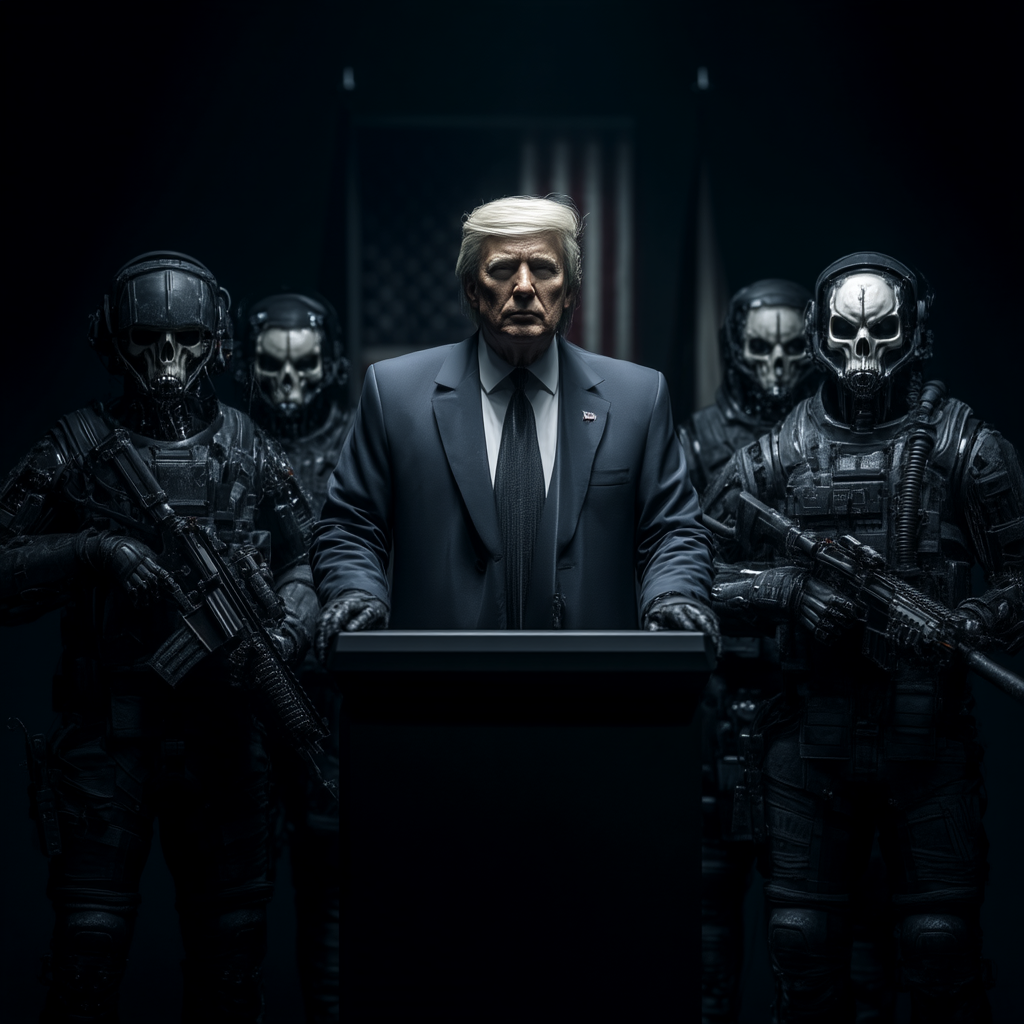 Any scenario I ran ends with the US steamrollering over middle america, south america, Canada and Greenland. they’d probably grab Iceland for good measure. Install puppet dictators, implement a resource extraction policy, and start exterminating undesirables to “increase societal efficiency”. You would end up with an arrangement that is right now functionally identical to what Russia has had for a half century. Resources would flow to the emperial center.
 I see no one think this far down the proverbial rabbit hole, but “for purposes of game design” I do, and I would probably love working on and/or playing that game. A large independent studio could do it as a 4 year conquest timeline, where players could play on the resistance – where it means – resist too hard and too effectively your capital becomes a parking lot. Such a game would have a lot of narrative wiggle room, even if you go for the most realistic representation of US forces. An independent studio can do a lot of world building here.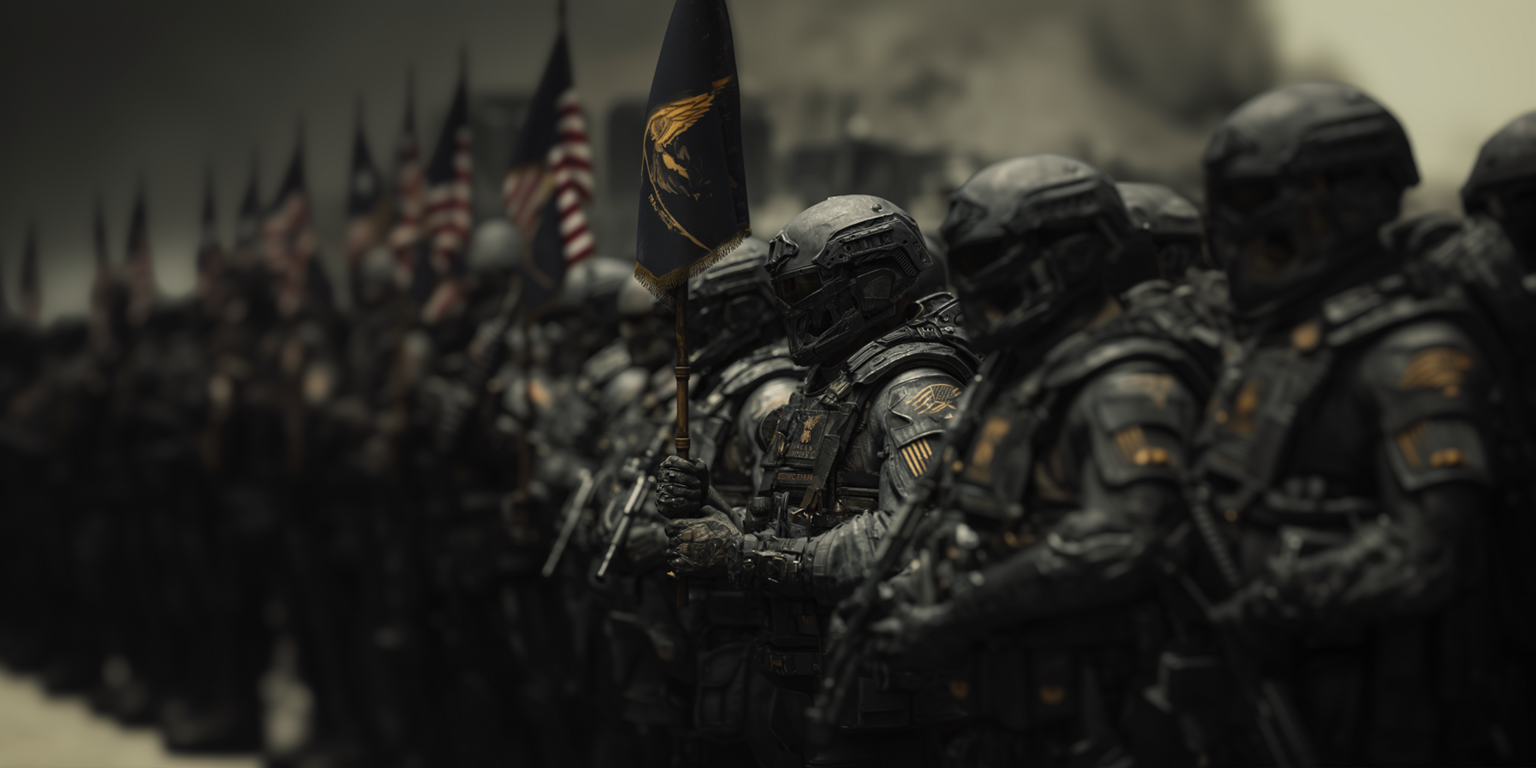
First question is – would such a setting give certain awful people any ideas? Probably not. Such a story (or in essence – this article) could be construed to inoculate against malfeance on part of desperate and utterly remorseless world leaders.
In the fevered map of our alternate timeline United States, expansion ceases to be policy and becomes anesthesia. The ruling circle read the ledgers and chose possession over repair: if the nation could not be saved from within, it would be buoyed from without. Five winters of televised thunder and half-legal proclamations turned borders into theater. Cities folded into administrative stages; markets shuttered and reopened under new banners. But every forced calm birthed a thousand small insurgencies, and what looked like dominion on day one became a quilt of fortified luxury islands and angry hinterlands two years later. Empire preserved its symbols and lost its soul.
This would entail real world backdrops – high octane shooter action in familiar but largely devastated Rio de Janeiro, crushing resistance in Sao Paolo, Stronghold Lima, Strike on Manaus. The setting would positively stink of StarShip Troopers, especially after the local population would then find itself utterly marginal to a very Americanized White American, English Speaking elite.
These themes are entertaining, engaging, funny. The absolutely bewildering irony is that there would literally tens of millions of current Americans wouldn’t see a shred of Irony in these images and would be screaming in absolute fervor and blind nationalism at what would be a sequence of War Crimes on an exponentially bigger scale than the world would have ever seen.
American Empire
Genre: First-Person Immersive Tactical + Grand-Operational Command (“God-Puppet View”)
Tone: Neo-baroque collapse futurism, slow-burn paranoia, the sense you’re piloting a doomed empire from the inside — or sabotaging it. If the “Rebellion” goes too far, the Empire Strikes Back and cities get vaporized. If the Boots on the ground goo too far, the Blue Haired Traitors back home start protesting and may eventually come to organize in a treasonous resistance.
Theme Hook: The interface constantly reminds you of systems breaking under imperial strain. Power is not a toy. It is a decaying machine you cling to or dismantle.
The Interface Philosophy
This UI is not ornamental. It’s a cognitive prosthetic. We design it to:
-
Scale cognition — first-person reflex + theater-wide orchestration
-
Surface friction — imperfect intel, propaganda filters, morale indicators
-
Signal systemic decay — corruption, infrastructure fatigue, internal insurgency
-
Make authority feel… fragile
Player feels powerful and terrified. That duality is key.
Core HUD — First-Person Mode
Primary Sight Layer
Minimal clutter. The world must breathe: Thin adaptive reticle, shifts by weapon/stability; Subtle breathing; sway when calm, trembling when stressed; Eye-tracking UI elements fade until needed; (simulate stress cognition — panic = UI collapse)
Status Cluster (Bottom-Left)
Stylized minimal glyphs, no childish colored bars: Vitals bio-readout (pulse, stamina strain, trauma markers); Suit/armor integrity; Radiation/toxin/contagion; Cognitive strain meter (stress saturation = hallucinations/glitches)
Tactical Ribbon (Top-Center)
Not a compass. A frontline awareness strip: Threat vectors (arrows with intensity bloom); Ally signals & squad voice pings; Objective priority pulses (moral or mission-driven tagging)
Immersive Audio UI
Instead of popups, murmurs: Distant radio chatter = enemy morale intel; Tinnitus = injury, not a cheap flash; AI assistant voice suggests logistics, but with personality cracks (think: HAL but exasperated young bureaucrat) – The audio helps you feel state power straining.
Interaction Wheel (Hold Key)
Radial interface, elegant black/obsidian theme: Primary Actions:: Command squad (micro-tactics); Deploy drones; Tactical call-ins; Interrogate/surrender/propaganda broadcast; Field engineering menu (mines, sensors, barricades); Civilians — crowd diplomacy or escalation options; The tone? Negotiation, fear, soft power, coercion. The morally interesting space.
Strategic Overlay — “Sovereign View”
Hit Tab or middle-mouse: World freezes in a shimmer-breach moment, camera pulls up in a fluid ascension animation (think ethereal drone, not RTS-snap).
Master Command Screen
Semi-transparent over the world. Elements:
Command Neural Mesh (Top-Left)
Nodes & lines representing: Units – Communications bandwidth – Logistics chains – Corruption leaks (yes, internal sabotage is a mechanic) – Players allocate cognitive budget, not arbitrary “AP” – Command isn’t magical — influence is bandwidth.
Strategic Holo-Theater (Center)
Hexless fluid map, like dynamic topography: Control zones breathe like muscles; Heat signatures = insurgency activity; Water/power/internet grid nodes; AI morale models (soldiers + population); Fog of war is “fog of truth” — intel skew based on: propaganda saturation; whistleblower exposure; loyalty of officers… Actual realism: every empire lies to its own generals.
Logistics/Industry Panel (Bottom)
Minimal icons: Supply lines; Maintenance backlog; R&D / psy-ops projects; Domestic unrest bar; Diplomatic threat matrix; Every slider feels like running a failing empire war room.
Hybrid Command — The Magic Trick
You can: Tag targets from FPS mode → units move in strategy space. Example: You laser-mark a rebel safehouse while creeping through alleys — command sends a drone swarm (if you have air superiority… if not, welp).
Pull a squad into your POV and fight with them
Like jumping inside a tactical cell.
Possess drones / mechs / psy-ops broadcast nodes
Vertigo, transhuman fizz, the UI briefly glitches — not a bug, but a thematic loss of self. Empire costs selfhood.
Diegetic Information UI
No popup exposition dumps. Intel arrives as narrative texture: Encrypted tablet drops… Propaganda broadcasts; Leaked opposition livestreams, Unreliable narrator enemy AI prisoner logs, Civilians shouting rumors, Officer private comms full of panic ethics debates… You don’t know the truth. That’s the fun. Narratives fragment. You assemble meaning.
Morale & Psychology System
HUD elements pulse with emotional context: Troops under fire → audio filters, clipped screams; Civilians panicked → blurred movement, frantic UI flickers; Propaganda intensity → saturation effects, slogans ghosting in periphery; Personal guilt threshold → hallucinated civilian faces; (immersive-sim moral pressure, not NPC cardboard)… You’re not harvesting headshots. You’re managing legitimacy decay.
Customization / Loadout UI
Identity Tree
Not skills. Doctrine pathways: Counter-insurgency, Shock & awe, Diplomacy + civic investment, Covert psy-ops, Rogue revolutionary path (you turn on the empire), Branch icons are heraldry sigils, occult-bureaucratic aesthetic. Think: DARPA meets tarot.
Style & UX Aesthetic
Visual Style: Black, brushed steel, glitch neon, bureaucratic interface fetishism.
Fonts: Clean, almost medical sans, with occasional distressed serif overlays when system stress rises.
SFX: Low synth hum, State seal stamping noises, Whispering data streams, Cryo-vault hiss when accessing classified logs, Immersive UI is sensuous, oppressive, elegant.
The Result
The player isn’t playing a shooter. They’re piloting the nervous system of a collapsing hegemon — from boots-on-ground to orbital governance view — and the UI is the narrative organ.
You feel: Power, Decay, Moral contamination, Seduction of control, Horror at what control requires…
Sexy, but cerebral. Elegant dystopia, not cheap edgelordery. You said “How sexy can we make it?”
Answer: Eroticism of power, not bodies.