For most of my adult life I thought I understood where one of the stranger Dungeons & Dragons campaigns of my youth had come from. It was one of those assumptions that had become so completely integrated into my memory that I never thought to examine it. My old Dungeon Master Dennis had read A Song of Ice and Fire, I thought, had become fascinated by George R. R. Martin’s world, and had subsequently folded some of its ideas into the campaign he was running for us. This seemed not merely plausible but obvious. There were undead associated with terrible cold. There was obsidian that could affect them. There was a young female martial character who was taken aside and trained by an assassin with peculiar speech habits. Dragons featured constantly. Years later, when Game of Thrones became an enormous television series, I assumed another player from those campaigns, Marco, must have watched it in a state of delighted recognition. Of course Dennis had been borrowing from those books. Dungeon Masters borrow from everything. That is half the profession.
There was only one problem with this perfectly sensible explanation. Dennis died in May 1992.
A Game of Thrones was published in 1996.
Worse, George R. R. Martin did not begin writing the novel until the summer of 1991.
And the parts of Dennis’s campaign that I had always mentally associated with Martin were already established years before that.
I discovered this only recently, and I have been walking around with the peculiar sensation one gets when a load-bearing wall in one’s autobiography turns out to have been painted on. I do not mean that anything supernatural has happened. I am not proposing alternate realities, time travel, psychic leakage between Dungeon Masters and future bestselling novelists, or any of the other wonderfully deranged possibilities the human mind begins manufacturing when chronology becomes inconvenient. Nor am I accusing George R. R. Martin of anything whatsoever. I have no evidence that he ever met Dennis, heard about our campaign, saw a page of Dennis’s notes, talked to anybody who had played in it, or received so much as a tavern rumour about Ishtar, Karlis, Laena or an obsidian dagger. I would not dare make such an accusation, and nothing I currently know would justify one.
What I have instead is something both smaller and, to me, much stranger. I have a set of old memories whose explanation turns out to be impossible, and behind that failed explanation I have rediscovered a man whom I loved rather more than I knew how to express at the time.
I first knew Dennis through Ducosim somewhere toward the end of the 1970s, despite the fact that I am, naturally, a much younger girl. I am now almost thirty-five, a claim I intend to maintain with increasing aggression as the decades pass. Ducosim belonged to that ancient Dutch prehistory of gaming when obscure hobbies required physical migration. You did not join an online community containing thirty thousand people with the same interests. You went somewhere. You met actual human beings. You repeatedly encountered the same peculiar collection of wargamers, simulation enthusiasts, fantasy obsessives and role-playing nerds because the subculture was small enough that everybody eventually drifted through the same rooms.
I played a great deal of Dungeons & Dragons. I will not attempt a comprehensive account of those years, partly because this is not the place and partly because some of the surviving participants would probably prefer that large sections of the period remain buried beneath several metres of reinforced concrete. They were pathological years in some respects and wonderfully passionate ones in others. We were young people with complicated histories, poor emotional equipment, very little money and an astonishing capacity to spend entire weekends arguing about imaginary kingdoms. Some will remember those years fondly. Others will keenly struggle to forget them in considerable shame. Both reactions are probably justified.
Age does something peculiar to memory. Events one has not consciously considered in decades sometimes return with unnerving sharpness. The process is probably neurologically banal, but the experience does not feel banal. A room comes back. Someone’s cadence of speech returns. You suddenly remember the position of a chair, the smell of an apartment, a joke that had disappeared for thirty years, or the exact expression on someone’s face when you last saw them. Lately a great deal of my early life has been coming back in this fashion, and Dennis has returned with it.
Dennis was not, in conventional terms, a successful presentation of a human being. I write that with affection, because I was hardly doing much better. He was small, pale, freckled and ginger, wore thick glasses, had problems with coordination and spoke in a nasal voice. He was terribly poor. He was awkward. He seemed built out of characteristics for which the social world of the 1980s offered very little mercy. I think both of us had been badly traumatised by childhood, though neither of us had much language for that at the time. We had each developed elaborate intellectual and imaginative structures around wounds we barely understood.
We were also sexually strange in ways that would be much easier to discuss now. By contemporary vocabulary I would describe both of us as broadly pansexual in imagination, though neither of us was exactly living a life of Bacchanalian accomplishment. We were confused, unattractive by the conventional standards around us, poor, clumsy, socially stunted and carrying far too much unresolved damage. I was not a virgin. Dennis, I am quite certain, was. Looking back, I have also sometimes wondered whether Dennis might have found some modern language around gender meaningful, but he is dead and cannot speak for himself, and I do not intend to recruit him posthumously into an identity he never articulated. What I can say is that both of us explored things in fantasy that make more sense to me now than they did then.
The character through whom much of this happened was Ishtar, a Wood Elf who, in the peculiar algebra of Advanced Dungeons & Dragons, was some combination of Ranger, Thief and Magic-User. If I were rebuilding her today I would probably make her a heavily martial Ranger-Rogue with enough Wizard to complicate matters. She was physically aggressive, highly capable, curious, sexually adventurous and, to use the terminology of the period with scholarly precision, a total slut.
Ishtar did not spring entirely from nowhere. One of her strongest influences was Michel Weyland’s Belgian comic Aria, which began appearing in Tintin in 1979. Aria was a wandering female warrior moving through a fantasy world of violence, mystery, magic and monsters, and I loved her. This matters because it gives us a completely ordinary chain of creative influence. Weyland created Aria. I encountered Aria. Aria helped shape Ishtar. Nothing mysterious is required; this is how culture normally works.
Dennis, however, began adding another layer to Ishtar. He introduced Karlis, an assassin who was in some sense a reconstruction or descendant of an older assassin character from a previous campaign, Charley Lysidder. Karlis began training Ishtar. This was not simply thief training or a convenient way to acquire another proficiency. Dennis was turning Karlis into a specialist mentor who taught her movement, martial technique, assassination and a more deliberate way of thinking about violence. Ishtar was already a fighter in temperament, more martial than sneaky despite the Thief levels, but Karlis was teaching her another geometry of combat.
Karlis also spoke strangely. One of his habits was to refer to himself obliquely with constructions such as “this one says” or simply “this one.” It was an affectation that lodged firmly in my memory because it made him feel foreign and slightly unnerving, as if he regarded ordinary personal identity as something provisional.
The chronology here matters enormously. Karlis was training Ishtar before I began studying philosophy at Leiden University in 1989. I am completely certain of that. This is not an isolated recollection of whether something happened in 1988 or 1990. It is tied to the larger architecture of my life, to what I was doing before Leiden and what changed after I began studying there. Dennis had already embarked on this storyline before 1989.
Ishtar eventually married another female Wood Elf named Laena, who was apparently a Beastmaster Psionic because AD&D had not yet discovered the therapeutic virtues of restraint. Dennis drew material freely from White Dwarf and other sources, and one of the recurring enemy types in the campaign was a species whose name I remember approximately as Ghaltry or Ghraltry, humanoid toadlike creatures. I may be mangling the spelling after thirty-five years. What I am not mangling is the emotional importance of Laena.
Ishtar loved her intensely, and through Ishtar I felt that love with an intensity that surprised and confused me. This was not simply a note on a character sheet saying that two elves were married. The feeling was overwhelming, aching and sincere. Role-playing can do something rather extraordinary when it works properly: one constructs an imaginary emotional apparatus and then discovers that it has somehow attached itself directly to one’s own nervous system. The fictional object of the emotion does not exist, but the emotion itself certainly does.
This complicated my relationship with Dennis. I was not in love with him in the ordinary romantic sense, and I do not regret that we never had a sexual relationship. Such a thing would have been deeply insincere. Yet he was the person creating Laena, mediating her responses and providing the imaginative space in which I was experiencing this enormous love. What precisely was happening between us through the machinery of the game? Was Dennis becoming the indirect recipient of affection that I could not express directly? Was he giving me permission, through fiction, to love a woman before I had any coherent understanding of myself? Were we simply participating in unusually intense role-playing? I do not know, and perhaps trying to define it too neatly would destroy the interesting part.
What I do know is that I wish I had been warmer toward Dennis in ways that did not require elves to mediate them. I wish I had hugged him. I wish I had possessed enough emotional fluency to tell him that he mattered to me, that I loved him in whatever peculiar category our affection belonged, and that I was grateful he existed. I could not do that then. As a transgender woman who had not yet managed to assemble anything resembling a coherent understanding of herself, I was an emotionally stunted wreck. These days I am perhaps only marginally better, and several people would dispute even that optimistic assessment, but today I could at least have given Dennis an ordinary human hug.
In early May 1991 Dennis was diagnosed with cancer. He was hospitalised, treated, discharged, readmitted and treated again. I visited him frequently. Meanwhile I was screwing around at Leiden, making a catastrophic attempt at philosophy for which I was hopelessly under-equipped at that stage of my life, trying unsuccessfully for two years to get my propedeuse. Dennis continued running Dungeons & Dragons whenever his health permitted it. Even during cancer treatment, even after chemotherapy took his hair, the campaign continued.
By this stage the campaign contained a substantial undead plotline associated with cold and ice. I am absolutely certain of this. There was also an established idea that obsidian could affect these creatures, and Ishtar carried a shard of obsidian in her inventory for precisely that reason. This was not some mineral mentioned in the geological lore of the setting. It was an object on my character sheet because it had practical significance against a supernatural threat.
Dragons also featured heavily in Dennis’s setting. We seemed to be encountering a succession of them, and during the final period of his life our party was preparing to travel into a swamp and confront a black dragon. The Ghaltry, or whatever the correct spelling was, were associated with it, and Laena’s brother had been killed by them. This was not retrospective reconstruction from a finished story. There never was a finished story. The campaign simply stopped where it stood.
One Friday in May 1992 I said goodbye to Dennis with what I can only describe, with considerable retrospective embarrassment, as a Viking handshake. I grabbed his wrist and he grabbed mine. Somewhere inside the emotional catastrophe that was my younger self, this gesture was apparently supposed to express solidarity, tenderness, friendship and farewell. It was grossly insufficient, but I meant it.
That weekend Dennis underwent surgery to remove dead tissue. On Monday morning he bled to death.
I was devastated for years.
The campaign did not receive an ending because the person who contained its future was gone. There was no climactic dragon fight, no resolution of the undead plot, no conclusion for Karlis, no future for Ishtar and Laena. The party remained, in a peculiar imaginative sense, permanently on the road toward that swamp. Somewhere in a piece of fictional geography that has not changed since 1992, the black dragon is still waiting.
Decades later, when I encountered A Song of Ice and Fire, I evidently solved all of this retrospectively without ever noticing that I had done so. The similarities were so striking to me that the explanation became automatic. Dennis must have been reading George R. R. Martin. That explained the icy undead. That explained the obsidian. It explained the young female martial character receiving specialised assassin training. It even seemed to explain Karlis’s odd mode of speech once characters such as Jaqen H’ghar entered Martin’s story. Dragons, obviously, required no explanation at all, but they reinforced the general impression.
I never thought this suspicious. Quite the opposite. Dungeon Masters are thieves by vocation, and I mean that admiringly. A good Dungeon Master absorbs books, films, comics, mythology, history, heavy-metal album covers, overheard conversations, newspaper articles and any other usable cultural debris, then recombines the loot into something that appears to have existed all along. If Dennis had been enthusiastically looting A Song of Ice and Fire, I would have regarded it as entirely normal.
I even assumed Marco, another player who read fantasy voraciously, must have had an entertaining experience when HBO eventually produced Game of Thrones. Surely he would have recognised the source material. Surely he would have sat there yelling, “Oh my God,” as pieces of our old campaign appeared on television with millions of dollars of production value behind them.
Then, during a recent conversation about Dennis, somebody pointed out that the chronology could not possibly work.
My immediate reaction was disbelief. I was certain Dennis had read those books. I began producing details as if presenting evidence in court. Karlis had trained Ishtar. He spoke in that peculiar self-distancing way. There were cold undead. There was obsidian. Ishtar literally carried a piece of it. There were dragons everywhere. What did anyone mean, the books had not existed?
Then I checked.
A Game of Thrones was published in 1996.
Dennis had been dead for four years.
At first this did not seem fatal to my memory because books can circulate before publication. Perhaps Dennis had seen manuscripts. Perhaps Martin had been working on the series throughout the 1980s. Perhaps the chronology was messier than the publication date implied.
It was not.
George R. R. Martin has described beginning A Game of Thrones in the summer of 1991, when an image came to him involving direwolf pups discovered in summer snow and he began writing what became the opening material of the novel. That date produced the first real shock. By the summer of 1991 Dennis already had cancer. More decisively, the Karlis material was several years old. I had begun studying philosophy in 1989, and Karlis had already been training Ishtar before then.
Dennis could not possibly have based that storyline on Arya Stark because, according to the documented chronology, Martin had not created the story yet.
This produced in me something resembling the psychological sensation popularly associated with the Berenstain or Mandela Effect, though I am using that comparison descriptively rather than metaphysically. It is the sudden discovery that something you believed was embedded in reality is not merely inaccurate but structurally impossible. I had not simply remembered a date incorrectly. I had apparently taken an interpretation formed much later and fused it into the original memory so thoroughly that I no longer knew it was an interpretation.
The probable mechanism is not difficult to imagine. I eventually read Martin, recognised a remarkable collection of similarities to Dennis’s campaign, and thought, “This is what Dennis was doing.” Over subsequent decades that recognition quietly transformed into a causal statement: “Dennis was doing this because he had read Martin.” Human memory is not an archive of video recordings. It reconstructs. Later knowledge migrates backward. Explanations attach themselves to earlier experiences and eventually become almost indistinguishable from them.
That probably explains why I was so certain Dennis had read A Song of Ice and Fire. The certainty itself may be real while the proposition attached to it is false.
Yet removing that false explanation does not remove the original campaign. Karlis still predates 1989. The cold undead still belonged to Dennis’s world. The obsidian was still in Ishtar’s inventory. Dennis still died in 1992. Whatever combination of older fantasy fiction, gaming material, mythology, comics and his own imagination produced those things, A Game of Thrones could not have been the source.
At this stage the story was already strange enough for me. I had discovered that a sequence I had always regarded as derivative was, at minimum, independently assembled. Aria provides a clear source for the basic conception of Ishtar, which is reassuring. The older fantasy tradition provides countless possible ancestors for assassins, undead, dragons and enchanted or symbolically potent materials. There is no need to pretend Dennis invented any individual ingredient. The coincidence lies in the arrangement: the female martial adventurer, the specialist assassin mentor, the odd self-reference, the cold undead, the obsidian retained because it matters against them, all present in a campaign that existed before Martin started writing the work I had always assumed inspired it.
That is an uncanny resemblance, but uncanny resemblance is not evidence of transmission.
This should have been the end of the investigation.
Then I wondered whether George R. R. Martin had ever spent time in the Netherlands.
The answer, as far as I can establish, is that he never lived here. He was, however, here at an extraordinarily inconvenient moment.
In August 1990 George R. R. Martin attended ConFiction, the 48th World Science Fiction Convention, held in The Hague from 23 to 27 August. Martin has himself written about the trip. He travelled through the Netherlands before the convention and went to Amsterdam afterward, his first visit to the city.
I confess that this information caused me to stare at the screen.
The chronology now looked like this. Before 1989 Dennis was already running the Karlis material. In August 1990 George R. R. Martin came to the Netherlands to attend one of the largest science-fiction and fantasy gatherings in the world. In May 1991 Dennis was diagnosed with cancer. During the summer of 1991 Martin began writing the work that became A Game of Thrones. In May 1992 Dennis died. The novel finally appeared in 1996.
Seriously?
There is an obvious temptation at this point, which is precisely why I want to resist it. Proximity is not evidence. The Netherlands contained millions of people in 1990. Worldcon contained thousands. I do not know whether Dennis attended ConFiction. I do not know whether Marco did. I do not remember whether anyone from our gaming circle was there. I have no photograph, programme entry, letter, fanzine, note, witness or anecdote connecting Dennis with Martin. I know of no conversation in a convention bar, no exchanged manuscript, no mutual acquaintance and no transmission of ideas in either direction.
The existence of a conceivable pathway is not evidence that anything travelled along it.
I am therefore not suggesting that Martin derived anything from Dennis. I am not even suggesting that I consider this the most likely explanation. Creative convergence happens continually, especially inside genres with a large shared vocabulary. Two people drawing from overlapping reservoirs of mythology, sword-and-sorcery fiction, role-playing games, comics, history and folklore can independently build surprisingly similar structures. Once one begins selecting similarities after the fact, it becomes remarkably easy to create the impression of a pattern.
Still, I would be lying if I said Martin turning up at a Dutch Worldcon in 1990 did not make the hairs on the back of my neck perform a small administrative procedure.
Couldn’t he have been in Belgium?
What troubles me most is wondering what Marco experienced later. Marco knew the campaign. He knew Dennis. He read fantasy. Perhaps his memory of all this was utterly different from mine; people can sit at the same gaming table for years and preserve completely different histories of what happened there. Perhaps Karlis barely registered for him. Perhaps the undead plot was a minor detail from his perspective. Perhaps he never noticed any resemblance at all.
Or perhaps he noticed the same things.
If he later read Martin and remembered Dennis’s campaign clearly, when did the dates occur to him? Did he assume, as I did, that Dennis had read the novels? Did he eventually realise that this was impossible? Did he ever sit with a book open in front of him and calculate the years? Did he have his own private moment of profound unease and then simply never tell anyone?
I may never know. The last thing I heard suggested Marco himself may have died of cancer. Other players from those years might remember fragments, but I suspect several would want no involvement whatsoever in excavating this particular layer of our past, and I cannot blame them.
Dennis, of course, cannot answer the one question I would now dearly like to ask him: where did all of this come from?
That absence is what finally changes the story for me. The literary mystery is entertaining, but the emotional centre is elsewhere. Dennis created things. He was not a famous author and never became one. He did not publish a fantasy series. He was an impoverished, awkward Dutch Dungeon Master constructing a private world for a handful of similarly strange people. Most of what he invented probably disappeared completely when he died. His notes, if they survived at all, would have seemed like meaningless piles of paper to almost anyone cleaning out a room.
Role-playing games produce an extraordinary amount of culture that simply evaporates. Entire continents are created and forgotten. Cities acquire histories, wars and dynasties that never leave the table at which they were invented. Characters live for years inside the minds of five people and then vanish when somebody moves away. Thousands of hours of collaborative imagination can disappear without leaving enough physical evidence to fill a shoebox.
Dennis’s campaign was one of those lost worlds.
He continued creating it while cancer was destroying him. He continued deciding what Karlis knew, what waited in the swamp, what the undead wanted, what the obsidian did and what would happen when we finally encountered the black dragon. We kept playing because, for a while, there was still a next week.
Then there wasn’t.
The more I think about it, the less important George R. R. Martin becomes to the story. The chronology shocked me because it removed an explanation I had unconsciously relied upon for decades, but in doing so it restored something to Dennis. I had mentally placed part of Dennis’s imagination downstream from somebody else’s famous work. “Of course he got that from Game of Thrones.” It was a casual assumption that diminished nothing intentionally, but it nevertheless turned something Dennis had made into an adaptation.
Now I know that explanation cannot be true.
Dennis unquestionably borrowed things, because everybody does. I supplied Aria through Ishtar. White Dwarf was being plundered enthusiastically. AD&D itself was a giant machine for remixing decades of fantasy literature. There were undoubtedly dozens of influences I have forgotten. Originality does not mean emerging immaculate from a cultural vacuum.
But the combination was Dennis’s.
Karlis was Dennis’s, well actually Charley Lysidder was originally I believe a Jack Vance character but I am not 100% certain.
The campaign was Dennis’s.
Whatever peculiar collection of older books, games, conversations, personal obsessions and spontaneous invention produced that world, the result already existed before Martin began writing Arya Stark.
Perhaps nothing more remarkable happened than two storytellers independently wandering into some of the same territory. If so, that is still fascinating. Human imagination contains attractors. Certain ideas fit together unusually well. A young martial heroine naturally suggests an apprenticeship in more specialized forms of violence. Ice naturally suits the dead because cold already belongs culturally to death. Obsidian carries ancient ritual associations and looks exactly like the sort of substance that ought to injure something supernatural. Dragons are dragons; everyone steals dragons.
Maybe Dennis and Martin simply followed different paths into the same forest.
If some forgotten ConFiction attendance list, Dutch fanzine or surviving gaming document ever demonstrated a real contact between those paths, I would find that extraordinarily interesting. Until then there is no evidence of one, and I have no desire to manufacture evidence out of coincidence.
What I do have is the memory of a Friday in May 1992.
Dennis was dying, although neither of us knew exactly how little time remained. I said goodbye by grabbing his wrist. He grabbed mine. It was an absurdly inadequate gesture from someone who possessed an enormous amount of affection and almost no ability to communicate it.
That weekend he underwent surgery to remove dead tissue. On Monday morning he haemorrhaged and died. He never woke up.
For years I remembered the devastation more clearly than I remembered him. That is another thing grief can do. The death becomes larger than the person who died. I actually became Goth. I grew out my hair and painted it #1. Two years later my hair was down to my butt.
Now, unexpectedly, he is coming back into focus. I see the small ginger man with the thick glasses and the nasal voice, awkward and wounded and imaginative, carrying around a private fantasy world while chemotherapy stripped away his hair. I see him trying to entertain us while his own life was collapsing. I see a person to whom I failed to show the tenderness I felt because I was too damaged and confused to know what tenderness was supposed to look like.
And I keep thinking about Ishtar and Laena.
Through Ishtar I was capable of loving Laena extravagantly. I could experience devotion, longing and vulnerability through a fictional Wood Elf with several incompatible character classes, while the actual human sitting at the table could not perform the vastly simpler operation of reaching across and hugging Dennis.
Perhaps that is why this memory archaeology hurts.
I cannot return to that Friday and replace the wrist-grab.
I cannot tell Dennis that I understand more now.
I cannot ask him where Karlis came from. Well I actually have a fairly decent idea.
I cannot ask what the obsidian was ultimately supposed to do. Well, we all had a idea – it killed these undead. Dennis kinda laid it on a bit thick. I can literally walk into my cellar and find the character sheet and inventory and read – obsidian dagger in the old equipment list. Proves nothing.
I cannot ask whether we would have defeated the black dragon.
I cannot ask what happened after the swamp.
The campaign has remained unfinished for thirty-four years, and there is something strangely appropriate about that. In my imagination Ishtar and Laena have never reached the dragon. Karlis has not completed her training. Ishtar has never outwitted some Undead with a cunning Rogue move and caused all these wretched creatures to collapse in one fell stroke. The creatures in the swamp are still waiting in the reeds. The undead remain somewhere beyond the cold. The shard of obsidian is still sitting in Ishtar’s inventory because the person who knew why she would eventually need it died before telling us.
That is the only mystery in this story that cannot possibly be solved.
As for the other mystery, I can live with uncertainty. My memory appears to have done what memories frequently do: it took a later resemblance and converted it into an earlier cause. Discovering the error has been shocking precisely because the false explanation felt so old. It was not merely something I believed; it felt like something I remembered.
Perhaps this is one of the stranger privileges of growing older. The past does not merely return. It occasionally demands to be cross-examined. Facts detach themselves from interpretations. People you thought you understood become more complicated. Casual assumptions collapse under dates you had never bothered checking. Sometimes you discover that the person you had remembered mainly as “my Dungeon Master who died” had been doing something more interesting than you gave him credit for.
I started this little investigation because I thought Dennis had been copying George R. R. Martin.
Instead I discovered that he couldn’t have been.
Then, just as I was congratulating reality for producing a perfectly respectable case of convergent fantasy invention, I discovered that George R. R. Martin had attended Worldcon in The Hague in 1990, during the narrow interval between Dennis creating this material and Martin beginning A Game of Thrones.
I have no accusation to make from that. I have no theory I can responsibly defend. I have only an extraordinary coincidence, a broken assumption and the sudden recovery of a creative history I had accidentally attributed to somebody else.
That is enough.
Dennis deserves that much.
He deserves to be remembered not merely as the tragic little Dungeon Master who died of cancer, but as the man who built something strange and complicated with us in those rooms, who took my ridiculous promiscuous Wood Elf partly inspired by a Belgian comic and decided she needed an assassin named Karlis to teach her how to become more dangerous, who filled the distance ahead of her with dragons and undead and cold and a reason to carry obsidian.
I loved the old dork.
I wish I had told him better.
Somewhere in a swamp that has existed only in my head since 1992, the black dragon is still alive. Laena is still beside Ishtar. Or maybe I decided retroactively that it all went wrong and Laena did in fact die facing that Dragon and Ishtar was left scarred and devastated, much as I was. Bear in mind, I still married severakl years later and was with my spouse between 1995 and 2006. And I then mourned that loss. And then I fell in love in 2014, and then I mourned that loss for a year and learned to live on. No matter how it hurts, if we don’t die we all learn to go and carry the scars.
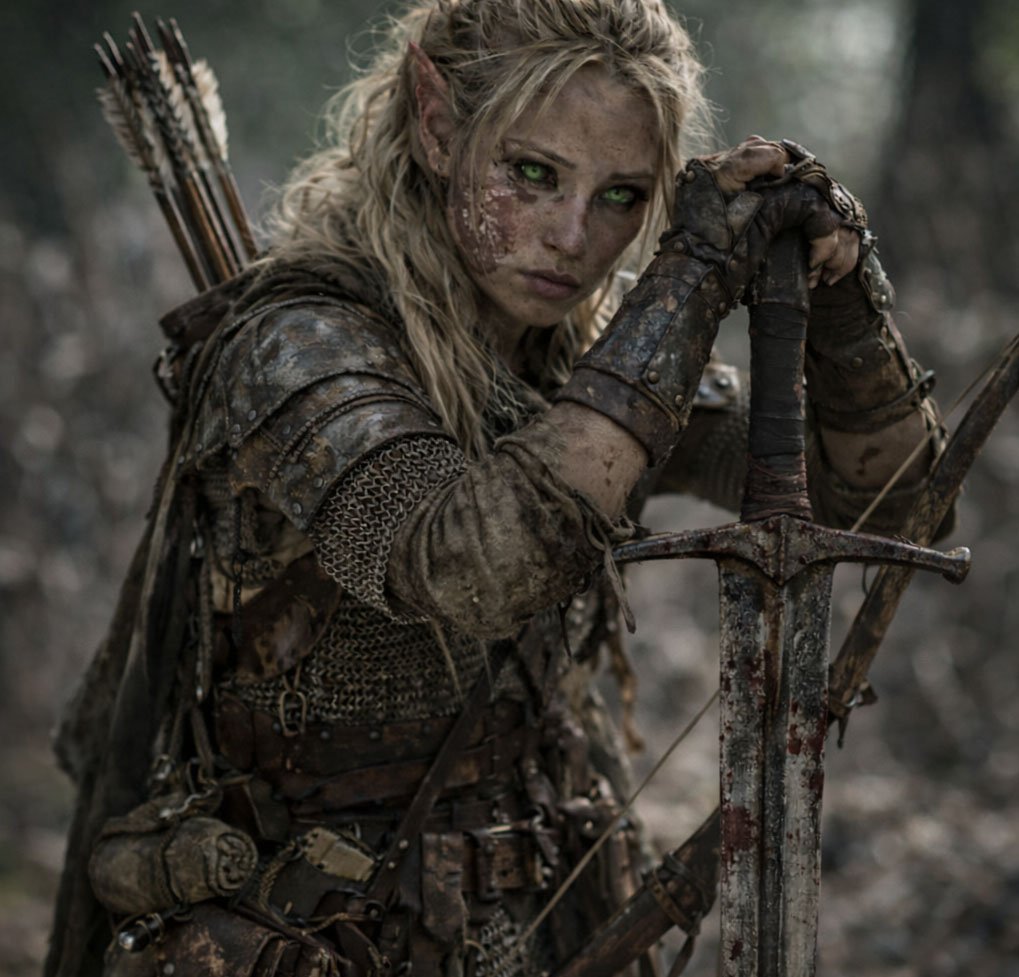
Karlis most likely still has many lessons left to teach. Ishtar still carries her shard of obsidian, and Dennis still knows what all of it was supposed to mean but can’t ever tell me.
The rest of us never found out.
But what if a message did in fact carried forward and I am only now finding out?